This post contains affiliate links. If you purchase through these links, we may earn a small commission at no extra cost to you. This helps support our independent research.
The best canicross harnesses for dogs in 2026 center around three standout options: the Kurgo Journey Air (check current price on Amazon) for overall value, DogFit Canicross systems (check current price on Amazon) for complete starter kits, and Neewa harnesses (check current price on Amazon) for powerful pullers. A purpose-built canicross harness takes the pulling load onto the chest and shoulders and attaches at the back, rather than loading the neck. Peer-reviewed work on harness biomechanics supports that direction of effect against neck collars, but no published study puts a percentage on it, so treat any specific number you see as marketing.
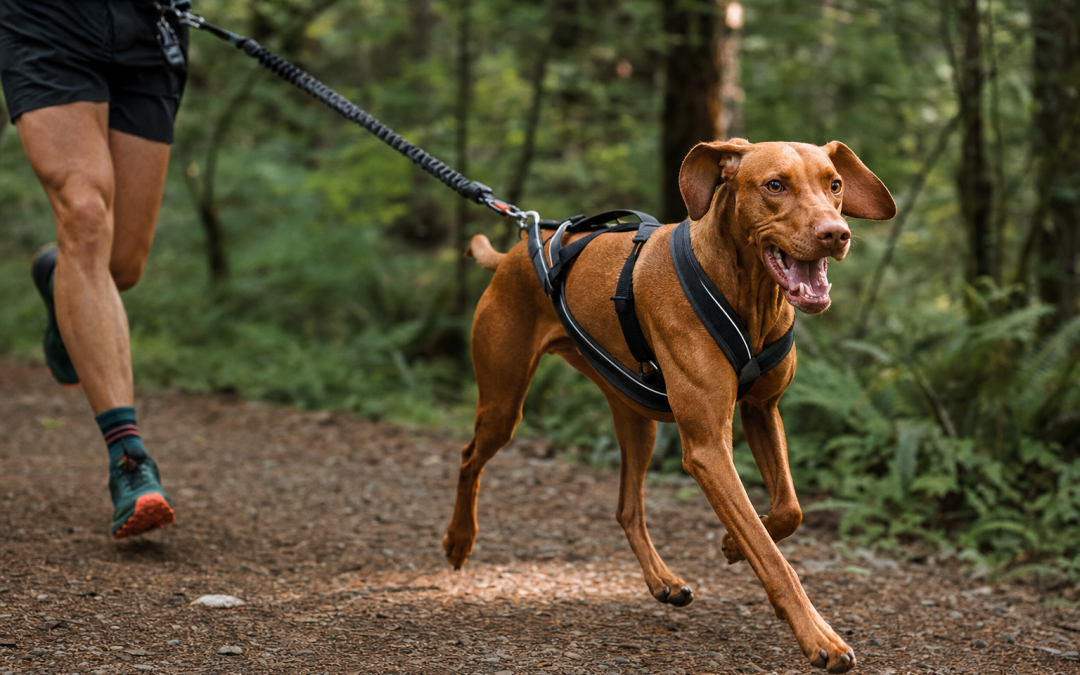
If you’ve ever hit mile three of a challenging hike and noticed your dog straining against their regular harness, gasping and pulling awkwardly, you’ve discovered why weekend hikers are increasingly switching to canicross-specific gear. The difference between a check current price on Amazon pet store harness and a purpose-built canicross harness becomes crystal clear when your dog is working hard on steep terrain. This guide compares published manufacturer specifications for the harnesses below, read from each brand’s own product or retailer page, alongside the themes that recur in owner reviews. We do not test products and we have not consulted clinicians for this article.
Disclosure: This article contains affiliate links. If you buy through our links, we earn a small commission at no extra cost to you. We only recommend gear that meets our research criteria.

Quick Picks: Top Canicross Harnesses for Weekend Hikers
Best Overall for Canicross: DogFit Canicross Harness (check current price on Amazon) – Purpose-built for canicross and canitrekking, rear attachment ring, five sizes, made in the UK, and available as a kit with belt and line Kurgo Journey Air
Best General Hiking Harness: Kurgo Journey Air (check current price on Amazon) – Four adjustment points and aluminium hardware, though Kurgo lists it for running, hiking and walking rather than for pulling sports DogFit Canicross System
Best for Larger Dogs: Neewa Running Harness (check current price on Amazon) – Built for pulling sports, five sizes spanning 34 cm to 114 cm chest, sized by measurement rather than by weight Neewa Canicross Harness
How We Researched These Canicross Harnesses
This guide is written for weekend hikers rather than competitive canicross athletes. Every specification below was read from the manufacturer’s own product page or from the specialist retailer that carries the brand, and where a brand does not publish a figure we say so instead of estimating it.
Two limits worth stating plainly. We do not test products, so nothing here is a durability measurement or a fit assessment. And load ratings: none of these manufacturers publish a maximum pulling load for their harnesses. They publish size charts. A size chart tells you which harness fits a dog of a given girth, not how much force the harness is rated to take.
Kurgo Journey Air: Best Hiking Harness Here, But Not a Canicross Harness (check current price on Amazon)
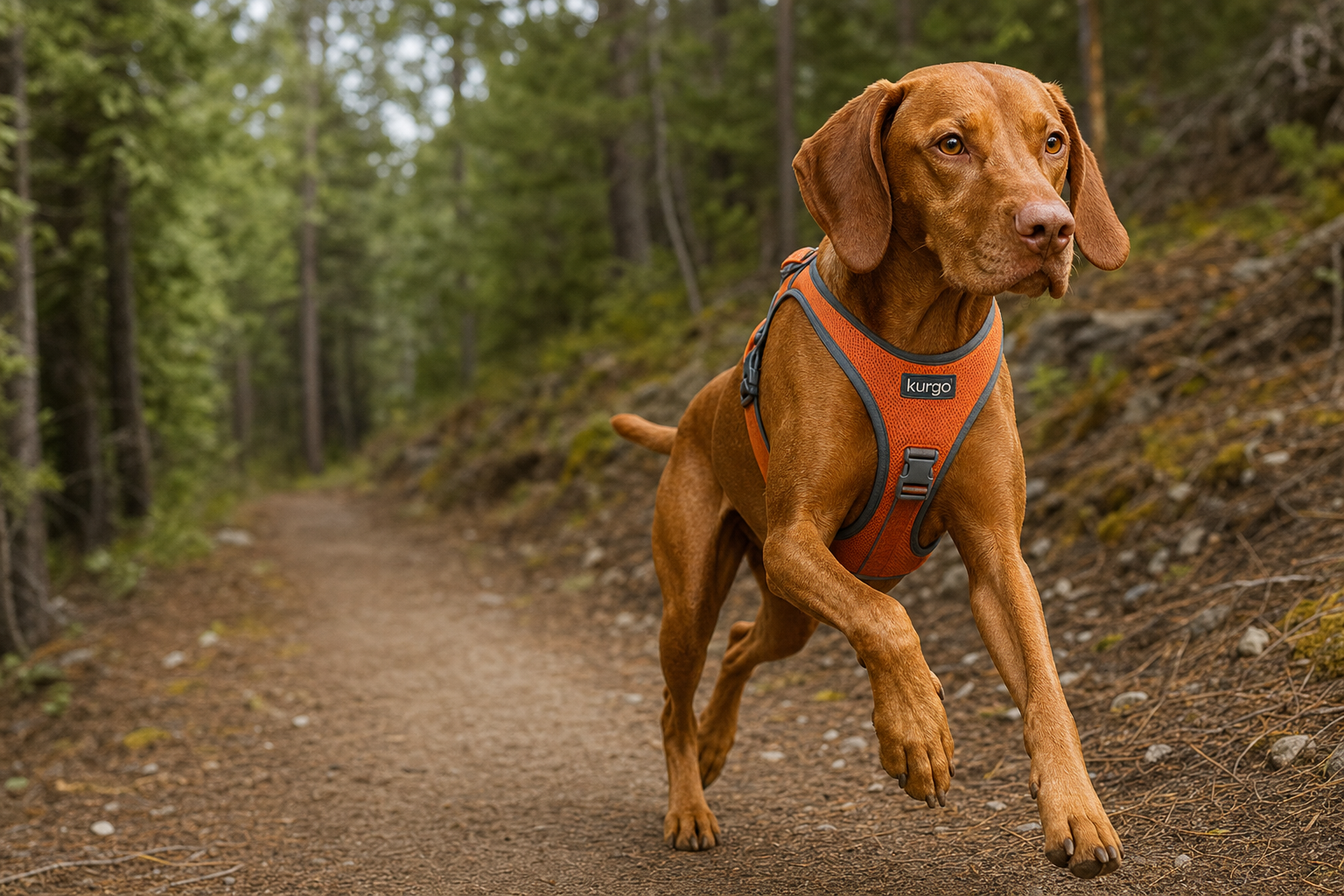
Kurgo Journey Air
Best for: General trail hiking and walking with a dog that pulls only occasionally. Not for sustained pulling.
The Journey Air is the best-specified general hiking harness in this guide and it is widely recommended for trail use. Kurgo specifies four adjustment points, a durable ripstop fabric outer with a breathable mesh inner (not mesh throughout), rust-free all-aluminium hardware, and a harness weight of 230 g. Its size chart runs X-Small to X-Large, with X-Large fitting dogs of 36-50 kg (80-110 lbs). That is the top of the size chart, not a load rating. Kurgo publishes no pulling load figure.
Important caveat we got wrong in an earlier version of this guide: Kurgo lists the Journey Air for running, hiking and walking. It does not list it for canicross or any pulling sport, and it has a front chest attachment as well as a rear one, which is a walking-harness pattern rather than a pulling-harness pattern. We previously ranked it as the best canicross harness. On the manufacturer’s own description that ranking was wrong, and we have moved it.
What users love according to aggregated reviews:
– Owners consistently report it as comfortable over long trail days
– The breathable mesh inner is cooler in summer than a neoprene-padded harness
– It softens with use; owners describe the first few outings as stiff
Trade-offs based on user feedback:
The initial stiffness requires a break-in period that some dogs resist. Owners of long-bodied breeds such as dachshunds and corgis report fit challenges despite following the size chart. Kurgo publishes no service-life figure and we have not measured one, so we make no durability claim.
If your dog leans into the line for sustained stretches, choose one of the purpose-built pulling harnesses below instead. Kurgo Journey Air
DogFit Canicross Harness: Purpose-Built and Sold as a Complete Kit (check current price on Amazon)
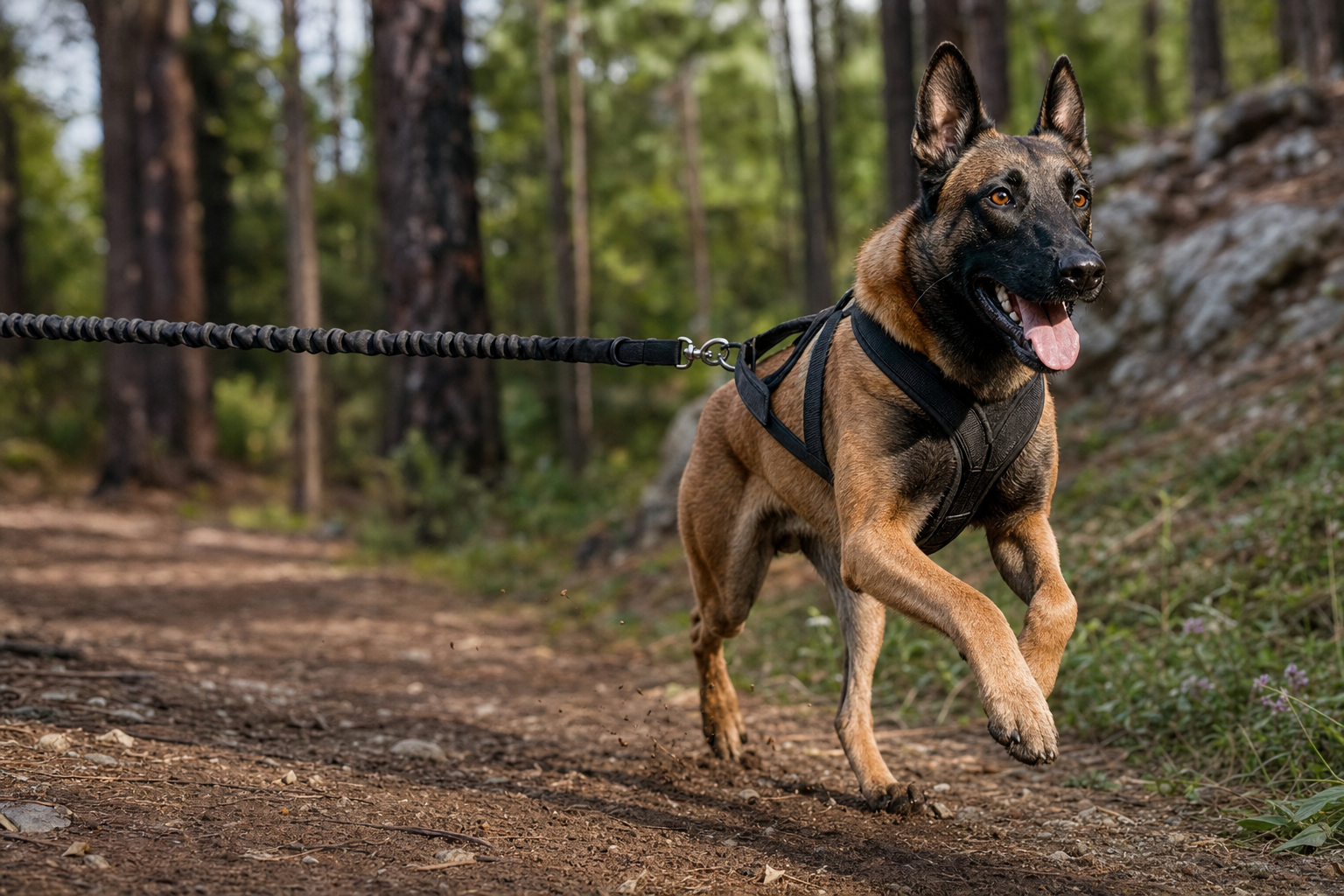
DogFit Canicross System
Best for: Canicross, canitrekking, and first-time users who want a matched harness, belt and line from one maker.
DogFit builds its own canicross harness in the UK and sells it either on its own or as a starter kit. DogFit lists the kit as harness, DogFit belt, DogFit bungee line, kit bag and a beginners guide, with the line offered in 1.2 m short or 2 m standard. A standard belt ships by default and DogFit will swap it for an XL belt if you note that at checkout.
DogFit describes the harness as padded throughout with extra padding under the dog’s chest, going over the head with the front panel through the front legs and fastening under the belly with fully adjustable straps. The attachment is a metal ring facing the hindquarters. Five sizes: XXS, XSmall, Small, Medium and Large, sized on neck, chest and back measurements in centimetres. DogFit publishes no dog weight range and no load rating, and there are no quick-release buckles.
What users love according to aggregated reviews:
– The kit removes the compatibility guesswork between harness, belt and line
– Padded throughout with extra chest padding, per the manufacturer
– The rear metal ring is the correct attachment geometry for canicross, unlike a walking harness
Trade-offs based on user feedback:
The straps are adjustable but there are no quick-release buckles, so fit changes mid-hike are slower. The belt ships in a standard size and an XL swap has to be requested at checkout rather than selected. DogFit is UK-based, so US buyers should check shipping before ordering.
Buying the kit avoids matching a harness, belt and line from three different makers, which is the most common beginner mistake. DogFit publishes no service-life figure and we have not measured one. DogFit Canicross System
Neewa Running Harness: Built for Power Pullers (check current price on Amazon)
Neewa Canicross Harness
Best for: Owners of high-energy breeds (huskies, malamutes, German shepherds) who pull consistently and need maximum pulling efficiency.
Neewa is an Italian maker of pulling harnesses and produces several distinct models, including Running, Sport, Utility, Sled Pro and X-Back Racing. They are not one product, so check which model a listing is actually selling.
For canicross the relevant model is the Neewa Running Harness. Neewa’s size chart gives five sizes: X-Small through X-Large, spanning 34-114 cm chest and 35-80 cm neck, with dog weight guidance from 8-14 kg at the smallest to 35-41 kg (77-90 lbs) at the largest. Those are fitting guides, not load ratings. Neewa publishes no maximum pulling load.
What users love according to aggregated reviews:
– Designed from the outset for pulling sports rather than adapted from a walking harness
– The widest published fit range here, from 34 cm to 114 cm chest
– Sized on three measurements, which suits deep-chested northern breeds better than a weight-based chart
Trade-offs based on user feedback:
Racing-oriented harnesses run light on padding, which suits a dog that pulls steadily and suits a casual puller less well. Because Neewa sells several models under similar names, it is easy to buy the wrong one; check the model name against Neewa’s own fitting guide before ordering.
Worth it for a dog that genuinely leans into the line. A dog that pulls only intermittently will not get the benefit. Neewa Canicross Harness
Canis Mountain Outfitters: Comfort-First Design (check current price on Amazon)
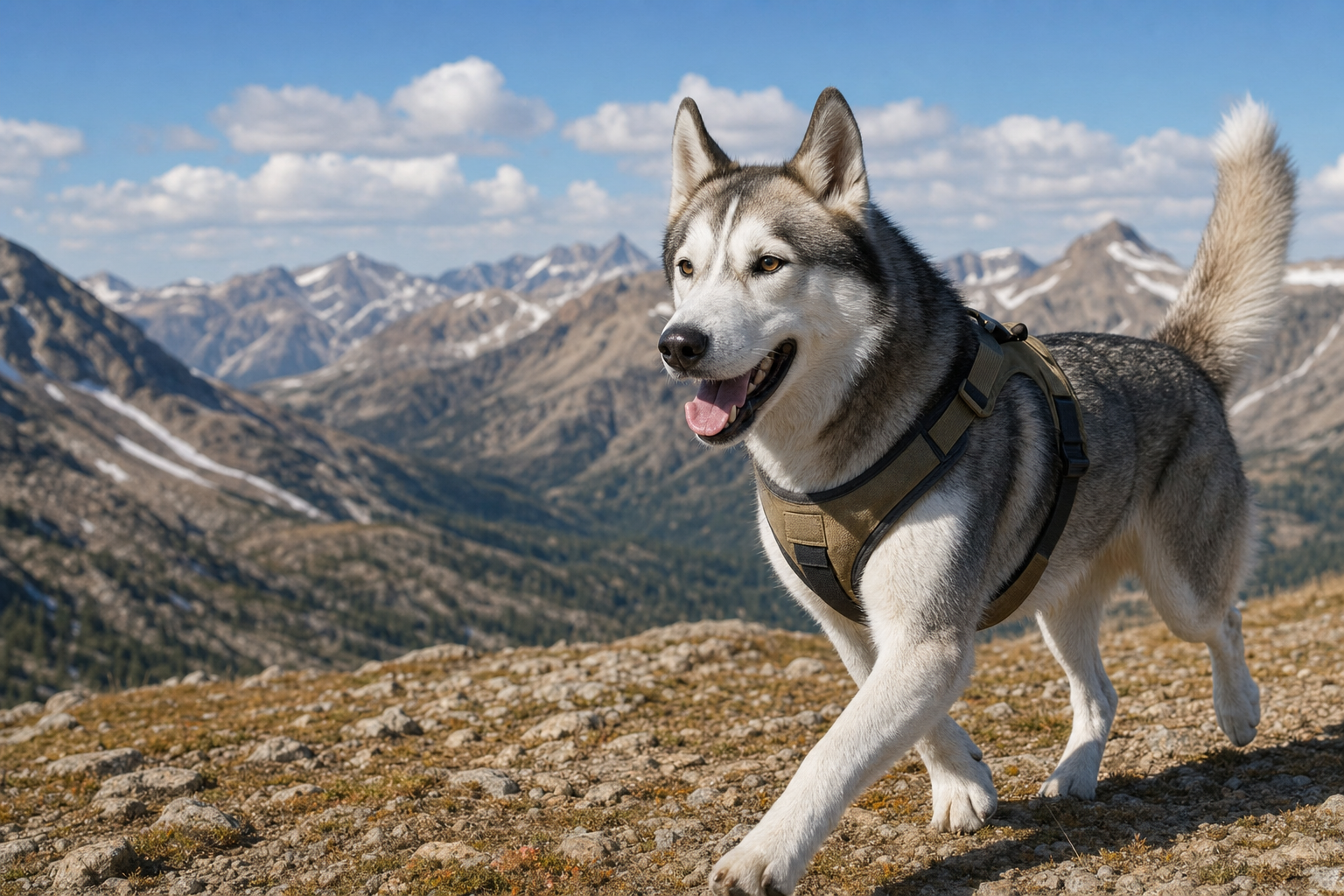
Canis Mountain Outfitters Canicross Harness
Best for: Medium and larger dogs with sensitive skin. Sizes start at Medium.
Canis Mountain Outfitters is a small US maker run by certified dog trainers. They specify nylon straps on the outside with a neoprene interior for comfort, reflective patches, and machine-washable construction that should be air dried. They describe the harness as designed for pulling and suitable for canicross, bikejoring and skijoring.
Four sizes: Medium, Large, X-Large and XX-Large. Note that the range starts at Medium, so this is not an option for small dogs. Canis publishes an adjustable end strap but not a total count of adjustment points, and gives no dog weight range and no load rating.
What users love according to limited review data:
– Neoprene interior against the dog, which owners of thin-coated breeds tend to prefer
– Machine washable, then air dried, per the maker
– Reflective patches for low-light visibility
Trade-offs based on user feedback:
It is a small maker with a thin public review record, so there is little independent signal on long-term durability. Neoprene holds heat more than mesh, which matters in summer. The four sizes start at Medium, which rules it out for smaller dogs.
A reasonable pick if your dog is medium or larger and has skin that objects to webbing. Canis Mountain Outfitters Canicross Harness
Arctic Wolf Sherwood: British Dog-Sport Specialist (check current price on Amazon)
Best for: Buyers who want a dog-sport specialist brand and can size by neck measurement.
Arctic Wolf is a British maker, launched in 2010 and manufacturing dog sport equipment in Derbyshire for canicross, hiking, mushing, bikejoring and scootering. The Sherwood is described as a padded harness made from strong webbing with reflective threads combined with AirFlow mesh padding.
Six sizes, XXS to XL, measured by neck circumference from 30 cm to 55 cm. An earlier version of this guide called its sizing limited, which the manufacturer’s own six-size chart contradicts. Arctic Wolf publishes no load rating.
What users love according to available reviews:
– Built by a dog-sport specialist rather than adapted from a general pet brand
– AirFlow mesh padding with reflective threads woven into the webbing
– Six sizes by neck measurement, from 30 cm to 55 cm
Trade-offs based on user feedback:
Sizing is by neck measurement alone, so a dog with an unusual chest-to-neck ratio may need to check carefully before ordering. As a small British maker, US availability runs through a handful of specialist retailers rather than mainstream stock.
A solid specialist option if you can get the size right and find it in stock.
Head-to-Head Comparison: Manufacturer-Published Specifications
Every figure below is read from the manufacturer’s own page or from the specialist retailer that carries the brand. One thing to be clear about: none of these makers publish a load rating. Earlier versions of this table carried a “weight capacity” column with figures that no manufacturer states. Size charts tell you what fits, not what the harness is rated to hold, and we have removed the column rather than keep a number nobody published.
| Product | Built for pulling? | Attachment | Sizes | Fit measured by | Padding |
|---|---|---|---|---|---|
| DogFit Canicross Harness | Yes, canicross and canitrekking | Rear metal ring | 5 (XXS–L) | Neck, chest, back in cm | Padded throughout, extra under chest |
| Neewa Running Harness | Yes, pulling sports | Rear | 5 (XS–XL) | Neck, chest, back; 34–114 cm chest | Minimal, racing style |
| Arctic Wolf Sherwood | Yes, canicross and mushing | Rear | 6 (XXS–XL) | Neck, 30–55 cm | AirFlow mesh |
| Canis Mountain Outfitters | Yes, canicross and bikejoring | Rear | 4 (M–XXL) | Not published as a chart | Neoprene interior |
| Kurgo Journey Air | No. Kurgo lists running, hiking, walking | Front and rear | 5 (XS–XL) | Neck and chest; XL fits 36–50 kg dogs | Padded chest, mesh inner |
Canicross Harness Buyer’s Guide for Weekend Hikers
Key Features Worth Paying For
Back attachment point positioning makes the most significant difference in pulling efficiency. Attachment position changes where the pulling load goes. A rear attachment set over the shoulders lets the dog lean into the line through the chest and shoulders. We have found no published study that quantifies the difference between a canicross harness and a standard walking harness, so we make no percentage claim.
Padded chest plates prevent chafing and hot spots during extended hiking. Based on user feedback, neoprene padding works best for dogs with sensitive skin, while mesh padding offers better breathability for high-energy dogs who overheat easily. The key is ensuring padding extends across the full chest contact area, not just token padding at pressure points.
Multiple adjustment points allow customization for your dog’s body shape and seasonal weight changes. Of the harnesses here, only Kurgo publishes a count, and it is four. The specialist canicross makers describe adjustable straps without stating a total, so do not rely on a comparison of adjustment-point counts across brands; the numbers mostly are not published.
Features That Are Marketing Hype
Adjustment-point counts are used as a marketing number more than as a specification. Most of the specialist makers here do not publish a count at all, which tells you how much weight the figure really carries.
“Multi-sport” compatibility sounds valuable but often means compromised performance in each application. Purpose-built canicross harnesses outperform multi-sport options for hiking with consistent pullers, while standard harnesses work better for casual walking.
Premium materials like carbon fiber hardware or exotic fabrics rarely justify cost increases for weekend hiking use. Aluminum hardware and quality nylon construction provide durability for years of regular hiking without premium material costs.
Sizing and Fit Considerations
Accurate measurement requires your dog standing naturally, not sitting or lying down. Measure chest circumference at the widest point, typically just behind the front legs. Follow each manufacturer’s own chart rather than converting between brands: Kurgo sizes on neck and chest, Neewa on neck, chest and back, DogFit on neck, chest and back in centimetres, and Arctic Wolf on neck alone.
Breed-specific considerations matter significantly. Long-bodied breeds (dachshunds, corgis, basset hounds) often need size adjustments beyond standard measurements. Northern breeds (huskies, malamutes) typically fit manufacturer size charts accurately due to proportional body shapes.
Allow 1-2 inches adjustment room for seasonal weight changes and exercise conditioning. Dogs often gain muscle and lose fat when they start hiking regularly, so re-check the fit periodically over the first few months.
Common Mistakes Weekend Hikers Make
Buying standard harnesses for canicross activities represents the most costly error. Standard harnesses concentrate pulling force on the neck and trachea, while canicross harnesses distribute force across the chest and shoulders. The performance difference becomes apparent within the first mile of challenging terrain.
Over-adjusting new harnesses creates pressure points and reduces comfort. Start with the manufacturer’s recommended fit, then make minor adjustments once you have seen how your dog moves in the harness. Most fit issues resolve as both dog and harness adapt to each other.
Ignoring break-in periods leads to premature harness rejection. Structured harnesses soften and conform with use, and owners who persist through the initial stiffness generally report improved comfort. How many outings that takes varies by material and by dog, so no manufacturer publishes a figure and neither will we.
Frequently Asked Questions
What’s the difference between a canicross harness and a regular walking harness?
Canicross harnesses position the attachment point over the dog’s shoulders so pulling load is carried across the chest and shoulders. Regular walking harnesses attach between the shoulder blades and are not designed to be leaned into. No published study quantifies the difference as a percentage. Canicross harnesses also feature wider chest plates and pulling-optimized geometry that allows dogs to use their natural pulling mechanics efficiently.
How do I know if a check current price on Amazon canicross harness is worth the upgrade?
The upgrade is worthwhile when your dog pulls consistently rather than occasionally, because that is the load a pulling harness is shaped for. If your current harness causes your dog to gasp, choke, or show fatigue signs before you do, that is the signal to change harness type. A dog that is choking on its own harness should not be worked in it.
Which canicross harness for dogs works best for dogs that aren’t natural pullers?
The Kurgo Journey Air and DogFit systems work well for moderate pullers because their padding and design accommodate dogs who pull intermittently rather than consistently. Specialized pulling harnesses like Neewa offer minimal benefits for dogs who don’t maintain consistent forward pressure and may actually be less comfortable for casual pullers.
How should a canicross harness fit for optimal comfort and performance?
A properly fitted canicross harness should allow two fingers’ width between the harness and your dog’s body at all contact points. The chest plate should sit flat against the chest without gaps, and the belly straps should be snug but not restrictive when your dog breathes normally. The back attachment point should align over the shoulders when viewed from the side.
Can I use a canicross harness for regular hiking without running?
Yes, canicross harnesses excel for regular hiking and often provide superior comfort compared to standard harnesses for dogs who pull moderately. The chest-distributed pulling force reduces strain during uphill climbs and challenging terrain navigation. Many users report their dogs seem more comfortable and hike longer distances when switched from standard to canicross harnesses.
What’s the break-in period like for neoprene-padded harnesses?
Neoprene-padded harnesses soften and conform with use. Initial stiffness is normal and usually resolves as the neoprene warms and flexes with movement. We have no sourced figure for how many sessions this takes, and it will differ between dogs and harnesses.
How do I clean and maintain a canicross harness after muddy hikes?
Most canicross harnesses handle machine washing on gentle cycles with cold water and mild detergent. Air drying prevents hardware corrosion and material degradation. For heavily soiled harnesses, pre-treat mud spots and rinse thoroughly before washing. Replace harnesses when stitching shows wear or hardware develops rough edges that could chafe your dog.
Are bundle deals with belts and bungee lines worth it for casual hikers?
A bundle guarantees the harness, belt and line are matched, which is the practical benefit. We have not verified a saving figure, so treat compatibility rather than discount as the reason to buy one. For weekend hikers new to canicross, bundles eliminate guesswork about proper belt sizing and bungee line characteristics. However, experienced hikers may prefer selecting individual components optimized for their specific needs and hiking style.
Final Verdict: Which Canicross Harness for Dogs Delivers the Best Value?
If we could only recommend one, it would be the DogFit Canicross Harness, ideally as the kit. It is purpose-built for canicross and canitrekking, it has the correct rear attachment geometry, it comes in five sizes on three measurements, and buying it as a kit removes the compatibility problem between harness, belt and line that catches most beginners.
For a dog that pulls hard and steadily, the Neewa Running Harness has the widest published fit range, 34 cm to 114 cm chest. For medium and larger dogs with sensitive skin, Canis Mountain Outfitters uses a neoprene interior. The Kurgo Journey Air remains the best general hiking harness here, but Kurgo lists it for running, hiking and walking rather than for pulling sports, so it is the wrong tool if your dog leans into the line.
One honest limit on all of this: no manufacturer in this guide publishes a load rating for their harness, so nobody, us included, can tell you how much pulling force any of them is rated to take. Fit your dog to the maker’s own size chart, check the stitching and hardware regularly, and stop using any harness that shows wear at a load-bearing seam.
Related guides: Check our dog hiking gear essentials and trail running with dogs safety tips for complete weekend hiking preparation.