
This post contains affiliate links. If you purchase through these links, we may earn a small commission at no extra cost to you. This helps support our independent research.
Based on published manufacturer specifications, the Ruffwear Grip Trex is the strongest all-round choice for hiking: Ruffwear specifies a non-marking Vibram outsole and a tightly woven polyester air mesh upper, and offers eight paw widths from 1.50 in to 3.25 in. For budget-conscious weekend hikers, the Ultra Paws Durable boots are a cheaper option, though the brand describes that line as light duty rather than as a technical hiking boot.
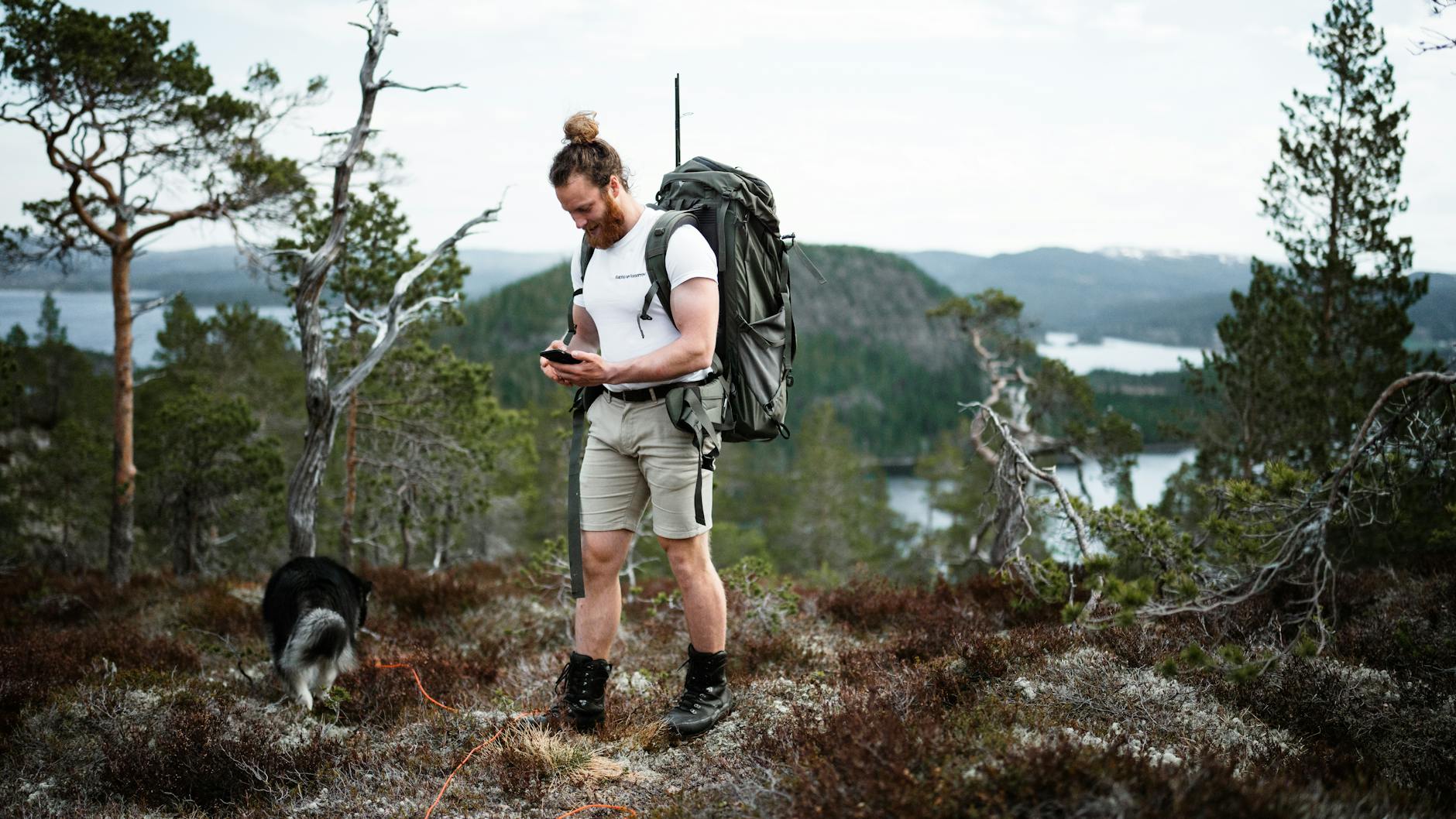
Every weekend hiker faces the same frustrating scenario: you’ve invested in quality gear for yourself, but your dog’s paws are getting torn up on rocky trails or burning on hot pavement. You start researching dog boots, only to get overwhelmed by options ranging starting at current retail Amazon specials to check current price on Amazon premium pairs. The core question haunting every purchase decision: are the expensive boots really worth it, or are you just paying for marketing hype?
This guide answers that question from published manufacturer specifications, checked against each brand’s own product page, plus the themes that recur in owner reviews. We do not test products ourselves. For a comprehensive overview of all dog boot categories beyond hiking, see our complete guide to the best dog boots.
Disclosure: This article contains affiliate links. If you buy through our links, we earn a small commission at no extra cost to you. We only recommend gear that meets our research criteria.


Quick Picks: Best Dog Boots for Hiking at a Glance
Best Overall: Ruffwear Grip Trex – check current price on Amazon
Ruffwear Grip Trex
Vibram outsole, proven durability, worth the premium for regular hikers
Best Budget: Ultra Paws Durable Boots – ~check current price on Amazon
Ultra Paws Durable Boots
Thermoplastic protection, perfect for occasional weekend adventures
Best for Hot Surfaces: Canada Pooch Hot Pavement Boots – check current price on Amazon
Canada Pooch Hot Pavement Boots
Ultra-wide opening with toggle and velcro closure, built for hot pavement
Most Versatile: Ruffwear Summit Trex – check current price on Amazon
Ruffwear Summit Trex
All-season paw protection, nine paw widths, DWR-treated upper
Best Value: Qumy Dog Boots – check current price on Amazon
Qumy Dog Boots
Budget option for testing whether your dog accepts boots at all
How We Researched These Best Dog Boots for Hiking
We compared published specifications for the boots below, focusing specifically on hiking performance rather than general use. Our method:
- Manufacturer specifications for materials, construction, and sizing, taken from each brand’s own product page
- Recurring themes in owner reviews on Amazon, Chewy, and hiking forums
- General veterinary guidance on paw protection
- Price-to-performance comparison across usage levels
Where a manufacturer does not publish a figure, we leave it out rather than estimate it. We do not test products ourselves, so nothing here is a durability measurement.
Owner reviews consistently suggest budget boots work fine for occasional use, while frequent hikers tend to report faster wear on lighter materials. For those longer multi-day adventures, a collapsible travel crate rounds out the gear list alongside trail boots. Premium boots justify their cost through materials science and construction quality, not just marketing.
The 6 Best Dog Boots for Hiking (Detailed Reviews)
Ruffwear Grip Trex: The Gold Standard (check current price on Amazon)
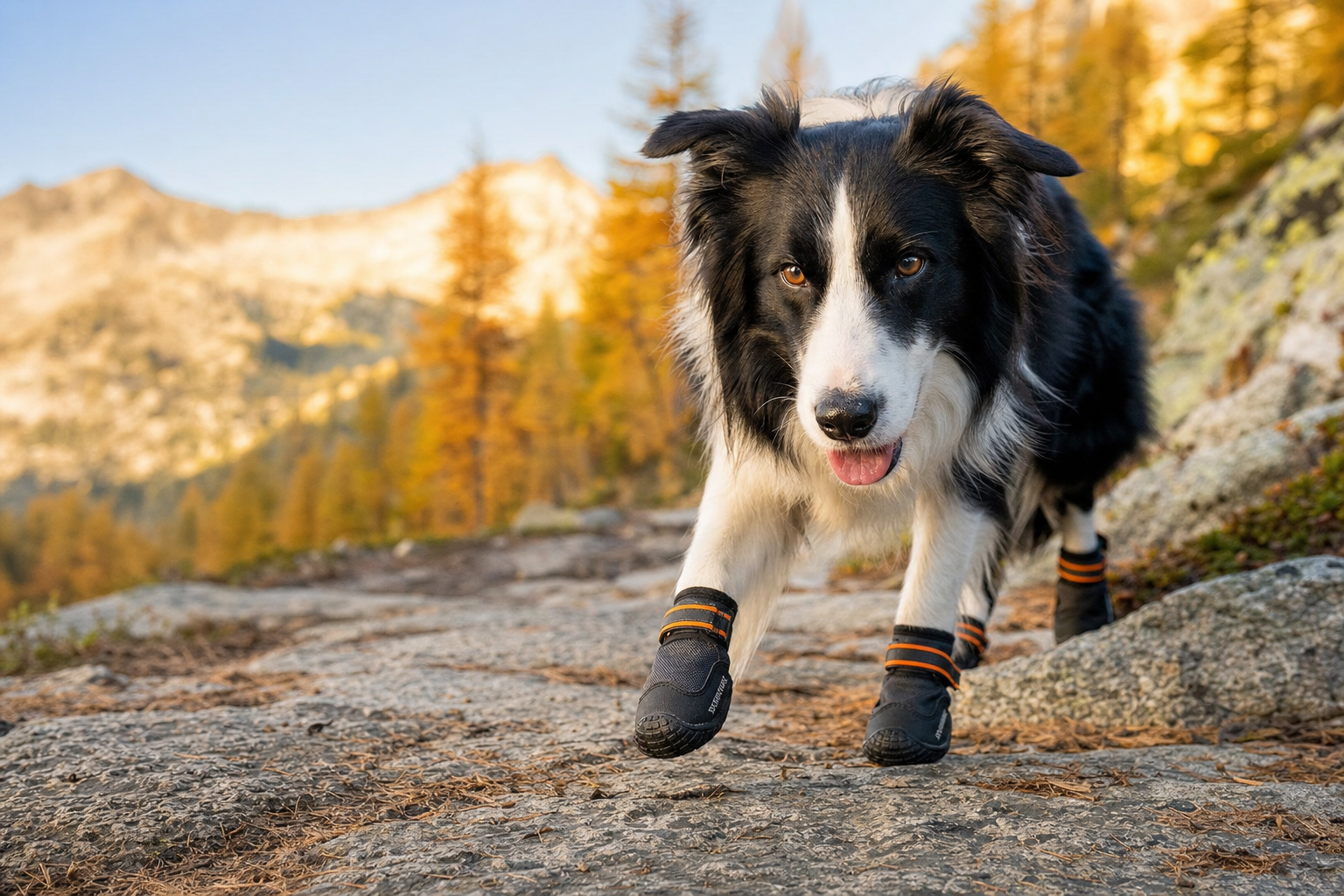
Ruffwear Grip Trex
Best for: Regular hikers willing to invest in long-term durability
Ruffwear specifies a non-marking Vibram outsole with a rugged lug design and a breathable 100% polyester air mesh upper. Ruffwear lists eight paw widths from 1.50″ to 3.25″ (38 mm to 83 mm), sold as a set of two boots, with a hook-and-loop cinch closure.
What users consistently love:
– Durability is the most common theme in positive owner reviews
– Superior traction on both wet and dry surfaces thanks to the Vibram compound
– Secure fit that stays put even during scrambling or running
Trade-offs: The check current price on Amazon price point makes replacement expensive, and some users with dogs having oval-shaped paws report sizing challenges. The breathable upper offers less water protection than waterproof alternatives.
Ruffwear does not publish an expected service life, and we have not measured one. Ruffwear Grip Trex
Ruffwear Summit Trex: Year-Round Versatility (check current price on Amazon)
Ruffwear Summit Trex
Best for: Multi-season hikers who want one boot for varied conditions
Retraction, for anyone who bought on our earlier recommendation: this slot previously held the Ruffwear Polar Trex, which we described as having a waterproof insulated upper rated to -30°F. Two things were wrong. The Polar Trex is discontinued and no longer appears anywhere in Ruffwear’s current product catalogue. And the temperature rating never existed: Ruffwear publishes no temperature rating for any of its boots, so that figure was not a misreading of a spec, it was an invented one. We have replaced the entry with the boot Ruffwear actually sells for multi-season use.
Ruffwear positions the Summit Trex as its all-season boot. Ruffwear specifies a non-marking rubber outsole (not Vibram, unlike the Grip Trex), a 150D polyester upper with a nonfluorinated DWR and PU coating, and a styrene-butadiene rubber cuff. The closure is a hook-and-loop cinch with reflective webbing. Ruffwear describes it as all-season paw protection against hot pavement, rough surfaces, ice, rain, snow, and snowmelt chemicals. There is no published temperature rating.
What users consistently love:
– Nine paw widths from 1.50″ to 3.25″, the widest fit range in Ruffwear’s boot line
– Sold as two pairs, which suits dogs whose front and back paws differ in size
– Reflective webbing on the closure improves visibility during dawn or dusk hikes
Trade-offs: The rubber outsole is not the Vibram compound used on the Grip Trex, so the Grip Trex remains the stronger choice for technical rock. Ruffwear publishes no insulation or temperature rating, so treat this as weather protection rather than a winter boot.
Choose these if you want one boot across seasons and surfaces. For technical rocky terrain, the Grip Trex outsole is the better tool. Ruffwear Summit Trex
Ultra Paws Durable Boots: Best Budget Pick (~check current price on Amazon)
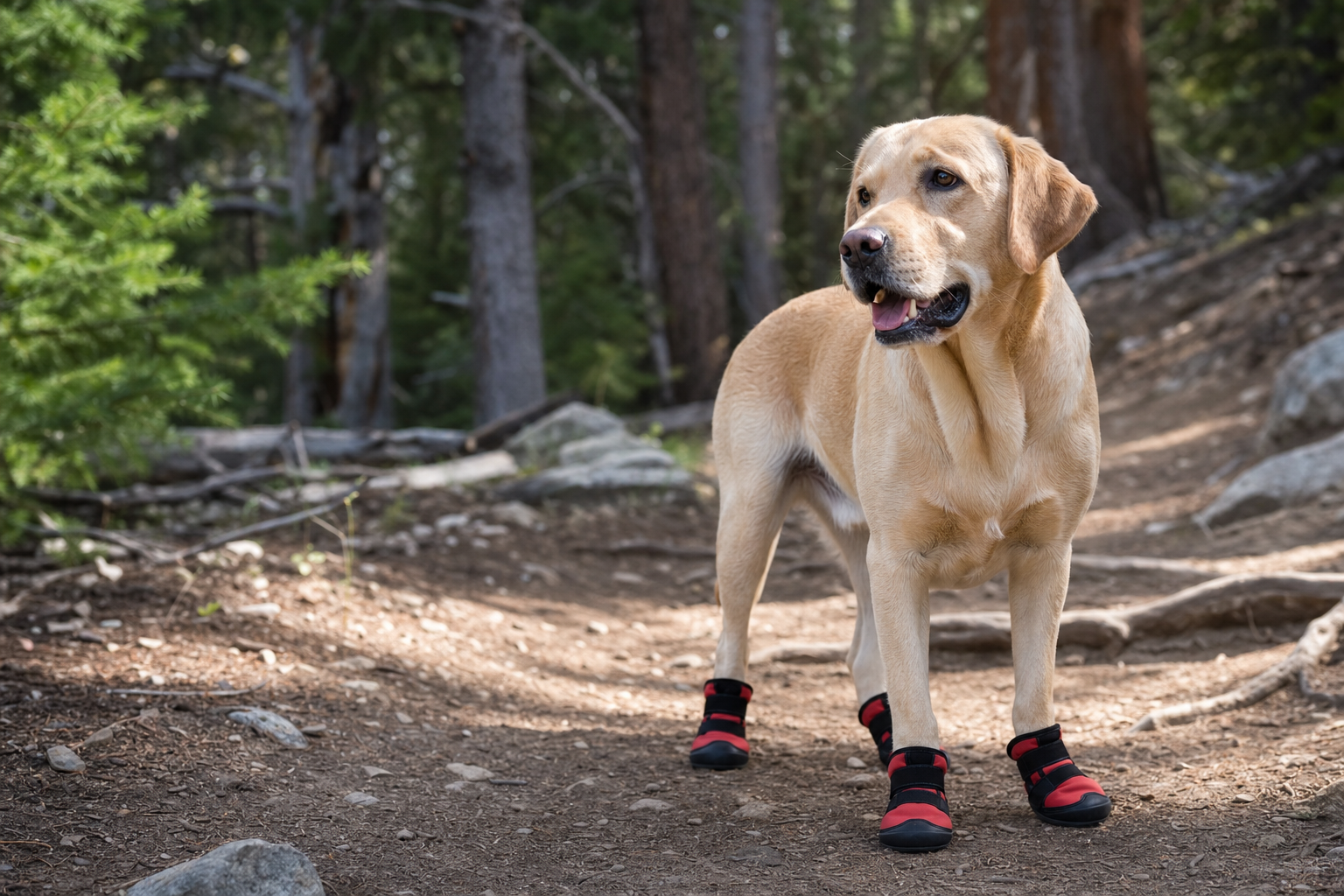
Ultra Paws Durable Boots
Best for: Occasional walks and easy trail, on non-abrasive surfaces
Ultra Paws describes the Durable line as a light duty, water-resistant boot with a thermoplastic sole and adjustable straps, sold as a set of four. The brand’s own site was unreachable when we checked, so we have left out size counts and any figure we could not read from a manufacturer source.
What users consistently love:
– Low cost per boot, and they come four to a set rather than two
– Water-resistant nylon sheds mud and wet grass, though the brand does not call them waterproof
– Reasonable pricing makes replacement less painful when wear occurs
Trade-offs: The thermoplastic sole lacks the grip of a Vibram outsole on technical terrain, and Ultra Paws itself positions this line for light use on non-abrasive surfaces rather than for rough trail. Some owners report the straps loosening on long hikes.
A reasonable pick for occasional walks and easy trail on soft ground. If your usual terrain is granite, scree, or sharp rock, the manufacturer’s own light-duty positioning is the honest signal to size up to a technical boot instead. Ultra Paws Durable Boots
Canada Pooch Hot Pavement Boots: Flexible Champion (check current price on Amazon)

Canada Pooch Hot Pavement Boots
Best for: Hot pavement and summer walking, and dogs that resist narrow boot openings
Canada Pooch specifies a 100% polyester upper with mesh layers, rubber grip soles, and an ultra-wide opening closed by adjustable toggles and velcro straps. They are sold in packs of four. The manufacturer gives no temperature rating for the boot itself; the figures on their page describe how hot pavement gets, noting that a 75°F day can put pavement at 125°F or higher.
What users consistently love:
– The ultra-wide opening is the most commonly praised feature for dogs that resist boots
– Purpose-built for hot pavement, which is the surface most likely to burn pads
– Drainage holes in the sole let water out, so they are usable around streams
Trade-offs: The polyester and mesh upper offers less protection against sharp rocks than a rigid boot. Canada Pooch publishes no service-life figure and we have not measured one.
These are built for hot pavement and summer walking. Choose a rigid boot with a lugged outsole for technical rocky terrain. Canada Pooch Hot Pavement Boots
Kurgo Blaze Cross: withdrawn, Kurgo no longer sells it
Retraction, for anyone who bought on our earlier recommendation: we ranked the Kurgo Blaze Cross here as an all-weather mid-range pick. Kurgo has discontinued it.
We checked Kurgo’s own site rather than a retailer listing. Kurgo’s dog-boots category page now contains exactly one product, the Blaze Dog Socks, and the word “Blaze Cross” appears nowhere on it. Kurgo’s own description of those socks still reads that they are “designed to improve the fit and comfort of Kurgo’s Blaze Dog Shoes”, which is the tell: the socks outlived the shoes they were made for.
Retailers including Amazon, Chewy and PetSmart still list the Blaze Cross, and a UK Kurgo storefront still carries a spec sheet for it. Remaining retail stock is not the same as a current product, and once that stock clears there is no replacement pair and no size exchange. We have removed the affiliate link.
Two specification errors in that entry are worth naming, because they were invented rather than misread. We credited it with “360° reflective details” and “a proprietary rubber compound with aggressive tread patterns”. Kurgo describes reflective trim, not 360-degree reflectivity, and publishes no outsole compound and no tread specification at all. The durability comparison we built on top of the compound claim therefore had nothing under it.
If you want the all-weather slot filled, the Ruffwear Summit Trex above is the boot with a published all-season use range that you can still buy new.
Non-stop Dogwear Protector Bootie: Cut Protection Specialist (check current price on Amazon)
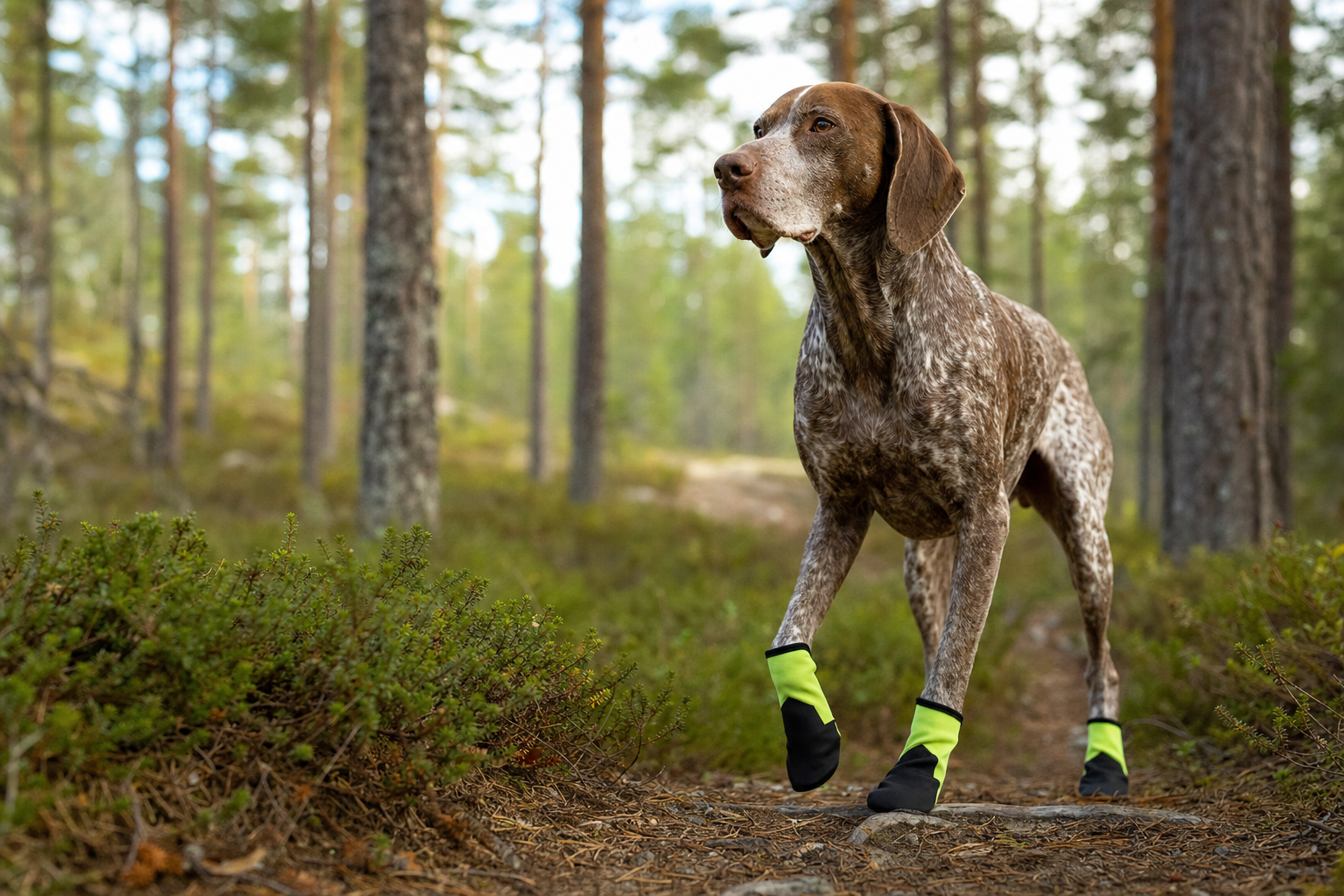
Non-stop Dogwear Protector
Best for: Sharp, abrasive ground where cut resistance matters most
Non-stop Dogwear specifies a Level 5 anti-cut fabric dipped in nitrile rubber, with a stated composition of 40% polythene, 15% nylon, 10% polyester, 10% fiberglass, 5% spandex and 20% nitrile rubber. The brand designs it for mushing and hiking. It comes in packs of four across seven sizes.
What users consistently love:
– Level 5 anti-cut fabric is the highest cut-resistance rating claimed by any boot here
– The nitrile rubber dip adds water and solvent resistance
– Norwegian brand with a seven-size range and four booties per pack
Trade-offs: The flexible construction has no rigid sole plate, so it protects against cuts and abrasion rather than against blunt impact on rock. Priced in Norwegian kroner on the brand’s own store, and US availability through retailers can be patchy.
Worth considering where the hazard is sharp ground rather than heavy impact. Our earlier version of this guide described these as a light-duty bootie, which the manufacturer’s own cut-resistance specification contradicts. Non-stop Dogwear Protector
Qumy Dog Boots: Budget Champion (check current price on Amazon)
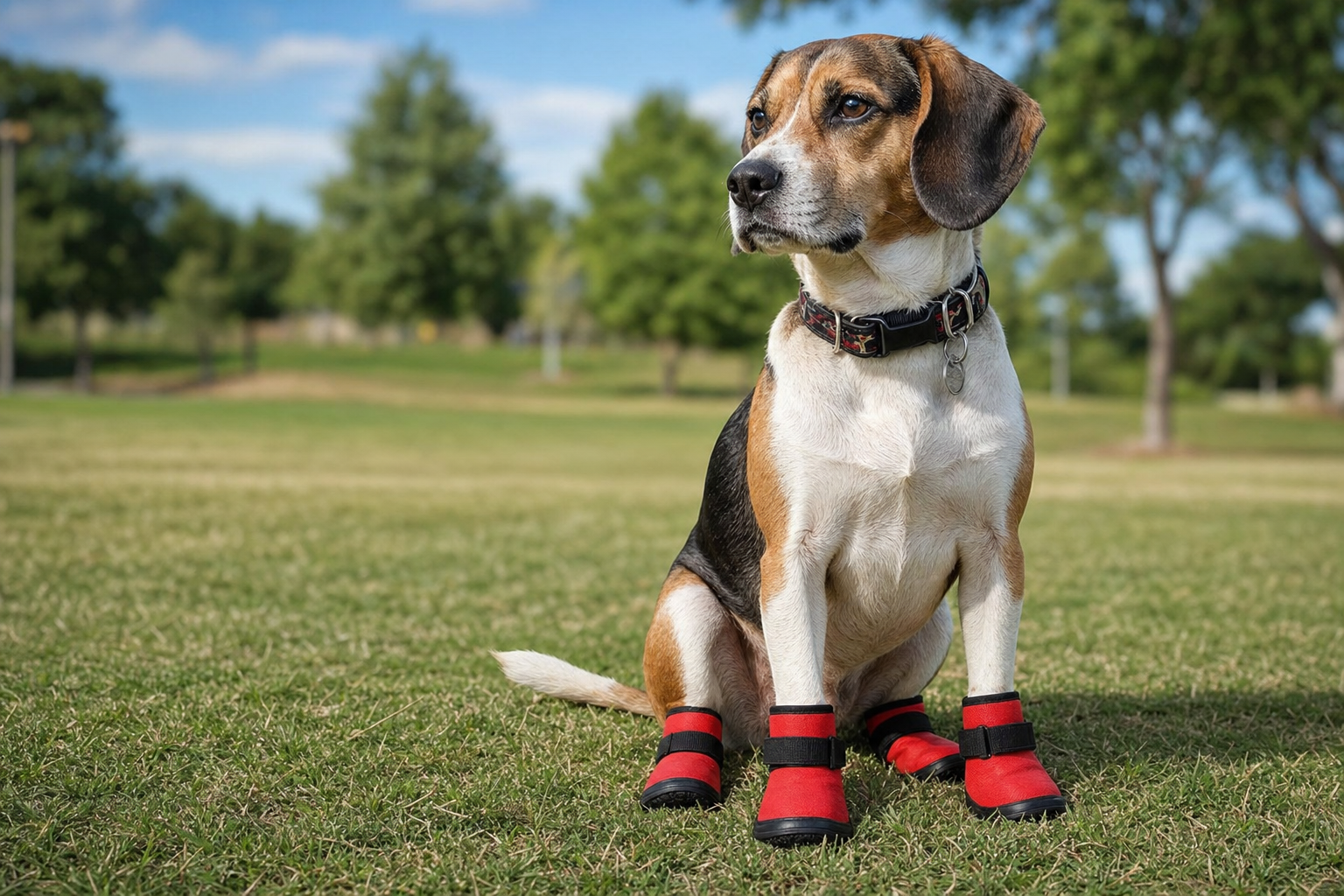
Qumy Dog Boots
Best for: First-time boot buyers or backup pairs
Basic construction with nonslip rubber soles and adjustable straps, in a range of colors and sizes. Qumy has no manufacturer product page we could reach, so we have not repeated any specification we could not source.
What users consistently love:
– Unbeatable price point for trying out boot concepts
– Value is the dominant theme in positive owner reviews
– Wide size range and color options
Trade-offs: No published material specification, and no manufacturer service-life figure. Budget boots of this construction are widely reported to wear quickly on abrasive rock.
Perfect for testing whether your dog will accept boots before investing in premium options, or as backup pairs for occasional use. Qumy Dog Boots
Head-to-Head Comparison: Which Boot for Your Hiking Style?
Rocky/Technical Trails
Winner: Ruffwear Grip Trex
The Vibram sole provides superior grip and puncture resistance essential for scrambling over sharp rocks. Users consistently report these handling technical terrain better than alternatives.
Hot Pavement and Summer Hiking
Winner: Canada Pooch Hot Pavement Boots
These are the only boots here that Canada Pooch builds specifically for hot pavement, and the mesh layers and sole drainage holes suit summer conditions.
Multi-Season Use
Winner: Ruffwear Summit Trex
Ruffwear lists it for hot pavement, rough surfaces, ice, rain, snow, and snowmelt chemicals, which is the widest published use range of the boots here, and it comes in nine paw widths for hiking adventures.
Casual Walks and Easy Ground
Winner: Ultra Paws Durable
The cheapest way to cover four paws, and Ultra Paws sells the Durable line as a light duty boot, which matches this use. Do not carry it onto abrasive rock.
Comparison Table: Manufacturer-Published Specifications
Every figure below comes from the brand’s own product page. Where a brand does not publish a figure we have written “not published” rather than estimate it. None of these manufacturers publish a per-boot weight, so there is no weight column.
| Boot Model | Best For | Sole (per manufacturer) | Upper (per manufacturer) | Fit range | Boots per pack |
|---|---|---|---|---|---|
| Ruffwear Grip Trex | Technical trails | Non-marking Vibram, lug design | 100% polyester air mesh | Eight widths, 1.50″–3.25″ | 2 |
| Ruffwear Summit Trex | All-season use | Non-marking rubber | 150D polyester, DWR + PU | Nine widths, 1.50″–3.25″ | 4 (two pairs) |
| Ultra Paws Durable | Light duty, easy ground | Thermoplastic | Water-resistant nylon | Not published on a reachable page | 4 |
| Canada Pooch Hot Pavement | Hot pavement | Rubber grip, drainage holes | 100% polyester with mesh layers | Sizes 1–6 | 4 |
| Non-stop Protector Bootie | Cut protection | Level 5 anti-cut, nitrile dipped | Same anti-cut fabric | Seven sizes | 4 |
| Qumy | First-time users | Nonslip rubber | Not published | Not published | 4 |
Dog Boot Buyer’s Guide for Hikers
Sizing: Why Most Hikers Get This Wrong
Proper sizing makes the difference between boots that stay secure and ones that slip off mid-hike. Based on user feedback analysis, most sizing failures happen because buyers measure only paw length, ignoring width and shape variations.
Key measurement points:
– Paw width at widest point (usually across the toes)
– Length from back of paw pad to longest toenail
– Consider paw shape (round vs. oval affects fit significantly)
Getting proper measurements is crucial for boot success. See our detailed guide on how to measure dog paws for boots for step-by-step instructions and common mistakes to avoid.
Materials That Matter: Vibram vs. Thermoplastic vs. Mesh
Vibram rubber (Ruffwear Grip Trex): a lugged outsole compound also used in human hiking boots. Note that only the Grip Trex uses Vibram; Ruffwear specifies a plain non-marking rubber outsole on the Summit Trex.
Thermoplastic (Ultra Paws): a firm budget sole material. Ultra Paws calls the upper water-resistant, not waterproof, and positions the line as light duty.
Mesh and fabric (Canada Pooch): more flexible and more breathable, but a mesh upper is inherently less abrasion-resistant than a coated one. Best for hot weather and smoother ground.
Traction Patterns: What Works on Different Terrain
Tread pattern affects grip, though only Ruffwear publishes an outsole specification detailed enough to compare:
- Deep lugs: Essential for mud and loose dirt (Ruffwear models excel here)
- Multi-directional patterns: Better for rocky scrambles (Vibram compound advantage)
- Smooth patterns: Adequate for groomed trails but poor on technical terrain
When to Skip Boots Entirely
Based on veterinary input and user experiences, boots aren’t always necessary:
- Dogs with thick natural paw pads on moderate terrain
- Short hikes (under 2 miles) on non-abrasive surfaces
- Well-conditioned dogs on familiar trail types
- Extremely hot weather where boots might cause overheating
Common Problems and Solutions
“My Dog’s Boots Keep Coming Off”
This is the single most common complaint in dog boot reviews across every price point. We have no review-rate data to quantify it by brand. Solutions owners report working:
- The maker’s own between-size rule beats guessing. Ruffwear, for one, says to size down
- Pre-hike conditioning with short walks improves acceptance
- Strap adjustment should be snug but not tight enough to restrict circulation
- Sock addition underneath can improve fit for between-size paws
“Are These Worth the Premium Price?”
No manufacturer here publishes an expected service life, and we have not run durability testing, so we cannot give you months-of-use figures. What the specifications do support:
- Only the Grip Trex has a published Vibram outsole, the same compound class used in human hiking boots
- Only the Non-stop Protector Bootie has a published cut-resistance rating
- The budget boots either publish no material specification or are positioned by the brand for light duty
If your terrain is abrasive rock, buy for the published outsole and cut resistance rather than for a durability claim nobody has measured.
“My Dog Won’t Walk in Boots”
Initial resistance is common and expected. Conditioning strategies owners report working:
- Start indoors with 5-10 minute sessions
- High-value treats during initial wearing
- Gradual progression from indoor to yard to short walks
- Individual paw introduction rather than all four boots immediately
Pace this to your own dog rather than to a session count. Some accept boots in a day; others need weeks of short, rewarded sessions.
Frequently Asked Questions
How much should I expect to spend on quality dog hiking boots?
Prices move constantly, so check the current listing. The more useful question is what you are buying: the premium boots here publish an outsole compound and a fit range in eighth-inch increments, while the budget boots generally publish neither.
How long do Ruffwear Grip Trex boots last?
Ruffwear publishes no expected service life and we have not tested one, so any month figure you see is someone’s estimate rather than a measurement. Longevity is the most common theme in positive owner reviews, and the published Vibram outsole is a durable compound class, but that is the honest limit of what can be said.
Are waterproof dog boots necessary for hiking?
Waterproofing matters primarily for stream crossings, muddy conditions, or winter hiking. For dry trail hiking, breathable non-waterproof boots like the standard Grip Trex often provide better comfort through ventilation.
What size dog boots should I buy if my dog is between sizes?
Follow the manufacturer’s own between-size guidance, because it differs by brand. Ruffwear states plainly that if a dog measures between sizes you should size down, and sells its boots in sets of two precisely because many dogs need a different size front and rear. Measure every paw before ordering rather than assuming all four match.
Do dogs need time to get used to wearing boots on hikes?
Yes. Start with short indoor sessions using treats, then progress to yard time and short walks before attempting a full hike. How many sessions this takes varies widely between dogs, so work to your dog’s comfort rather than to a target number.
Can I use hot pavement boots for regular hiking trails?
The Canada Pooch hot pavement boots have a polyester and mesh upper with a rubber grip sole, which suits pavement and easy trail. For sharp rock, choose a boot with a published lugged outsole or a published cut-resistance rating.
Why do some hikers prefer flexible boots over rigid ones?
A flexible upper with a wide opening is easier to get on and tolerates irregular paw shapes better. The trade-off is less structure over the top of the paw. Choose based on terrain difficulty and on whether your dog resists having boots fitted.
Are there any dog breeds that shouldn’t wear hiking boots?
Dogs with circulation issues, extreme paw sensitivity, or those prone to overheating may not be good boot candidates. Consult your veterinarian for breed-specific concerns, particularly for brachycephalic breeds in hot weather.
Our Final Pick for Weekend Hikers
If we could only recommend one boot for weekend hikers, it would be the Ruffwear Grip Trex at current retail. It is the only boot here with a published Vibram lugged outsole, and its eight paw widths from 1.50″ to 3.25″ give the best chance of a correct fit, which is the single thing owners most often get wrong.
For budget-conscious hikers or those testing boot acceptance, the Ultra Paws Durable Boots are the cheaper route, with the caveat that Ultra Paws itself positions the Durable line as light duty for non-abrasive surfaces. Take that at face value when picking terrain.
The decision comes down to terrain rather than to frequency: abrasive rock rewards a published outsole and cut-resistant fabric, while soft trail does not. Either way, protecting your dog’s paws enhances the hiking experience for both of you.
For more boot options covering urban walking, snow protection, and other specialized uses, explore our complete best dog boots guide covering every category and use case.