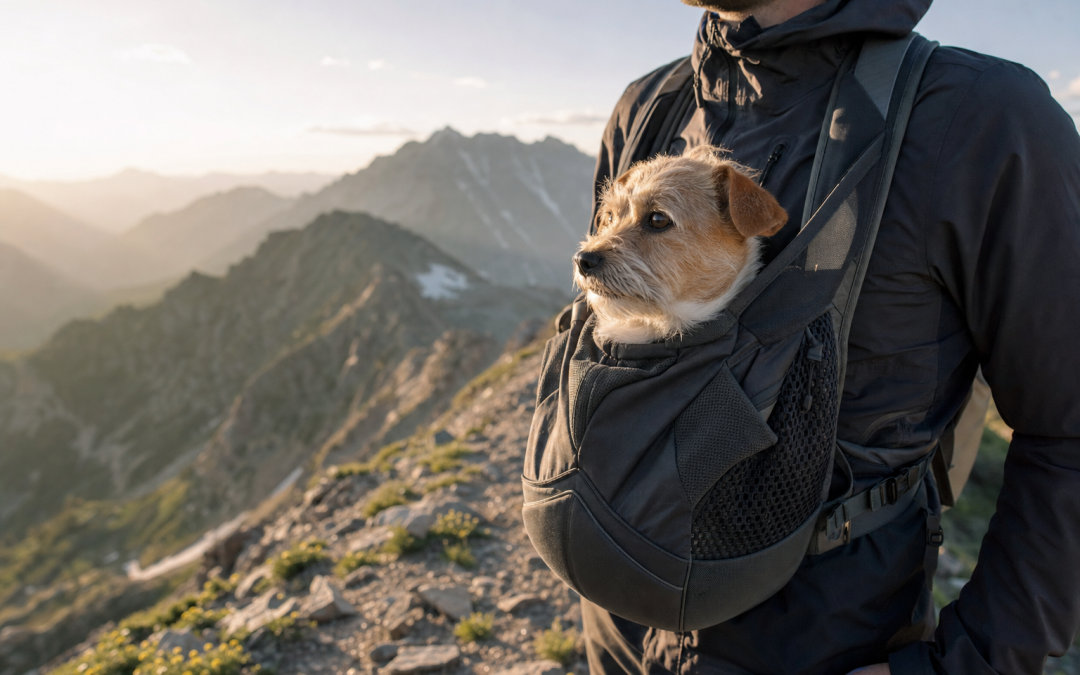
Small dogs love trails as much as big dogs, but their short legs and lower stamina mean they often need help covering distance. A good dog-carrying backpack lets you bring a small dog on longer hikes, harder terrain, or distances they could not physically manage. Below are five options, with the specifications each manufacturer actually publishes and a note where a manufacturer publishes nothing.
Disclosure: This article contains affiliate links. If you buy through our links, we earn a small commission at no extra cost to you. We only recommend gear that meets our research criteria.
How to read this guide: we do not test products. Everything below is either taken from the manufacturer’s own published specification, attributed to what owners report, or flagged as unpublished. Carrier weight limits and sizing decide whether a bag is safe for your dog, so measure your dog and check the manufacturer’s current size chart before you buy.
Why most “dog backpacks” fail on trails
The market is full of dog carrier bags marketed as travel-friendly, but most are designed for short urban trips: subway commutes, vet visits, brief errands. Trail use is a different problem. A trail-rated carrier needs to handle hours of continuous wear, weight that can shift unpredictably as a dog moves, weather, sweat, and the realistic possibility of your dog getting in and out multiple times per hike.
Four things are worth checking before you buy:
- Padded shoulder straps, and a hip belt if the carrier offers one: weight transfer matters as soon as hikes run past an hour
- Ventilation that works in summer heat: mesh panels that allow airflow, not just visual “windows”
- Internal safety tether: stops the dog from leaping out if startled by trail noise or wildlife
- Fabric suited to abrasion: ripstop or similar, rather than lightweight nylon that tears on brush
Quick comparison
| Pick | Best for | How the maker sizes it | Style |
|---|---|---|---|
| K9 Sport Sack Air | Best overall | Four sizes by collar-to-tail length, 9 to 22 in | Backpack style |
| Kurgo G-Train K9 Pack | Check availability first | No longer listed by Kurgo | Backpack style |
| PetAmi Deluxe Pet Carrier Backpack | Best budget | Maker specs not published on an accessible page | Backpack style |
| Ruffwear Front Range Day Pack | Best for the dog to carry | Four sizes by girth, 17 to 42 in | Dog-worn day pack |
| Lollimeow Pet Carrier Backpack | Bubble-window option | Maker specs not published on an accessible page | Bubble window design |
1. K9 Sport Sack Air: Best overall
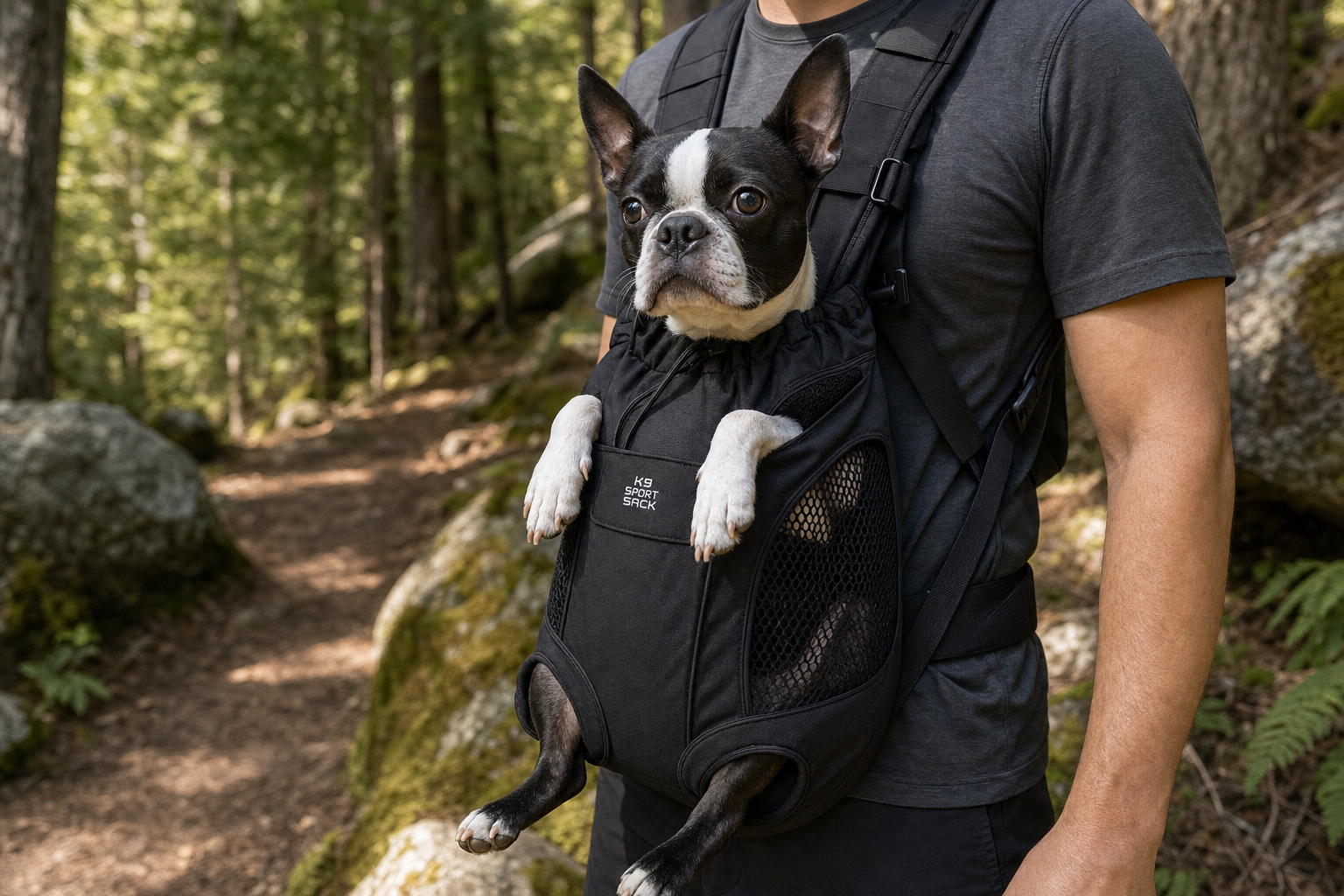
The K9 Sport Sack Air, sold as the Air 2 by some retailers, is the most established product in this category. The manufacturer describes it as “a durable and breathable mid-level backpack perfect for small to medium size dogs” and recommends it for “intermediate walks, hikes, public transportation, and bike rides”.
Manufacturer-listed features are ventilated side panels, a single side pocket for hydration, a wide base to accommodate the dog and its tail, updated side mesh, support straps that encompass the dog, an updated shoulder strap design, and an adjustable collar enclosure.
Sizing is the important part. K9 Sport Sack sizes the Air by the dog’s collar-to-tail length, not by weight, and offers four sizes: X-Small covering 9 to 12 inches, Small 13 to 16 inches, Medium 17 to 19 inches and Large 20 to 22 inches. The manufacturer does not publish a maximum dog weight for this model on its product page, so do not buy on weight alone. Measure your dog from collar to base of tail and match that to the current size chart.
For nervous dogs on their first carrier-hike, see our dog life jacket guide for added security if your route crosses water.
Pros: Established design, ventilated side panels, sizing based on actual body measurement rather than a weight guess
Cons: Premium pricing, requires measuring your dog, no published weight ceiling to check against
2. Kurgo G-Train K9 Pack: check availability before you plan around it
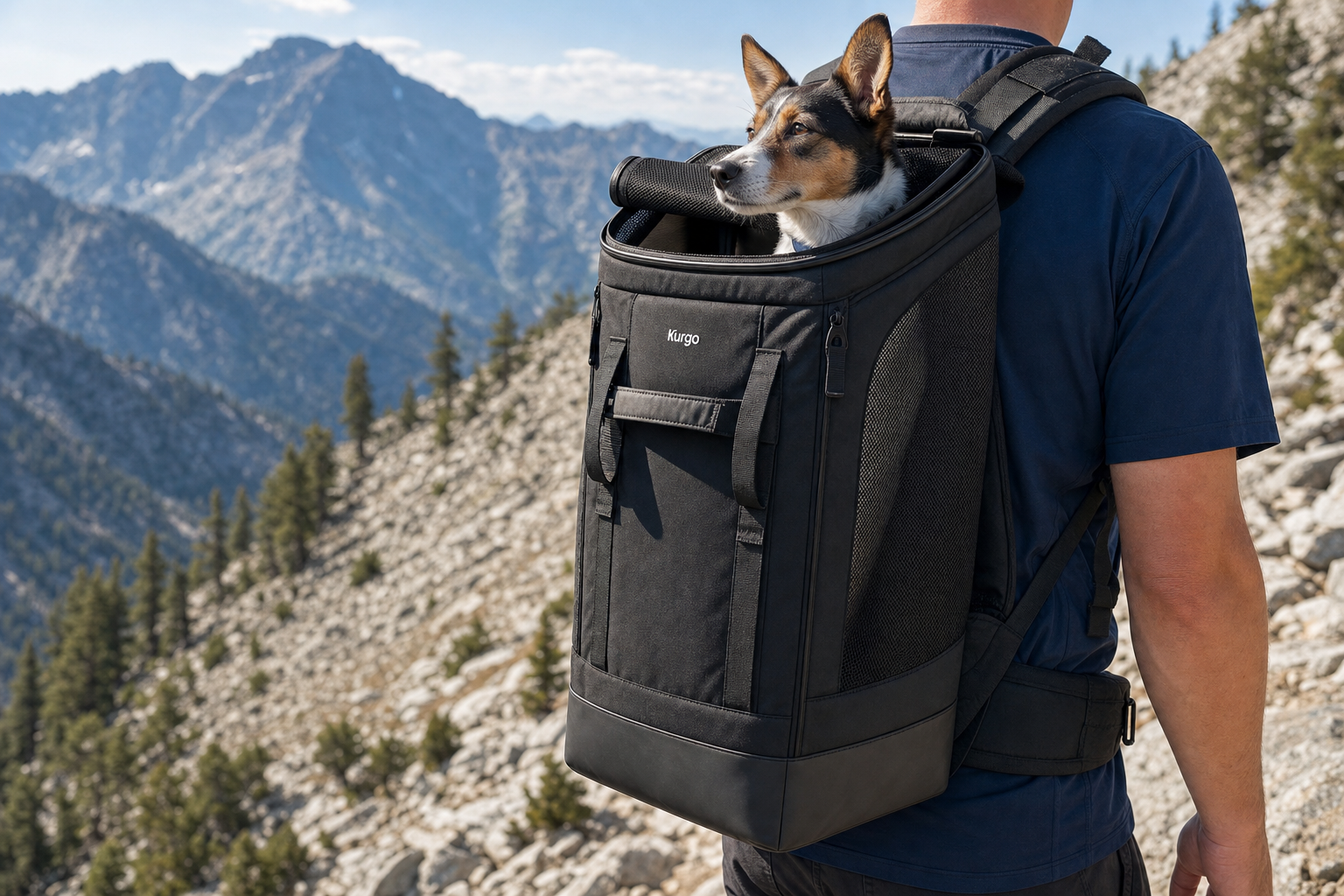
Kurgo makes gear aimed at genuine outdoor use rather than light commuting, and the G-Train has a long-standing reputation among hikers who carry small dogs.
One caveat before you shop. At the time of writing, the G-Train K9 Pack no longer appears on Kurgo’s own website, and we could not retrieve a current manufacturer specification for it. Any weight limit, capacity or material figure you see quoted for this pack in third-party listings should be checked against Kurgo directly before you rely on it. If you find one for sale, confirm the current specification and warranty position with the seller.
Because we cannot source manufacturer figures for it, we are not quoting a weight ceiling or fabric specification here. If you want a carrier you can verify today, the K9 Sport Sack Air above publishes its sizing openly.
3. PetAmi Deluxe Pet Carrier Backpack: Best budget
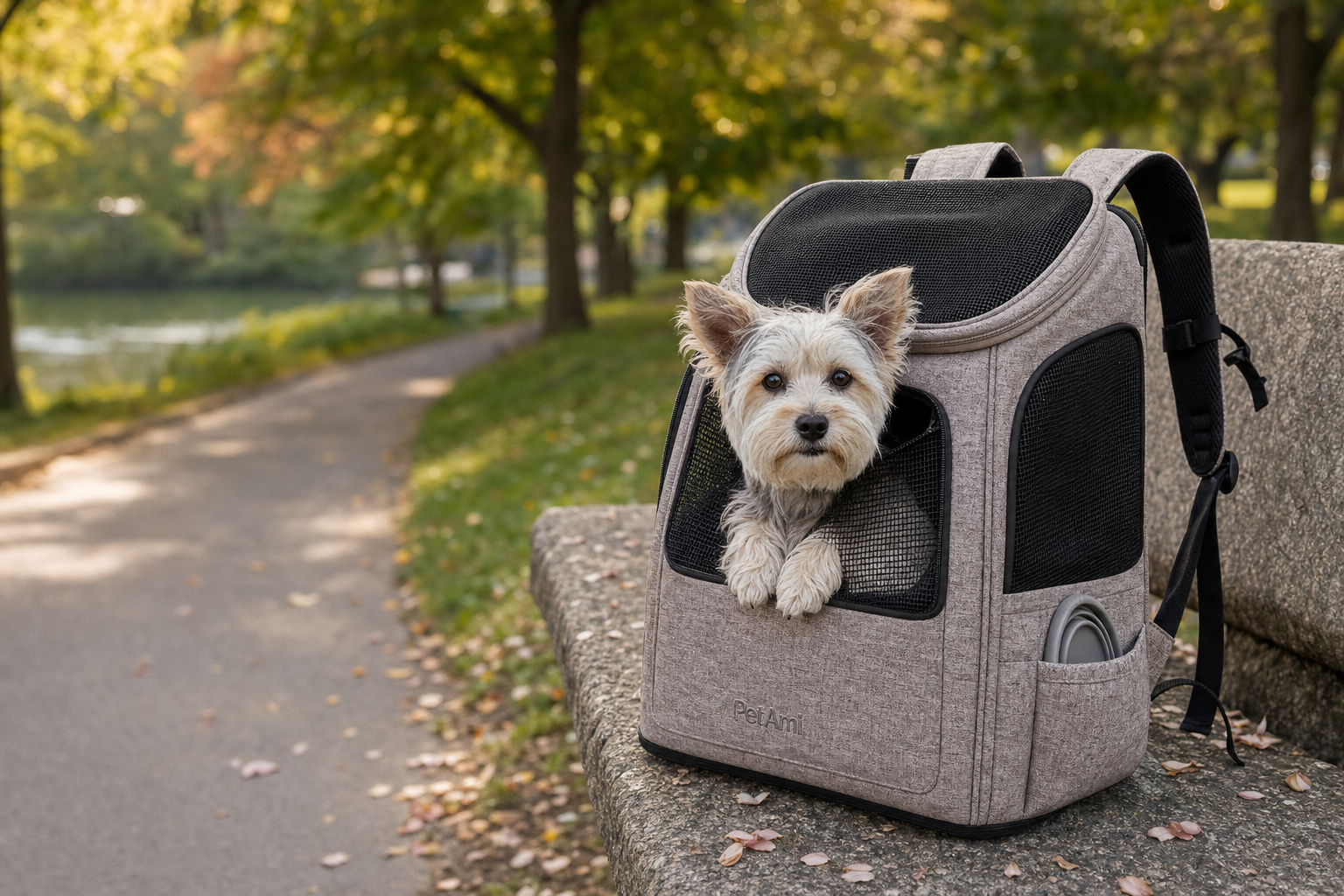
The PetAmi backpack is the budget option in this group and a common first carrier. Owners generally report it suits shorter outings rather than repeated all-day use, and that the construction is lighter than the premium picks.
We were not able to reach a manufacturer specification page for this product, so we are not quoting a weight limit, capacity or fabric specification. Read the weight limit and size chart on the listing you are buying from, and treat the stated maximum as the ceiling rather than the target.
For a first carrier purchase, or to find out whether your dog will tolerate carrier wear at all before spending more, it is a low-risk starting point.
Pros: Lowest cost of the group, widely available, common entry point
Cons: Lighter construction than the premium picks, manufacturer specifications hard to verify independently
4. Ruffwear Front Range Day Pack: Best for the dog to carry
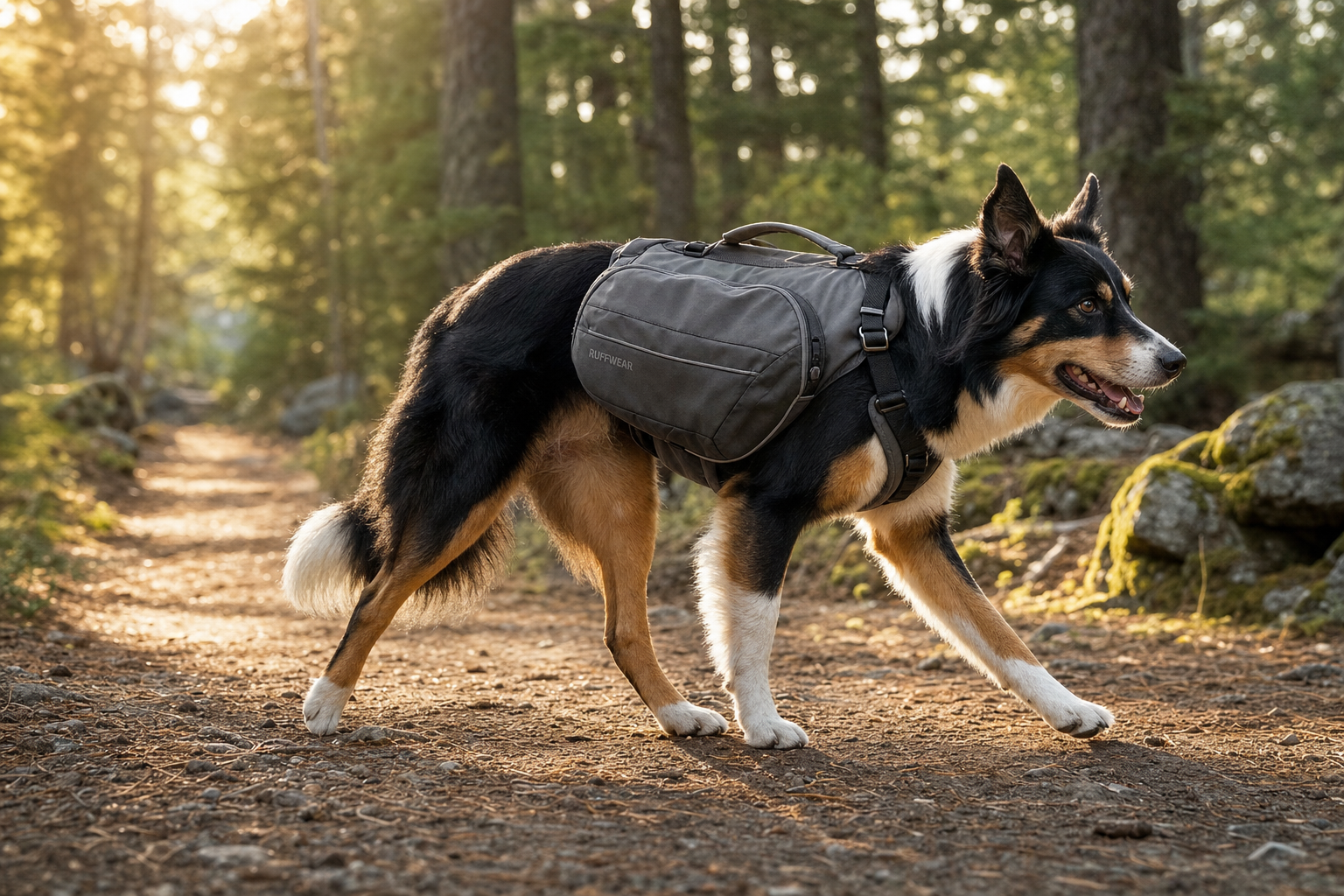
Some small dogs do not need to be carried, they need to carry. A dog-worn day pack lets a fit adult dog haul their own water, poop bags and small items.
Ruffwear sizes the Front Range Day Pack by girth, not by dog weight, in four sizes: XSmall 17 to 22 inches, Small 22 to 27 inches, Medium 27 to 32 inches and Large/XLarge 32 to 42 inches. Cargo capacity runs 4.5 litres on the XSmall, 8 litres on the Small, 10.5 litres on the Medium and 18.5 litres on the Large/XLarge. For small dogs the XSmall and Small are the relevant sizes. Ruffwear does not publish a recommended dog weight range for the pack, so measure girth rather than guessing from weight.
On how much a dog should carry, Ruffwear publishes no load guidance for this pack. Load is a question for your vet, who can weigh your dog’s age, build and condition. Start with empty bags, let your dog adjust to the feel, and add weight gradually rather than working to a number you read online.
Pros: Lets a fit dog contribute, girth-based sizing, four sizes spanning small through large dogs
Cons: Premium price, not for dogs who should not carry weight (check with your vet for young, senior or structurally compromised dogs)
5. Lollimeow Pet Carrier Backpack: the bubble-window option
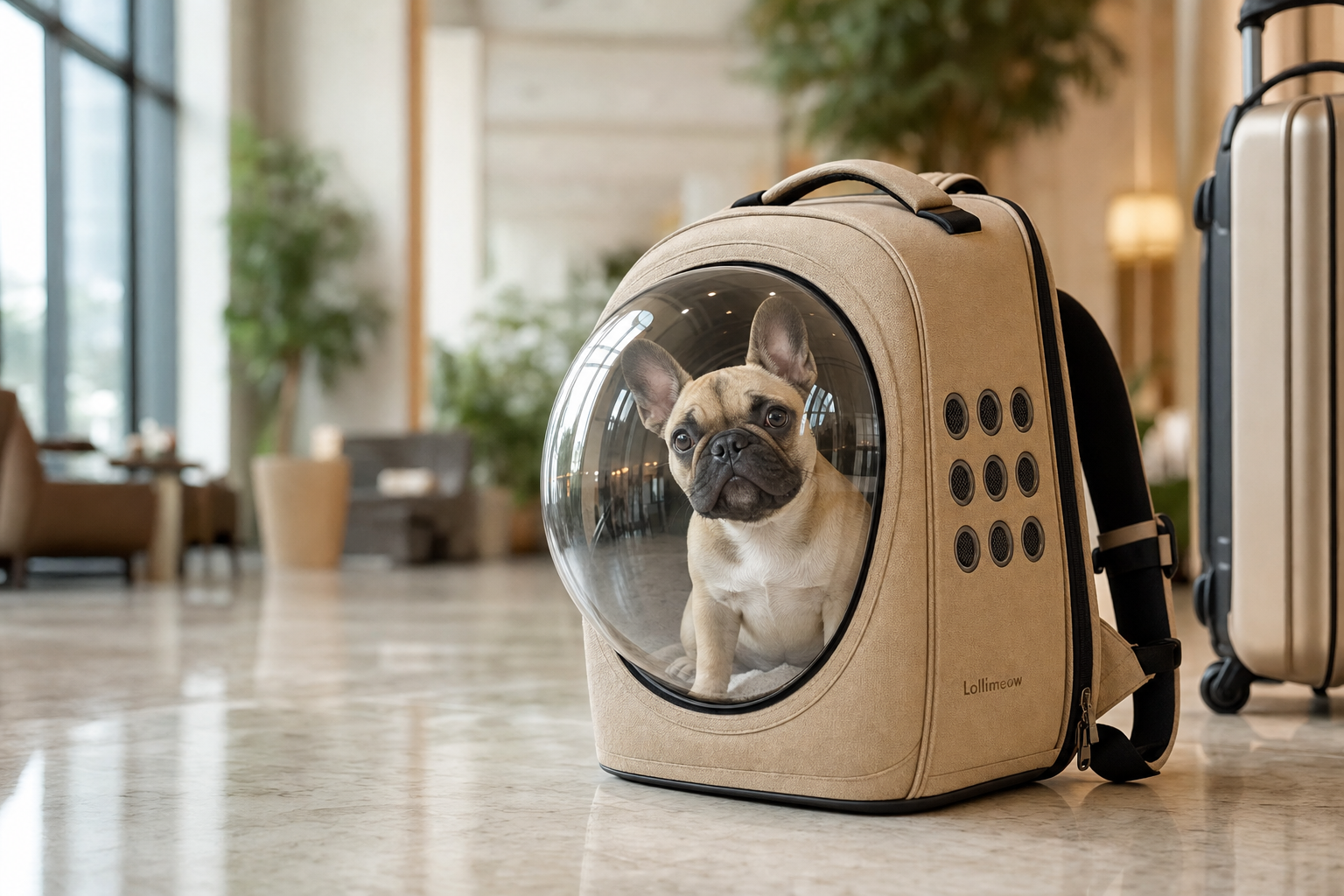
The Lollimeow bubble carrier has a transparent dome instead of a mesh panel on the rear face. Owners of dogs who dislike enclosed mesh carriers often report the extra visibility helps, and the design is usually sold with a swappable mesh panel for warmer days, since a clear dome traps heat.
We were not able to reach a manufacturer specification page for this product, so we are not quoting a weight limit or field of view. Check the weight limit and dimensions on the listing before buying.
The bubble design divides opinion. Some dogs settle into it quickly, others find the enclosed dome worse than open mesh. Try short trips first.
Pros: Bubble window suits some dogs who dislike mesh, usually ships with a swappable mesh panel
Cons: Dome traps heat in summer, polarising design that not all dogs accept, manufacturer specifications hard to verify independently
How to introduce your dog to a carrier backpack
Most carrier failures are not about the bag, they are about the introduction. Dogs need time to associate the carrier with safety, not restraint. A workable progression:
- Days 1-3: Set the carrier open on the floor near your dog’s regular resting area. Put treats and a favourite toy inside. Let the dog go in and out freely.
- Days 4-6: Close the carrier briefly while the dog is inside, then open it. Reward calm behaviour with treats. Increase duration gradually.
- Days 7-10: Carry the dog around the house in the closed carrier for short periods. Move smoothly. Talk in a calm voice.
- Day 11 onwards: First short walk in the carrier outdoors. Choose a quiet area, not a busy trail. Keep the first trip short.
If your dog whines, struggles, or refuses to enter at any stage, drop back a step. Forcing the carrier creates lasting aversion.
Weight, size, and safety limits
Two different limits apply and it is worth keeping them apart.
The carrier’s limit. Whatever maximum the manufacturer publishes is a structural rating for the bag. Two of the five carriers here publish sizing openly, the K9 Sport Sack Air by collar-to-tail length and the Ruffwear pack by girth. For the others, take the figure from the listing you buy from and confirm it with the seller.
Your limit. A bag rated to hold a given weight says nothing about how far you can comfortably carry that weight plus your own gear over uneven ground. Your realistic range depends on your own fitness, the pack’s weight transfer and the terrain. Plan conservatively on the first outing and find out with a short route rather than committing to a long one.
Remember to add the weight of water, leash, treats and basic kit on top of the dog.
What about flying with a dog backpack?
Airline-approved soft carriers are a different product category from trail backpacks. Most trail carriers exceed airline under-seat dimension limits. If you fly often, look for a separate carrier that meets your airline’s published under-seat dimensions and use your trail carrier for ground travel only. Our international flying checklist covers the paperwork side.
FAQ
Is it cruel to carry a dog in a backpack?
No, when done properly. A well-fitted carrier lets small dogs come on outings they could not physically complete otherwise. The problems come from forcing a dog into a carrier they are not conditioned to accept, or from using a carrier that does not fit safely. Both are solvable with proper introduction and the right sizing.
What size dog can fit in a backpack carrier?
It depends entirely on the model, and manufacturers do not size these consistently. Some size by the dog’s collar-to-tail length, some by girth, and some by weight. Measure your dog for the specific carrier you are considering rather than relying on a general weight range. Where a manufacturer does publish a maximum, treat it as a ceiling rather than a target.
Can I use a backpack carrier for a puppy?
Ask your vet first. Puppies have incomplete vaccination protection until their course is finished, and your vet is the one who can say when your puppy can safely be in outdoor environments and for how long. A carrier is not a substitute for a puppy learning to walk on leash on their own.
How long can a dog stay in a backpack carrier?
It varies a great deal between dogs. Some settle and nap, others get restless quickly. Build in regular breaks to let your dog stretch, drink and relieve themselves, and match the schedule to your specific dog’s tolerance rather than a generic figure.
Will my dog be safe if I fall while wearing the carrier?
A carrier with an internal safety tether reduces the chance of the dog being ejected in a fall. The bigger risk is your weight landing on the carrier. For technical terrain such as scrambling, rock-hopping or river crossings, reconsider whether your dog should be in a carrier at all. Carriers suit trail walking and moderate hiking, not technical climbing.
Where to go from here
If you’re putting together small-dog adventure gear, these companion guides will help: