
This post contains affiliate links. If you purchase through these links, we may earn a small commission at no extra cost to you. This helps support our independent research.
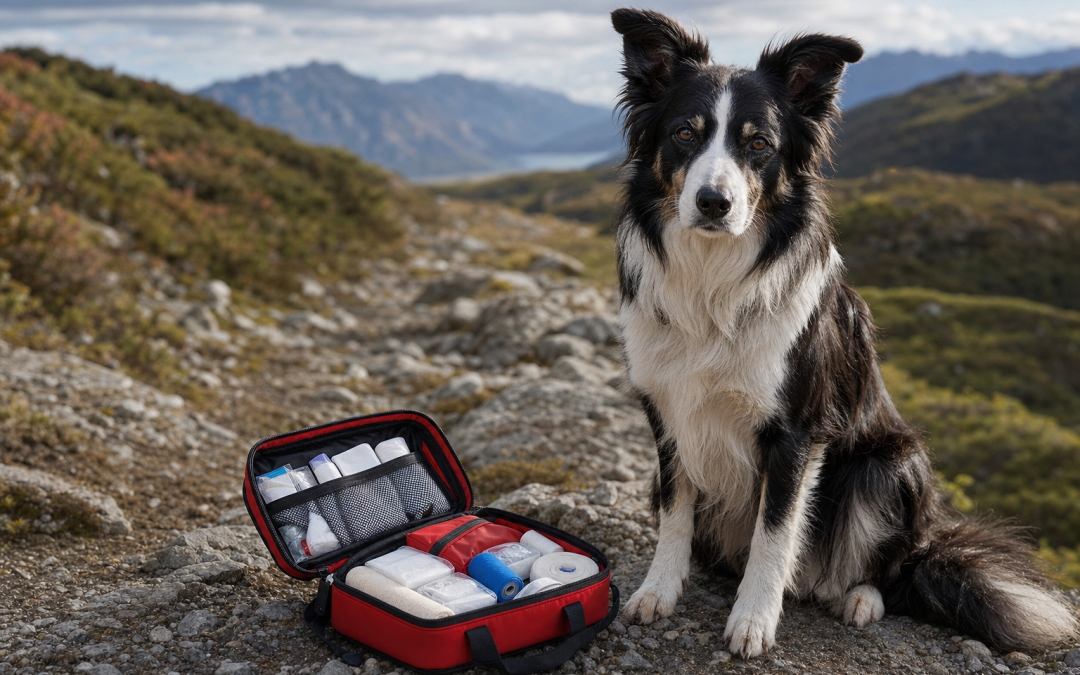
A dog first aid kit for hiking has to do two things: hold the supplies you would actually reach for on a trail, and be light enough that you carry it every time. This guide compares five kits on the specifications their manufacturers publish, and says plainly where a manufacturer publishes nothing.
How to read this guide: we do not test products. Every specification below is either taken from the manufacturer’s own published page and attributed, or flagged as unverified. Where we could not reach a manufacturer specification, we have left the figure out rather than repeat a number from a retail listing. This guide builds on our wider approach to dog trail safety essentials.
A word on scope: a first aid kit stabilises a dog so you can get to a vet. It does not replace veterinary care. Nothing here is veterinary advice, and any treatment decision on the trail should be guided by your own vet’s instructions and, where you can get a signal, a call to them or an emergency clinic.
Disclosure: This article contains affiliate links. If you buy through our links, we earn a small commission at no extra cost to you. We only recommend gear that meets our research criteria.
Quick Picks: Dog First Aid Kits for Weekend Hikers
Widely recommended all-rounder: Adventure Medical Kits Trail Dog Kit – A dog-specific trail kit from an established emergency-medicine brand. See the caveat on published specifications below.
Most contents per kit: Kurgo Dog First Aid Kit – Kurgo publishes a full 50-piece contents list in a soft Oxford 600D case.
Trauma-focused: GunDog Outdoors Field Trauma Aid Kit – Includes a tourniquet, clotting powder and a vet-approved field guide in a 7 x 6 x 6 inch waterproof bag.
How We Compared These Dog First Aid Kits
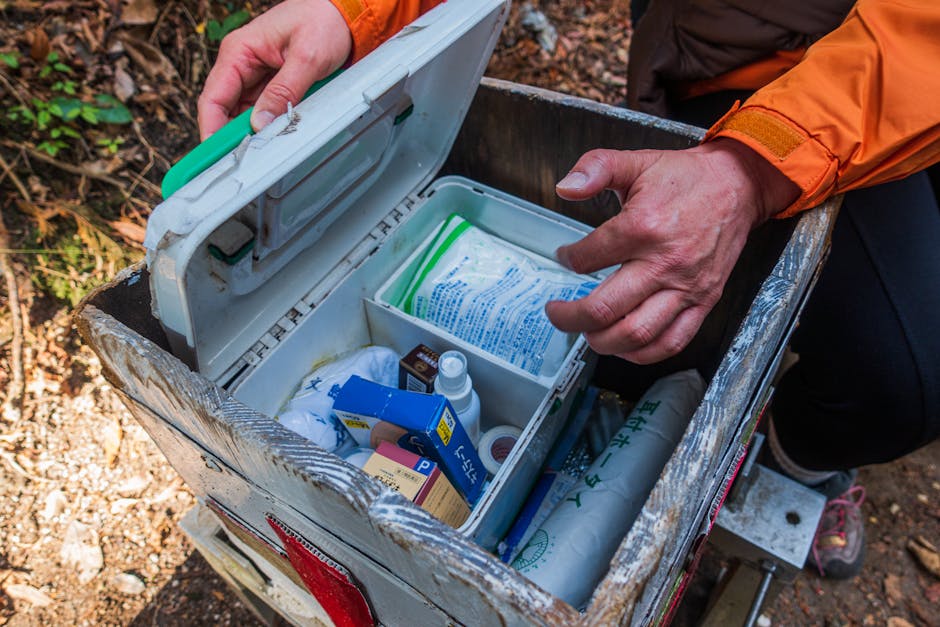
We compared these kits against the manufacturers’ own published specifications, checking each maker’s product page for the contents list, piece count, case type, dimensions and weight. Where a manufacturer’s site was unreachable or did not publish a figure, we say so in that kit’s entry instead of substituting a number from a retail listing.
That approach has a cost worth stating: several kits in this category are sold mainly through marketplaces, and their makers publish little or nothing. For those, the only figures available come from the seller, and sellers sometimes get them wrong. Check the listing you are buying from and treat piece counts as approximate.

Adventure Medical Kits Trail Dog Kit
Best for: Weekend hikers wanting a dog-specific kit from an established first aid brand
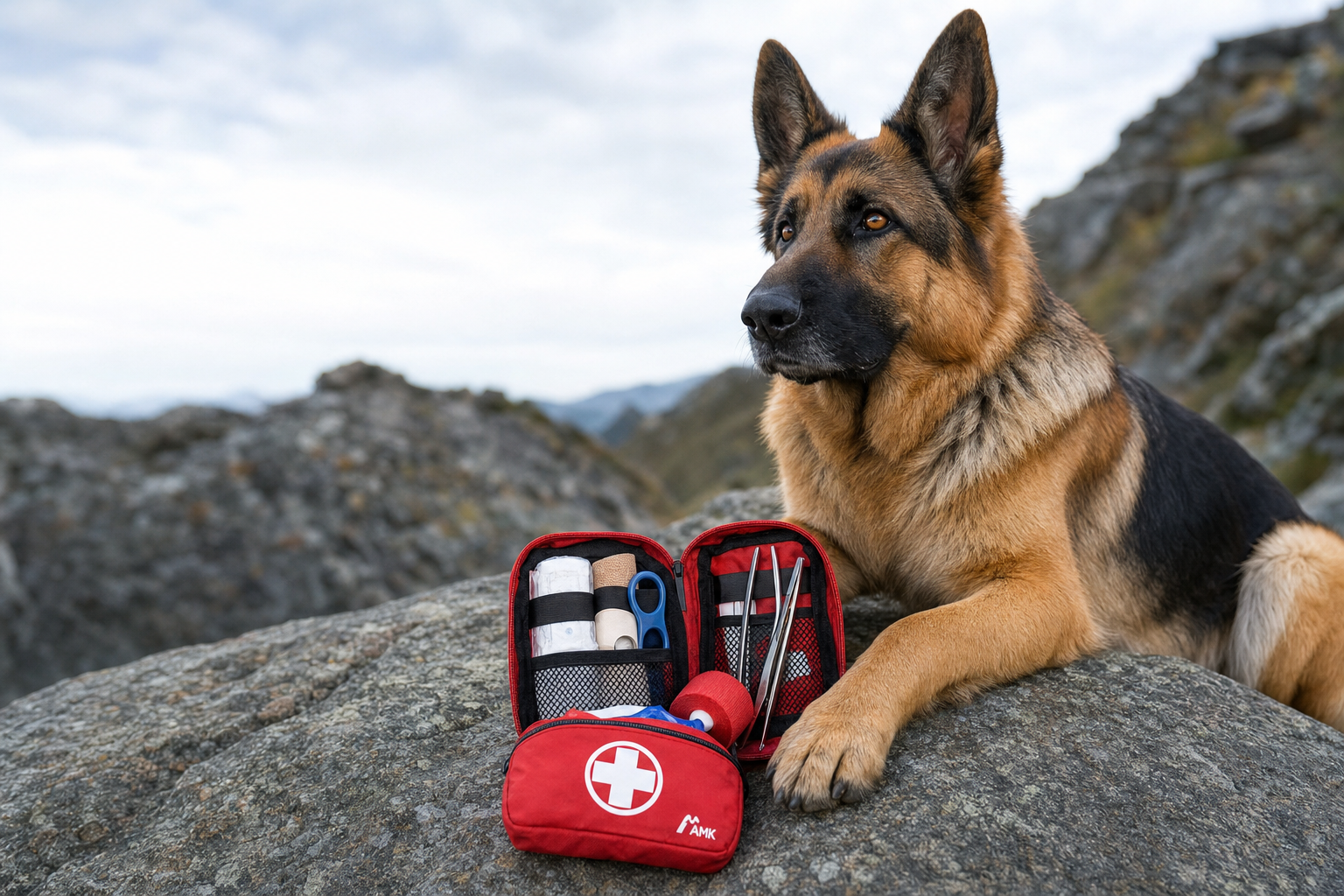
Published specifications: Adventure Medical Kits’ own product pages were not reachable at the time of writing, so we are not quoting a piece count, weight or case dimensions for this kit. Earlier versions of this article carried specific figures that we could not confirm against the manufacturer, and they have been removed. Check the piece count, weight and case type on the listing before you buy.
What owners report: Adventure Medical Kits has a long history in wilderness and emergency first aid, and owner reviews of the Trail Dog kit commonly single out the quality of the self-adhesive wrap and the organisation of the case. Reviews also frequently mention the case keeping contents dry.
Reported drawbacks: It sits above basic pet first aid kits on price. Reviews mention the case taking more pack space than a soft pouch of similar contents, which matters in a tightly packed day pack.
For dogs that join their owners in deeper water, pair any kit with a flotation vest for dogs to reduce drowning risk during creek crossings. Adventure Medical Kits Trail Dog Kit
Kurgo Dog First Aid Kit
Best for: Hikers who want a published, checkable contents list
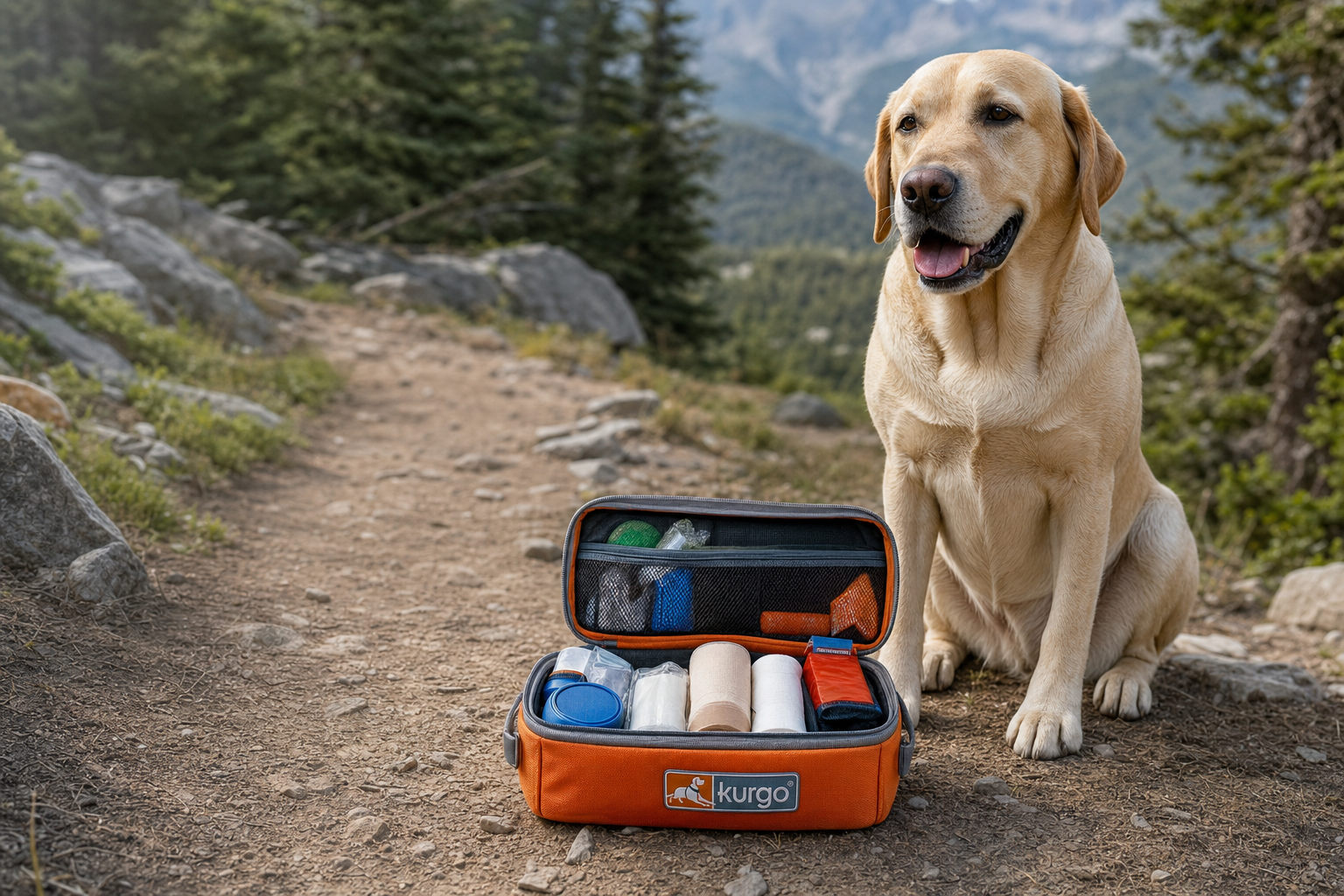
Published specifications: Kurgo lists this as a 50-piece kit in a soft case of “Oxford 600D fabric with twill tape binding for durability”. Kurgo publishes the full contents: parachute cord, first aid guide, sting relief pads, tweezers, tape roll, 2 inch crepe bandage, cotton swabs, tongue depressors, antiseptic towelettes, instant cold pack, disposable rubber gloves, 4×4 inch and 2×2 inch gauze pads, 2 inch gauze roll, 5×9 inch trauma pad, alcohol prep pads, thermal foil emergency blanket, scissors and iodine prep pads. Kurgo does not publish a weight or packed dimensions for the kit.
What owners report: The soft case conforms to pack shape better than a rigid box, which suits a full day pack. Owners commonly praise the wrap and the tweezers.
Reported drawbacks: A soft case offers less crush and moisture protection than a hard case, and owners in sustained rain report needing to pack it inside a dry bag. There is no thermometer in the published contents. Note that the kit does include three separate antiseptic types (towelettes, alcohol prep pads and iodine prep pads), so it is better supplied on wound cleaning than its compact size suggests.
GunDog Outdoors Field Trauma Aid Kit
Best for: Remote hiking and hunting where evacuation takes hours
Published specifications: GunDog Outdoors describes a 7 x 6 x 6 inch waterproof bag designed to clip to a belt or fit a vest or blind bag, made in the USA. The published contents include BleedStop clotting powder, a tourniquet, two sterile gauze bandage rolls, self-adhesive bandage (vet wrap), four gauze sponges, a roll of waterproof medical tape, ten antiseptic wipes, six antiseptic ointment packets, tweezers, trauma shears, forceps, two pairs of latex gloves, a hot pack, a cold pack, sterile saline eye wash, an emergency blanket and a GunDog Outdoors emergency care field guide, with a skin stapler as an option. GunDog Outdoors does not publish a weight for the kit.
What owners report: Reviews single out the trauma components that most pet kits omit, and the field guide.
Reported drawbacks: The trauma focus is aimed at a narrow set of serious injuries, and much of that equipment is gear most weekend hikers will never use. The kit is not small: at 7 x 6 x 6 inches it takes real pack volume. There is also a judgement risk worth naming, that carrying trauma equipment can encourage field treatment in situations that need a vet.
GunDog Outdoors Field Trauma Aid Kit
EVERLIT Pet Medic First Aid Kit
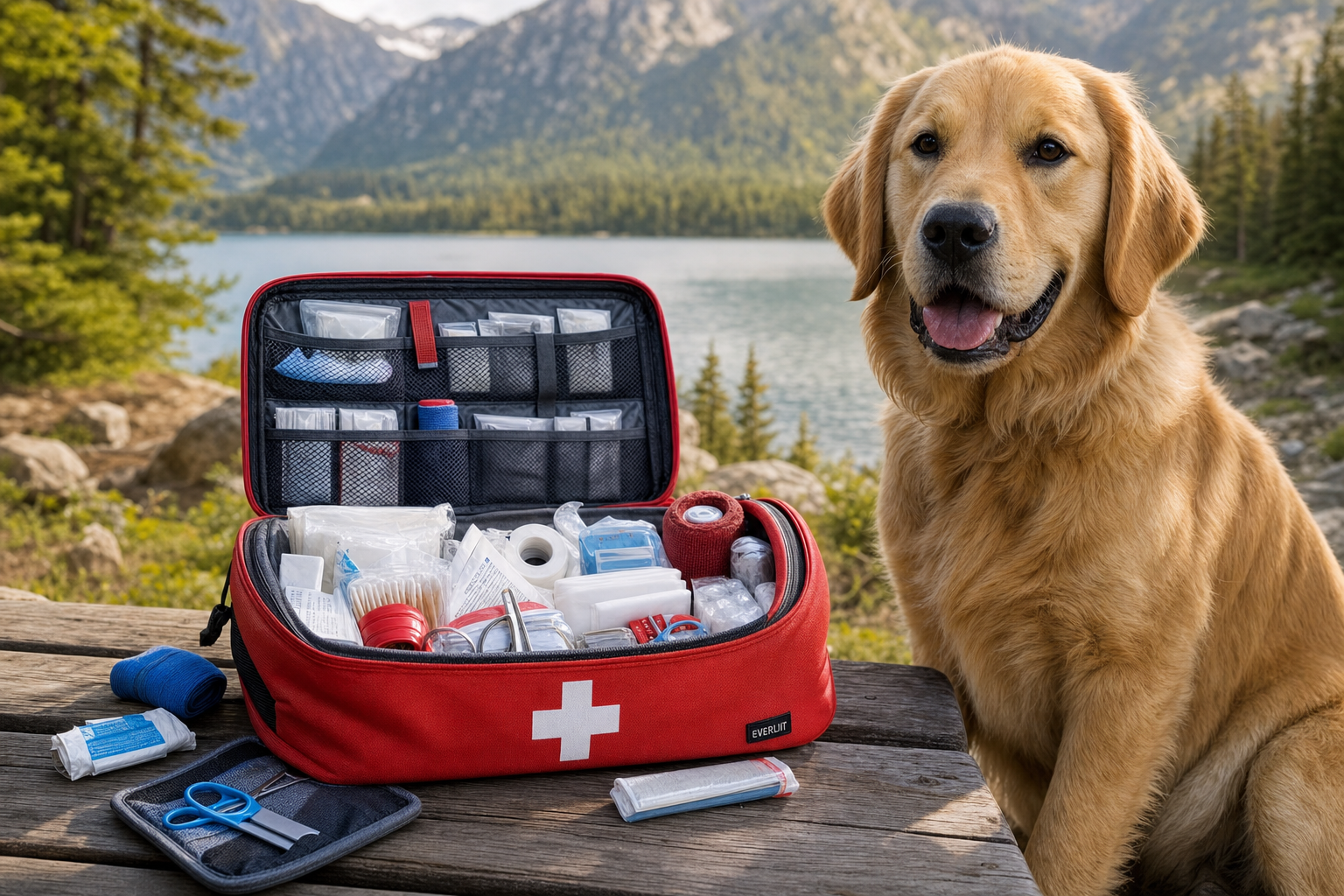
Verify this one before buying. An earlier version of this article listed an “EVERLIT Pet Medic Kit” with a specific piece count, weight and case type. Checking EVERLIT’s own catalogue, we could not find a pet-specific kit listed at all; the products EVERLIT publishes are human trauma and first aid kits. We have therefore removed the specifications we previously carried, because we cannot trace them to the manufacturer.
If you find a pet kit sold under this brand, confirm with the seller what it actually contains before relying on it. If what you want is a large, comprehensive kit for car camping or a base camp rather than the trail, that need is real, but buy it from a listing whose contents you can verify.
Check Current Listings on Amazon
Arca Pet First Aid Kit
Best for: Car camping or home use rather than trail carrying
Published specifications: We could not reach a manufacturer specification page for this kit, so we are not quoting a piece count, weight or case dimensions. Read them off the listing you are buying from.
What owners report: Reviews describe a large, comprehensive kit with a detailed manual and a wide variety of supplies at a low price, and note that the case is bulky. Several reviews mention the plastic case cracking in transit.
Reported drawbacks: The comprehensive-home-kit approach does not translate well to a hiking pack. The bulk that makes it useful in a car boot is what keeps it at home on trail days.
Dog First Aid Kit Comparison Table
| Product | Best For | Manufacturer-published specs | Case |
|---|---|---|---|
| Adventure Medical Trail Dog | Balanced trail use | Manufacturer site unreachable, specs unverified | Check listing |
| Kurgo Dog First Aid | Checkable contents list | 50 pieces, full contents published, no weight given | Soft, Oxford 600D |
| GunDog Outdoors Field Trauma | Remote emergencies | 7 x 6 x 6 in bag, full contents published, no weight given | Waterproof bag |
| EVERLIT Pet Medic | Verify before buying | No pet kit found in manufacturer catalogue | Unverified |
| Arca Pet Kit | Car camping only | Manufacturer page unreachable, specs unverified | Hard plastic per reviews |
Buyer’s Guide: Choosing Your Dog’s Trail Safety Kit
Weight Considerations for Trail Carrying
The kit you actually carry beats the comprehensive kit you leave in the car. Most makers of trail-oriented dog kits do not publish weights, so if weight is your deciding factor, weigh the kit when it arrives and repack it. Stripping duplicated items you already carry in your own first aid kit is usually the fastest saving.
Essential vs. Nice-to-Have Features
Across the kits whose contents are published, the recurring core is the same: self-adhesive wrap that does not stick to fur, gauze in more than one size, antiseptic wipes, tweezers or forceps for thorns and ticks, scissors or shears, gloves, and a printed guide. Beyond that core, thermometers, emergency blankets and cold packs are common additions.
Trauma equipment such as tourniquets and clotting powder is a different category of decision. It is aimed at bleeding that will not stop, and it belongs with people who are hours from help and who know how to use it. Talk to your vet about whether it makes sense for the terrain you hike and ask them to show you.
Waterproof Protection
Wet dressings are useless dressings, so the case matters. Hard and waterproof cases protect better and cost pack space; soft cases pack better and generally need a dry bag in sustained rain. Of the kits here, GunDog Outdoors publishes a waterproof bag and Kurgo publishes a soft Oxford 600D case. For the others, check what the listing claims.
Buying a Kit vs. Building One
A pre-made kit gets you a sensible core and a printed guide in one purchase, which is worth something when you are stressed and your dog is bleeding. Building your own lets you match the contents to your dog and drop duplication with your own kit. Either works. What matters more is that you have opened it once before you need it, so you know what is inside and where.
Medications: the part where people get hurt
This is the section to read twice, because reaching for a human medicine is the most common way a well-meaning owner does real harm on a trail.
The US Food and Drug Administration warns that common human non-steroidal anti-inflammatory drugs, including aspirin, ibuprofen and naproxen, are dangerous for pets, noting that even where these drugs are safe and effective in people they may not be safe in dogs because they can reach higher blood levels, leading to stomach problems and liver and kidney damage. The FDA notes that ibuprofen and naproxen top the list of human medications most frequently eaten by pets. On acetaminophen, the FDA describes dose-dependent liver damage in dogs and cats that may lead to liver failure, along with red blood cell damage, and states that it is fatal to cats. See the FDA’s guidance on pain relievers for pets and on dangers for pets.
Xylitol deserves its own line. The FDA states that although it is safe for humans, xylitol can be deadly to dogs, and it appears in sugar-free gum, sweets and other products people carry. Read the FDA’s guidance on xylitol and dogs.
The combination-product trap. Owners are sometimes told to carry an antihistamine for insect stings. If your vet advises this, get from them the exact product, the exact formulation and the exact dose in writing, and buy that product. Many human allergy and cold medicines sold under a familiar brand name are combination products containing a decongestant, acetaminophen or other added ingredients, and some sugar-free or liquid formulations contain xylitol. A brand name is not a formulation. Read the active ingredients panel on the specific box you are carrying, every time you restock, and never dose from a general recommendation you read online.
If your dog ingests something it should not have, contact your vet or an emergency veterinary service immediately rather than treating on the trail.
Frequently Asked Questions
What’s the difference between dog and human first aid kits for hiking?
Dog-specific kits centre on self-adhesive wrap that does not stick to fur, tick and thorn removal tools, and a guide written for canine anatomy. They also leave out the oral medications found in many human kits, which matters given the FDA warnings above. If you already carry a human kit, the overlap is large: gauze, tape, gloves and scissors serve both.
How much should a hiking dog first aid kit weigh?
Light enough that it lives in your pack permanently. Most manufacturers in this category do not publish weights, so weigh yours on a kitchen scale when it arrives and decide from there. Removing duplication with your own first aid kit is the easiest way to cut it down.
Are waterproof cases really necessary for dog first aid kits?
Waterproofing protects the one thing that makes the kit useful, which is sterile, dry dressings. A waterproof case does it directly; a soft case inside a dry bag does it just as well. Either way, plan for rain, creek crossings and condensation when crossing cold-weather safety thresholds.
What’s the most important item in a dog hiking first aid kit?
Self-adhesive wrap appears in every published contents list here and covers the widest range of uses, from securing a dressing to supporting a limb, without sticking to fur. Antiseptic wipes and a means of removing thorns and ticks are the next most used.
Should I buy a pre-made dog first aid kit or build my own?
Pre-made kits give you a sensible core and a printed guide in one go. Building your own lets you match contents to your dog and avoid duplication. There is no general price rule that holds across brands, so compare the specific kit against the cost of its parts if budget is the deciding factor.
How often should I check and replace items in my dog’s kit?
Check expiry dates on antiseptics, ointments and any medications at the start of each hiking season, and again mid-season if you hike year-round. Replace anything you use as soon as you get home, and replace dressings whose packaging is torn, damp or worn, since a compromised package means a non-sterile dressing. Update the emergency contact details in the kit whenever your vet or your phone number changes.
Can I use human first aid supplies on my dog in emergencies?
Physical supplies such as gauze, tape, gloves and scissors work on both. Medications are the hard line. Per FDA guidance, human NSAIDs including aspirin, ibuprofen and naproxen, along with acetaminophen, can cause serious harm to dogs, and xylitol can be deadly. Do not give any oral medication without direction from your vet. On the trail, focus on cleaning the wound, controlling bleeding and stabilising the dog until you can reach veterinary care.
Which Dog First Aid Kit Should You Buy?
If you want a kit whose contents you can check before you buy, the Kurgo Dog First Aid Kit is the clearest choice in this group, because Kurgo publishes the full 50-piece contents list and the case material rather than a marketing summary. That transparency is worth real weight when the alternative is trusting a number on a marketplace listing.
If you hike far from help and have talked the decision through with your vet, the GunDog Outdoors Field Trauma Aid Kit publishes its contents in the same detail and adds bleeding control, at the cost of a larger bag.
Whichever you choose, open it at home, read the guide inside, and find out what is missing before a trail day rather than during one. Combined with sensible trail planning, that is most of what a first aid kit is actually for.