
This post contains affiliate links. If you purchase through these links, we may earn a small commission at no extra cost to you. This helps support our independent research.
The five essential safety items every first-time dog hiker needs are a proper trail harness, shock-absorbing leash, collapsible water bowl, paw protection, and basic first aid supplies. Every specification in this guide is read from the manufacturer’s own product page, and where a manufacturer publishes no figure we say so rather than estimate it.

Getting your dog ready for trail adventures feels overwhelming when you’re staring at hundreds of gear options online. This guide compares published manufacturer specifications and the themes that recur in owner reviews. We do not test products ourselves, so nothing here is a durability measurement or a field test.
Disclosure: This article contains affiliate links. If you buy through our links, we earn a small commission at no extra cost to you. We only recommend gear that meets our research criteria.
Quick Picks: Get These 5 Essential Items First
Best Overall Trail Harness: Ruffwear Web Master Harness (check current price on Amazon) – Superior control and lift assistance when your dog needs help over obstacles.
Best Hands-Free Leash: EzyDog RoadRunner Leash (check current price on Amazon) – Shock absorption that actually protects your back and gives your dog comfortable freedom.
Best Trail Water Bowl: Ruffwear Trail Runner Bowl (check current price on Amazon) – 18.1 g and a full litre of capacity, in waterproof nylon ripstop.
Best Beginner Paw Protection: Musher’s Secret Paw Wax (check current price on Amazon) – A barrier wax of beeswax, carnauba and candelilla; easier to get a dog to accept than boots.
How We Researched This Guide
We read the published specifications from each manufacturer’s own product page: Ruffwear, EzyDog, Zero DC and Musher’s Secret. We then looked at the themes that recur in owner reviews on Amazon, Chewy and REI, and at general veterinary guidance on hydration and paw care. Where a brand publishes no figure, we leave the figure out.
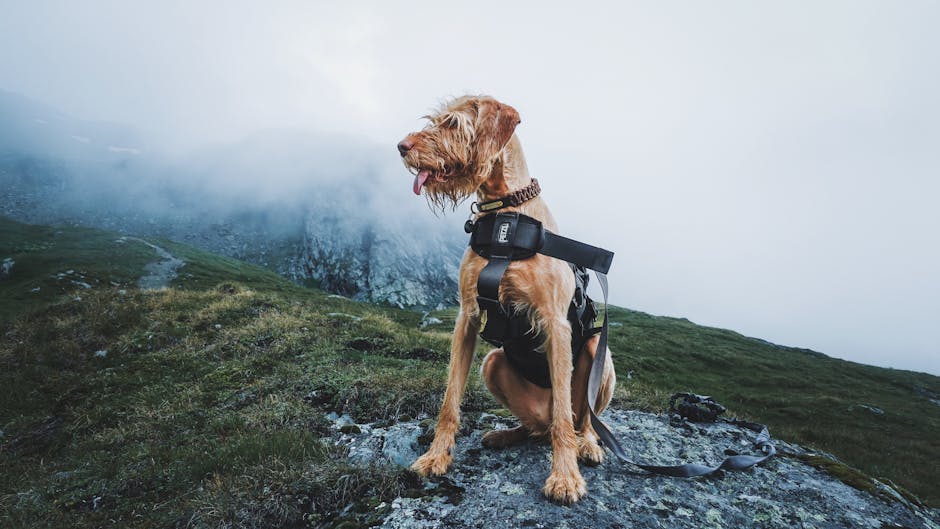
We have not tested these products ourselves. Instead we work from manufacturer specifications plus the patterns in owner feedback, focusing on gear that suits different weather, terrain and dog sizes (and overnight setups including a foldable travel crate). Our goal was identifying equipment that works reliably for beginners, not just advanced hikers.
The 7 Essential Categories Every Trail Dog Needs
Trail safety breaks down into seven key areas: control systems (harness and leash), hydration solutions, paw protection, visibility gear, emergency preparedness, weather protection, and tracking. You don’t need premium gear in every category to start hiking safely. Our view is that beginners get the best value focusing on control and hydration equipment first, then adding other items as experience grows. That is a judgement about sequencing, not a research finding.
Best Dog Harnesses for Trail Control
Ruffwear Web Master Harness – Best Overall for Beginners
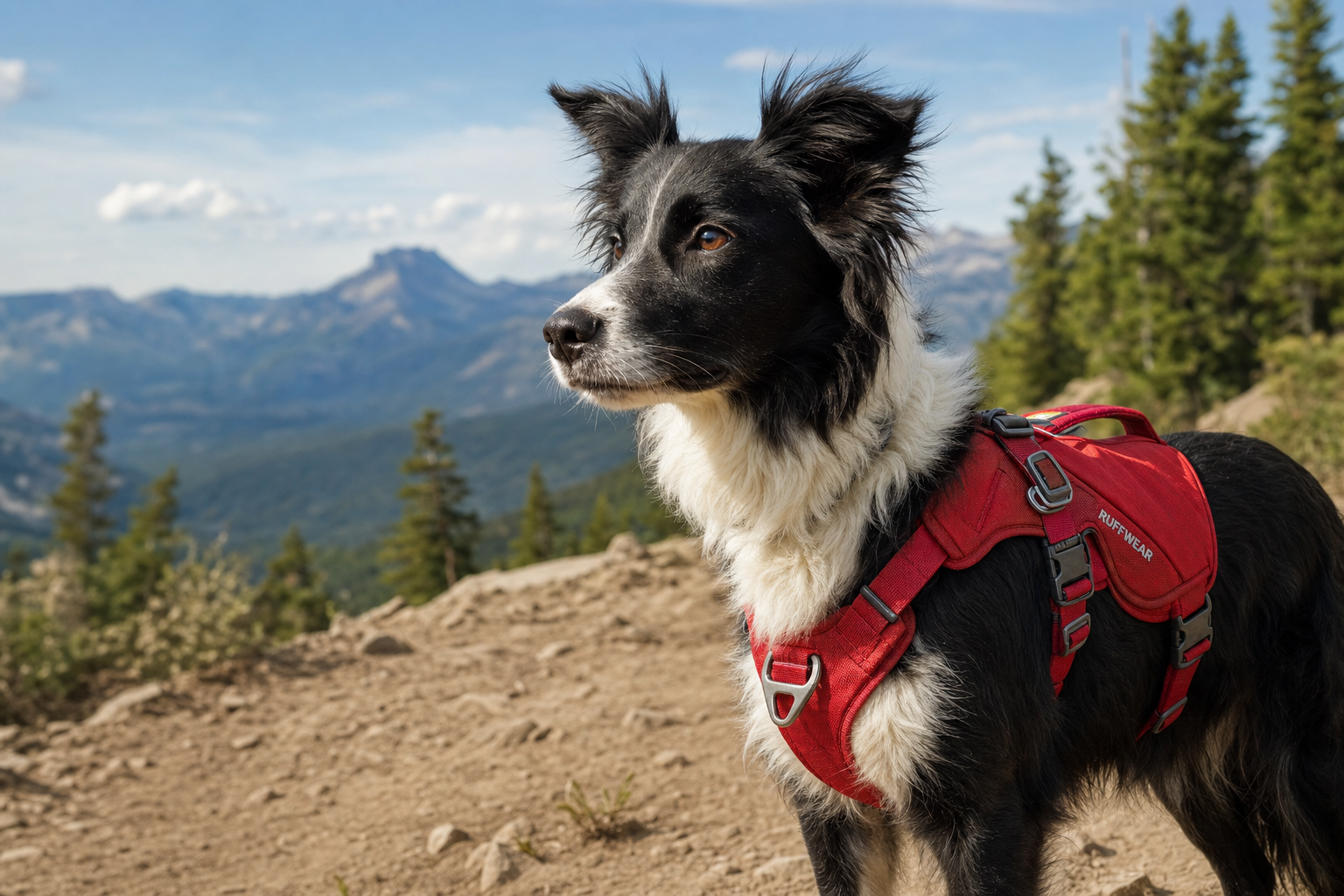
Ruffwear Web Master Harness
Best for: Dogs who need secure control and occasional lift assistance over trail obstacles.
Key specs (per Ruffwear): Five sizes, XXSmall through Large/XLarge. Four points of adjustment, not five. Shell is 150 denier polyester ripstop with a PU coating and 40% recycled content, padding is closed-cell foam, lining is polyester knit mesh, and the back attachment is an anodized 6061-T6 aluminium V-ring with a front attachment in nylon webbing and molded TPU. Ruffwear publishes no harness weight, so we do not quote one.
What users love: The lift handle gets consistently praised for helping dogs over rocks and logs without strain. Reviews mention superior control compared to standard harnesses, with many users noting their dogs can’t back out of it. The closed-cell foam padding and perforated foam back panel are what owners credit for comfort over long days.
Trade-offs: More expensive than basic harnesses, and some users report the chest strap can ride up on barrel-chested breeds. The substantial construction makes it warmer than minimal harnesses in hot weather.
Price ranges starting at current retail depending on size. For beginners prioritizing safety and control, this harness delivers professional-grade performance that users consistently rate as worth the investment. Ruffwear Web Master Harness
Zero DC Harness – Best for Small Dogs
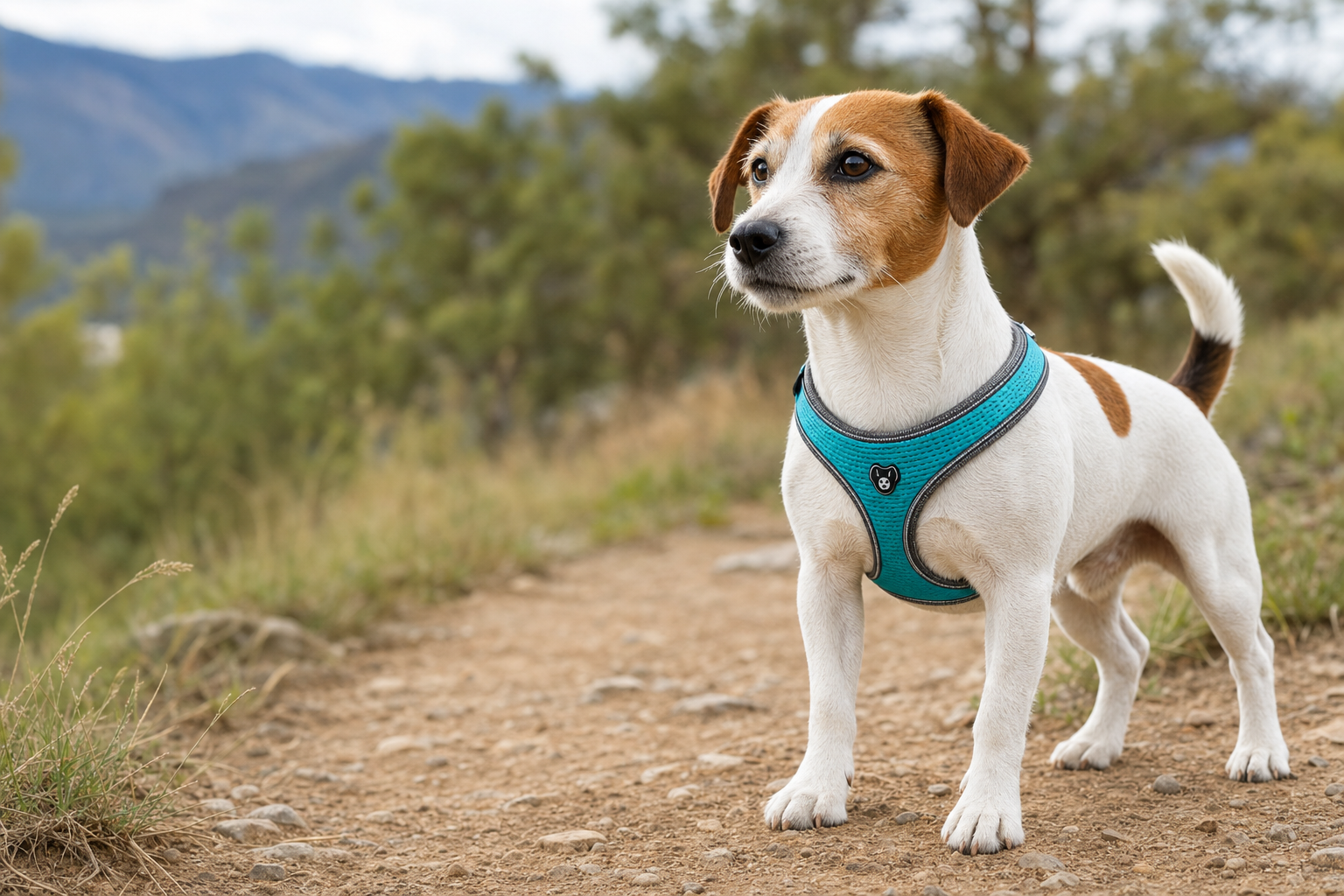
Zero DC Harness
Best for: Smaller dogs that pull, where a canicross-style rear attachment suits better than a bulky control harness.
Key specs: Zero DC harnesses have a single rear attachment, a metal ring facing the hindquarters, and reflective stitching. There is no front attachment point; these are canicross and canitrekking harnesses designed to be pulled into, not no-pull walking harnesses. Sizing runs from Mini I and Mini II upward and is taken on neck, chest and back in centimetres. Zero DC publishes no harness weight or material breakdown on a page we could reach.
What users love: Small dog owners appreciate the minimal bulk that does not overwhelm their dog’s frame, and the Mini sizes fit dogs most trail harnesses do not. Owners report it stays positioned during active hiking, and the reflective stitching helps in low light.
Trade-offs: No lift handle and no front attachment point, so this is not a control or no-pull harness. If you need to lift your dog over obstacles or to discourage pulling, the Web Master is the right tool instead.
A good fit for small dogs that pull happily and hike with you rather than needing to be managed. Zero DC Harness
Best Trail Leashes for Safe Hiking
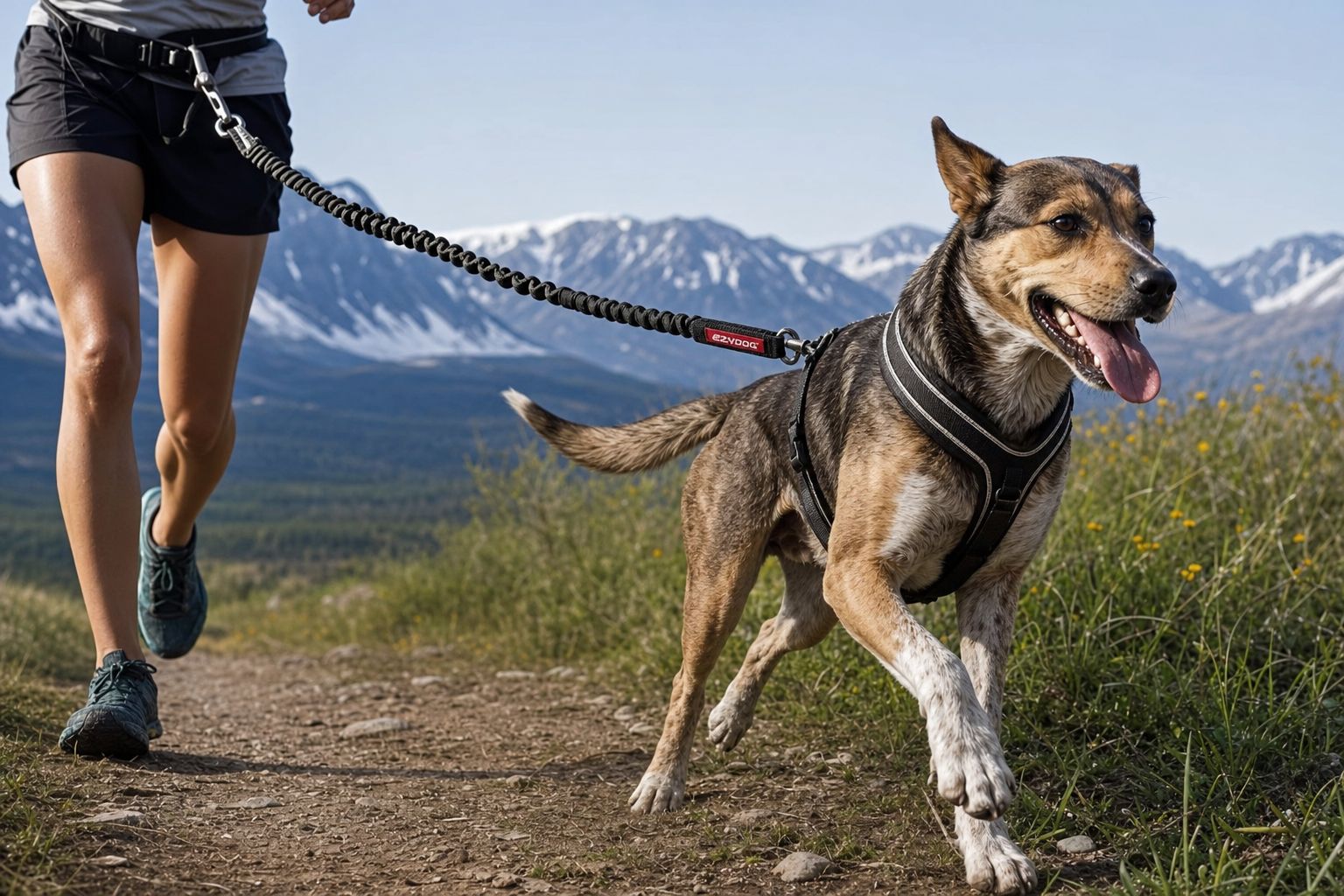
EzyDog RoadRunner – Best Hands-Free with Shock Absorption
EzyDog RoadRunner Leash
Best for: Hikers who want hands-free convenience with genuine shock absorption protection.
Key specs (per EzyDog): A 7-foot leash with an adjustable handle length that shortens or extends for control. Zero Shock is EzyDog’s own shock-absorbing section. Reflective stitching for night safety. Two widths: the Standard at 1″ for dogs over 26 lbs, and the Lite at 0.5″ for dogs under 26 lbs. EzyDog publishes neither a weight nor a stretch length, so we quote neither.
What users love: The shock absorption gets specific praise from users with back problems who notice the difference on longer hikes. The hands-free design allows natural arm swing while maintaining connection, and users report the belt sits comfortably for hours. Many mention their dogs adapt quickly to the consistent, gentle resistance.
Trade-offs: Takes up more pack space than standard leashes when not in use, and the stretchy section can confuse dogs initially used to rigid leashes.
Pick the width by your dog’s weight using EzyDog’s own 26 lb cut-off. We have no measurement of the shock absorption, only the consistent owner reports that it is noticeable. EzyDog RoadRunner Leash
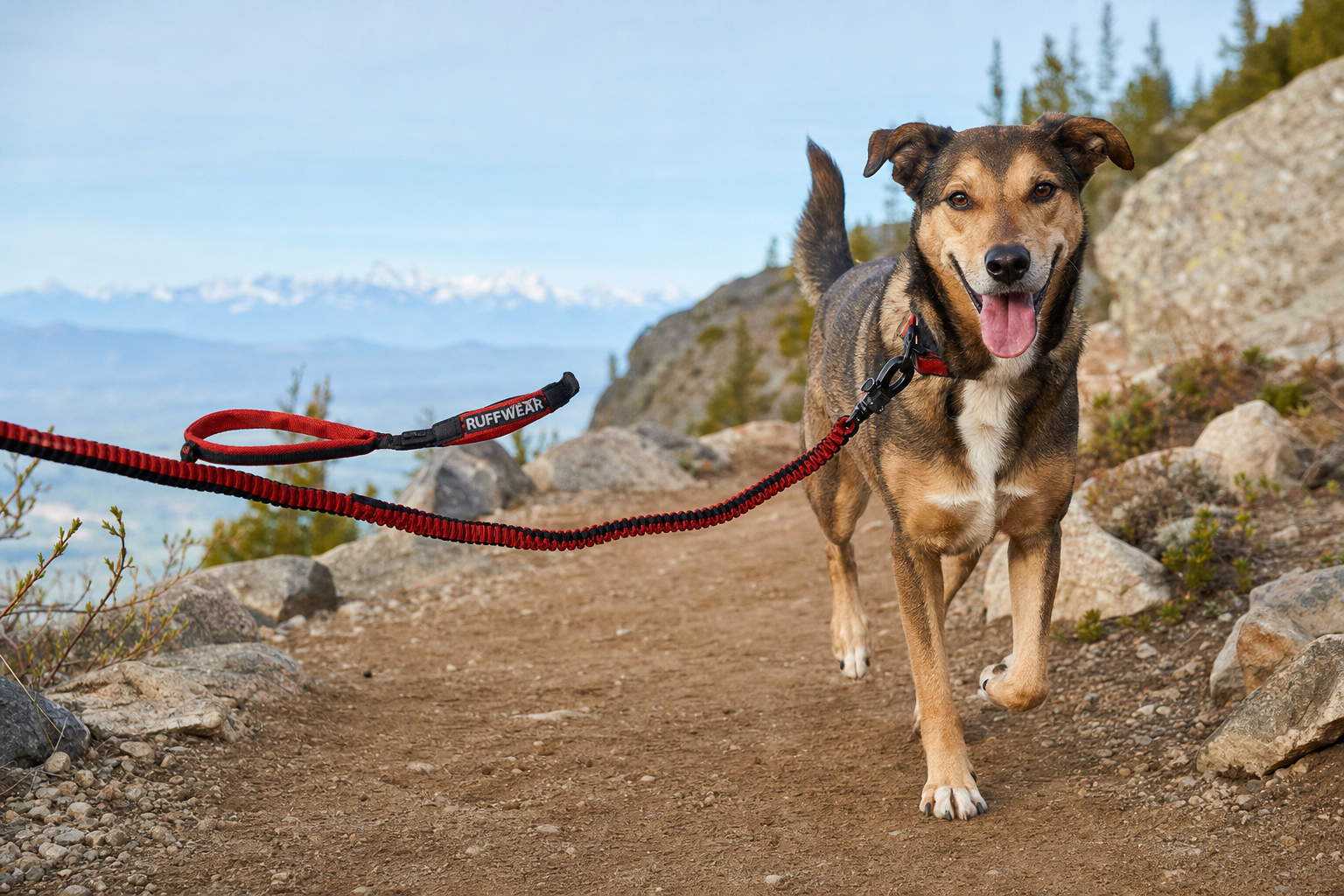
Ruffwear Roamer – Best Dual-Handle Control
Ruffwear Roamer Leash
Best for: Situations requiring both hands-free hiking and immediate close control when needed.
Key specs (per Ruffwear): Two sizes, 5.5-7 ft and 7.3-11 ft, both stretching under load rather than being a fixed length. Wavelength stretch webbing, 25 mm wide, made of 81% polyester, 11% polyethylene and 8% elastane. An adjustable padded handle plus a traffic handle. Hardware is an anodized 6061-T6 aluminium Talon Clip with an aluminium uniloop on the side-release buckle. Ruffwear publishes no weight.
What users love: The dual-handle design provides instant control options without fumbling for leash adjustments. Users appreciate the shock absorption feels substantial but not bouncy, and the hardware holds up to aggressive pullers.
Trade-offs: More complex than single-function leashes, with some users finding the multiple handles initially confusing in urgent situations.
Check which of the two length ranges you are buying, since the shorter 5.5-7 ft version behaves quite differently on trail from the 7.3-11 ft one. Ruffwear Roamer Leash
Essential Hydration Gear
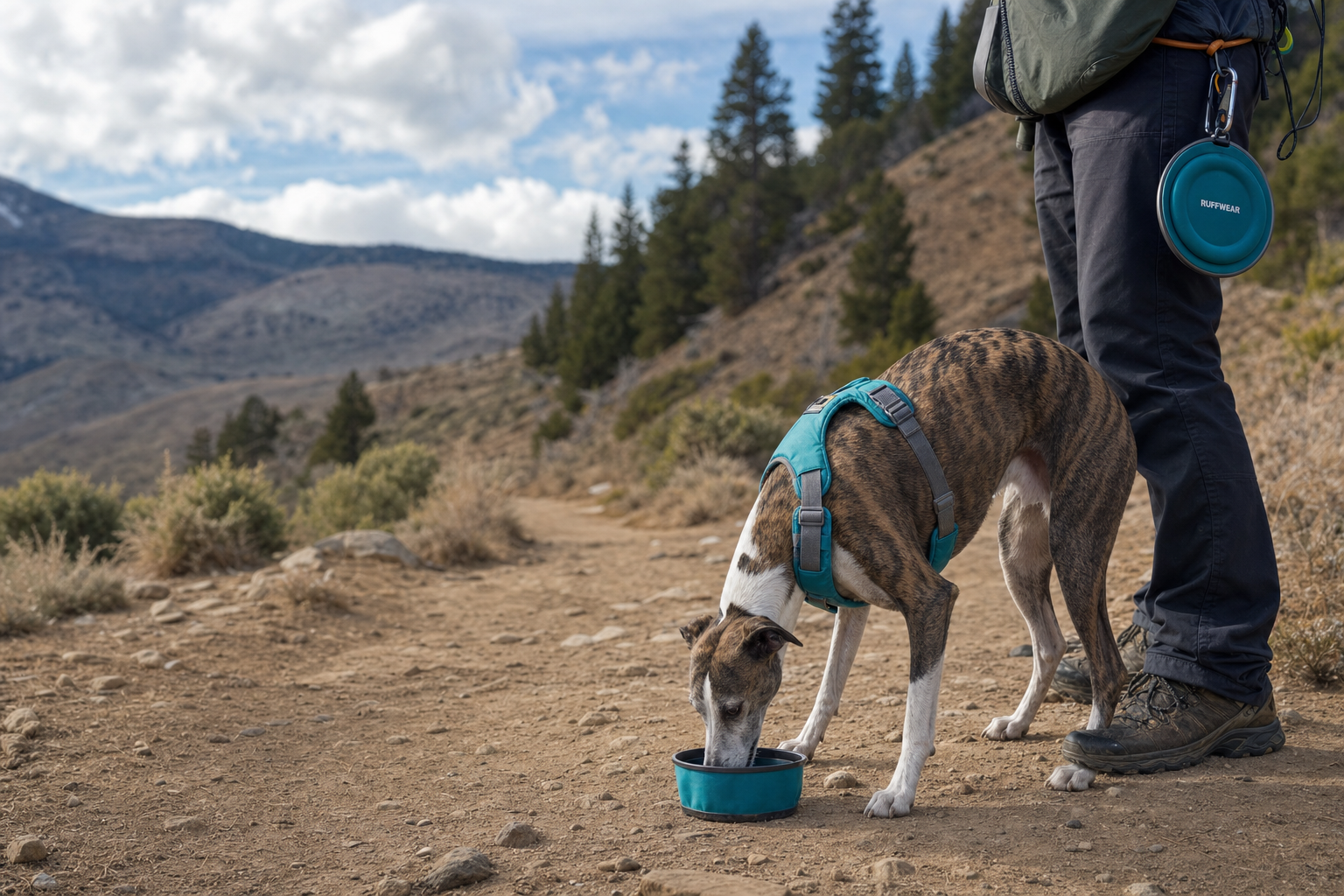
Ruffwear Trail Runner Bowl – Ultralight Champion
Ruffwear Trail Runner Bowl
Best for: Weight-conscious hikers. At 18.1 g it is the lightest bowl we know of that still holds a full litre.
Key specs (per Ruffwear): 18.1 g and 4.2 cups (1 litre) capacity, in a single size. It is a fabric bowl, not silicone: waterproof 70D/210D nylon ripstop with a 5,000 mm waterproof rating, a nonfluorinated DWR finish and a PU coating. An earlier version of this guide gave the material, the weight and the capacity, and all three were wrong.
What users love: The packability, and the fact that a bowl this light still holds a litre. It deploys quickly with one hand, and owners report it rinses clean easily.
Trade-offs: A fabric bowl has a flexible rim that can fold under an enthusiastic drinker, and fabric needs drying out properly rather than just a rinse.
The weight and the litre capacity together are what make it the strongest hydration pick here. Ruffwear Trail Runner Bowl
How Much Water Your Dog Actually Needs
Hill’s Pet Nutrition states the general rule directly: “A general rule of thumb for how much water a dog should drink is 1 ounce of fluids per pound of body weight.” Hill’s also notes that dogs which are very active or live in a hot climate will drink more than that.
What Hill’s does not give, and what we will not invent, is a per-hour figure for hiking. An earlier version of this guide carried one. It had no authority behind it and it has been removed. Use the daily rule as your baseline, carry more than that baseline, and offer water little and often rather than trying to get a dog to drink a lot at once.
Source: Hill’s Pet Nutrition, How Much Water Should Dogs and Cats Drink Each Day?
Paw Protection Solutions
Musher’s Secret Paw Wax – Easiest for First-Timers
Musher’s Secret Paw Wax
Best for: Beginners who want effective paw protection without the complexity of fitting booties.
Key specs (per Musher’s Secret): A blend of food-grade natural waxes, named as white and yellow beeswax, carnauba and candelilla, with vegetable oils and vitamin E. The manufacturer publishes no temperature range and no figure for how long a container lasts. An earlier version of this guide quoted a -85°F to 85°F range and a 3-4 month container life; neither appears in any Musher’s Secret material we could find.
What users love: Application takes seconds and dogs accept it immediately, unlike booties that many dogs refuse to wear. Users report it protects against hot sand, rough rock, ice, and salt effectively. The formula doesn’t wash off during normal hiking but removes easily with soap when needed.
Trade-offs: Musher’s Secret advises applying a thin layer two to three times a week for year-round use, and says extra applications may be needed in snow. It is a barrier wax, so it does nothing against sharp objects that puncture a pad.
Owners describe it as the most practical paw protection for most hiking situations, mainly because dogs accept a wax where many refuse boots. We have no measured acceptance rate for either, so we quote no percentages. Musher’s Secret Paw Wax
When to Consider Dog Booties
Owner forums surface one recurring problem with dog booties: plenty of dogs refuse to walk normally in them, and many learn to pull them off. We have no measured rejection rate, so treat this as a common pattern rather than a statistic. However, booties become essential for extended hiking on extremely rough terrain or sharp rock surfaces.
If you decide to try booties, users recommend the gradual introduction approach: short indoor sessions before trail use, proper sizing (many users initially buy too large), and accepting that some dogs will never tolerate them regardless of brand quality.
Visibility and Safety Gear
Trail visibility matters even during day hikes because weather can change rapidly, and dense forest sections can become surprisingly dark. Bright colours and reflective elements make a dog easier for other trail users to see, which matters most on narrow trails and in low light.
LED collars are the most versatile visibility option. Look for both steady and blinking modes, and for a rechargeable battery rather than a coin cell. Battery life varies so widely between models that a range is meaningless; check the specification on the individual collar you are buying.
Dog First Aid Essentials for Trails
Trail first aid goes beyond basic home care because you’re potentially hours from veterinary help. The injuries that come up most often in owner accounts of trail incidents are cut paws, insect stings, overheating, and minor sprains from jumps or slips. We have no injury-incidence data, so treat this as a list of what to prepare for rather than a ranking.
A proper dog first aid kit for hiking contains wound cleaning supplies, bandaging materials, emergency contact information, and basic medications. Pre-assembled kits designed for trail use typically cost check current price on Amazon and save significant time compared to building your own kit.
Essential components include wound irrigation solution, gauze pads, elastic bandages, tweezers for splinter removal, and instant cold packs for sprains. Some owners carry an antihistamine for insect stings. Do not add one to your kit, and do not dose it, without asking your own vet first: the appropriate drug and the dose both depend on your dog’s weight and health, and we are not in a position to publish either.
GPS Tracking for Security
This guide previously recommended the Whistle Go Explore here. That recommendation has been withdrawn, and it is worth being explicit about why rather than quietly deleting it.
Tractive acquired Whistle from Mars Petcare in July 2025 and did not keep Whistle’s tracking infrastructure running. The service stopped operating on 31 August 2025. Whistle devices did not simply stop being sold: they stopped working. Every Whistle Go Explore in circulation, including units people already owned, lost connectivity permanently once the backend went dark. Chewy now lists the product as discontinued. Anyone buying a used one today is buying a collar-shaped paperweight.
We have removed the product, its specifications and its affiliate link rather than leave a live recommendation for hardware that cannot connect to anything.
We are not naming a replacement, because we have not verified one to the standard the rest of this guide is held to. If you want a GPS tracker for trail use, the things worth checking on any candidate before you buy are:
- Whether the tracker needs a subscription, and what happens to the device if you stop paying
- Whether the manufacturer is still operating the service, which the Whistle case shows is not a given
- Battery life under live tracking rather than in standby, since those two figures differ enormously
- Cellular coverage on the trails you actually use, because a cellular tracker is useless outside coverage
- Ingress rating for water, published as an IP rating rather than as a marketing phrase
Complete Gear Comparison Table
Every figure below is read from the manufacturer’s own product page. Two columns from the earlier version of this table are gone: the weight column, because most of these makers publish no weight and the figures we had were not theirs, and the user-rating column, because those scores had no source at all.
| Product | Best For | Manufacturer-published spec | Key Feature |
|---|---|---|---|
| Ruffwear Web Master | Overall control | Five sizes, four adjustment points, aluminium V-ring | Lift handle |
| Zero DC canicross harness | Small dogs that pull | Rear metal ring only, sized on neck, chest and back | Mini sizes |
| EzyDog Road Runner | Hands-free hiking | 7 ft, adjustable handle, 1″ over 26 lbs / 0.5″ under | Zero Shock section |
| Ruffwear Roamer | Dual-handle control | 5.5–7 ft or 7.3–11 ft, 25 mm Wavelength webbing | Traffic handle |
| Ruffwear Trail Runner Bowl | Lightweight hydration | 18.1 g, 4.2 cups (1 L), nylon ripstop | Litre capacity at 18 g |
| Musher’s Secret | Paw protection | Beeswax, carnauba and candelilla blend with vitamin E | Apply 2–3 times weekly |
Beginner’s Buying Guide: What to Get First
The Starter Kit: Control and Hydration First
Your first trail safety investment should prioritize control and hydration. A quality harness, a hands-free leash, a collapsible bowl and paw wax create a foundation that handles most hiking scenarios. For trails near water, add a dog life jacket as the sixth essential. That covers the essential safety categories without overwhelming your budget.
Users in hiking forums consistently recommend starting with these four items before adding specialized gear like GPS tracking or advanced weather protection. The control and hydration elements prevent the most common trail problems beginners encounter.
Budget vs Premium: Where to Spend and Where to Save
We would put your money into the harness and the leash before anything else, because those are the two items that fail in a way that lets a dog loose. That is a judgement, not a measured safety benefit. The difference between a check current price on Amazon harness and a check current price on Amazon harness typically involves better padding, stronger hardware, and more secure attachment systems.
However, items like water bowls and paw wax show diminishing returns beyond mid-range prices. A check current price on Amazon collapsible bowl performs nearly identically to a check current price on Amazon version in real trail conditions. Save money on accessories and invest in quality control equipment.
Common Beginner Mistakes to Avoid
Don’t buy gear based solely on price or appearance. Users report the most common beginner mistake is choosing harnesses or leashes based on looks rather than functional features like padding, hardware quality, or proper fit adjustments.
Avoid over-buying initially. Many beginners purchase comprehensive gear collections before understanding their specific hiking patterns. Start with essentials and add specialized items as your experience reveals actual needs rather than perceived requirements.
Trail Safety Beyond Gear
Pre-Hike Health Checks
Check your dog’s paws, eyes, and energy level before each hike. Look for cuts, swelling, or sensitivity in paw pads. In summer months, factor in summer paw protection before exposure to heated surfaces. Check that eyes are clear without discharge, and ensure your dog shows normal enthusiasm for activity.
Dogs hide discomfort effectively, so subtle changes in behavior or movement often indicate developing problems. A dog who normally bounds ahead but stays close to your heels might be experiencing discomfort that could worsen during a long hike.
Reading Your Dog’s Fatigue Signals
Dogs show fatigue through excessive panting, a slowing pace, frequent stops to lie down, and persistently seeking shade. Unlike humans, dogs don’t sweat efficiently and rely primarily on panting for temperature regulation.
Watch for changed tongue color (very pale or bright red), stumbling, or reluctance to continue walking. These signs indicate your dog needs immediate rest, water, and potentially emergency cooling measures.
Trail Etiquette and Regulations
Most trail systems require dogs on leash for wildlife protection and hiker safety. Research specific regulations before hiking, as some areas have seasonal restrictions during wildlife breeding periods or extreme fire danger.
Yield trail to horses, pack your dog’s waste completely, and keep your dog close when passing other hikers. Many trail conflicts involve dogs who approach other people or dogs without permission, even when friendly.
Frequently Asked Questions
What are the absolute must-have safety items for my first dog hiking trip?
A proper trail harness, a hands-free leash with shock absorption, a collapsible water bowl, paw protection wax and basic first aid supplies cover the categories that matter most for a first trail dog. We have no figure for what share of situations that covers, so we do not claim one.
How much water should I bring for my dog on a trail hike?
Hill’s Pet Nutrition gives the general rule as 1 ounce of fluids per pound of body weight per day, and notes that very active dogs and dogs in hot climates drink more. There is no reliable per-hour hiking figure, so use the daily rule as a baseline, carry more than that, and offer water little and often.
Why use a harness rather than a collar for trail hiking?
A pulling harness distributes force across the chest and shoulders rather than concentrating pressure on the neck area. This prevents tracheal damage during sudden stops or when lifting dogs over obstacles. Trail harnesses also provide better control and lift assistance when your dog needs help navigating difficult terrain.
Are expensive dog hiking harnesses really worth it for beginners?
Quality harnesses in the check current price on Amazon range offer measurably better padding, stronger hardware, and more secure attachment systems compared to budget options. Users report the difference becomes obvious during longer hikes where comfort and reliability matter. The investment pays off through better control and reduced injury risk.
What’s the deal with shock-absorbing leashes – do I really need one?
Shock absorption protects both you and your dog from sudden jolts when your dog stops unexpectedly or changes direction quickly. Users with back problems specifically mention the difference during longer hikes. The consistent, gentle resistance also helps dogs maintain better pace and reduces pulling behavior over time.
Should I get dog booties or is paw wax enough for trail protection?
Paw wax works for most hiking situations and dogs generally accept it more readily than boots, though we have no measured figures for either. Start with wax for general protection against hot surfaces, rough terrain, and minor abrasions. Consider booties only for extended hiking on extremely sharp rock or highly abrasive surfaces.
When does GPS tracking make sense for trail dogs?
GPS tracking provides value for dogs prone to chasing wildlife, hiking in unfamiliar areas, or situations where thick forest cover might separate you temporarily. The monthly subscription costs (check current price on Amazon) make it a significant ongoing expense, so consider your specific risk factors and budget carefully before investing.
What’s the difference between a regular dog first aid kit and one for hiking?
Trail-specific first aid kits emphasize wound cleaning and bandaging supplies since you’re potentially hours from veterinary care. They include items like wound irrigation solution, gauze pads, elastic bandages, and emergency contact information. A comprehensive dog first aid kit for hiking contains supplies for the most common trail injuries like cut paws and insect stings.
Final Recommendations: Start Here
If we could only recommend one complete starter setup, it would be the Ruffwear Web Master Harness paired with the EzyDog RoadRunner leash, Ruffwear Trail Runner bowl, and Musher’s Secret paw wax. Ruffwear Web Master Harness This combination provides professional-grade control, genuine shock absorption, ultralight hydration, and reliable paw protection that works for most dogs in most trail conditions.
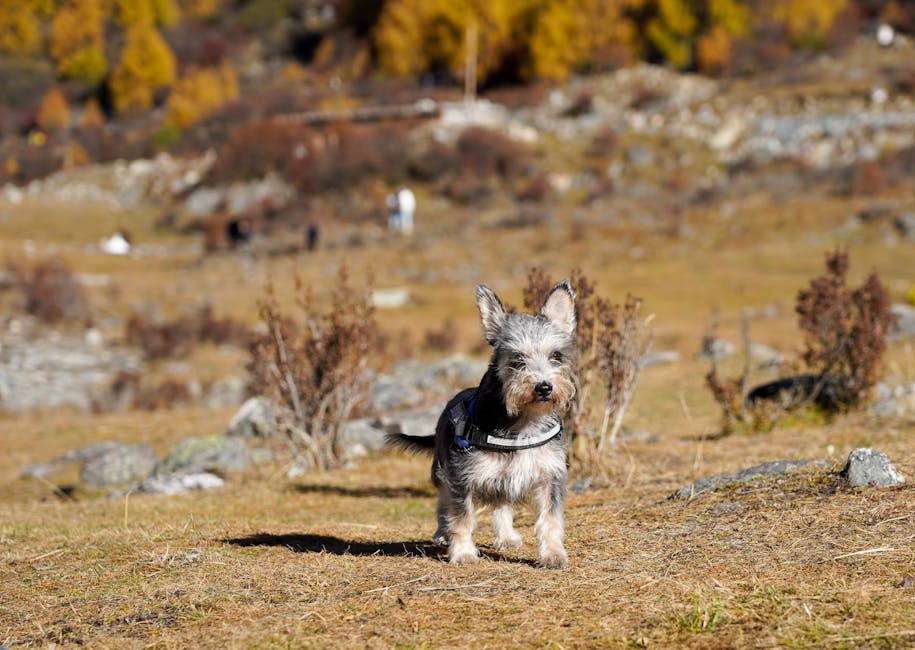
This foundation costs at typical retail and covers the essential safety categories without overwhelming a beginner with gear complexity. Add GPS tracking, weather protection, and advanced first aid supplies as your hiking experience reveals specific needs for your dog and trail preferences.
Start with quality basics and expand thoughtfully rather than buying everything at once. Your dog’s safety depends more on proper use of essential gear than on having every possible accessory.
Related Guides
First Aid & Emergency Preparedness:
– Best Dog First Aid Kits for Hiking in 2026 – Complete reviews of trail-ready first aid solutions
– Dog Snake Bite First Aid – Emergency response for venomous encounters (coming soon)
Advanced Trail Safety:
– Additional comprehensive guides covering specialized trail safety topics will be added to expand this essential safety resource.