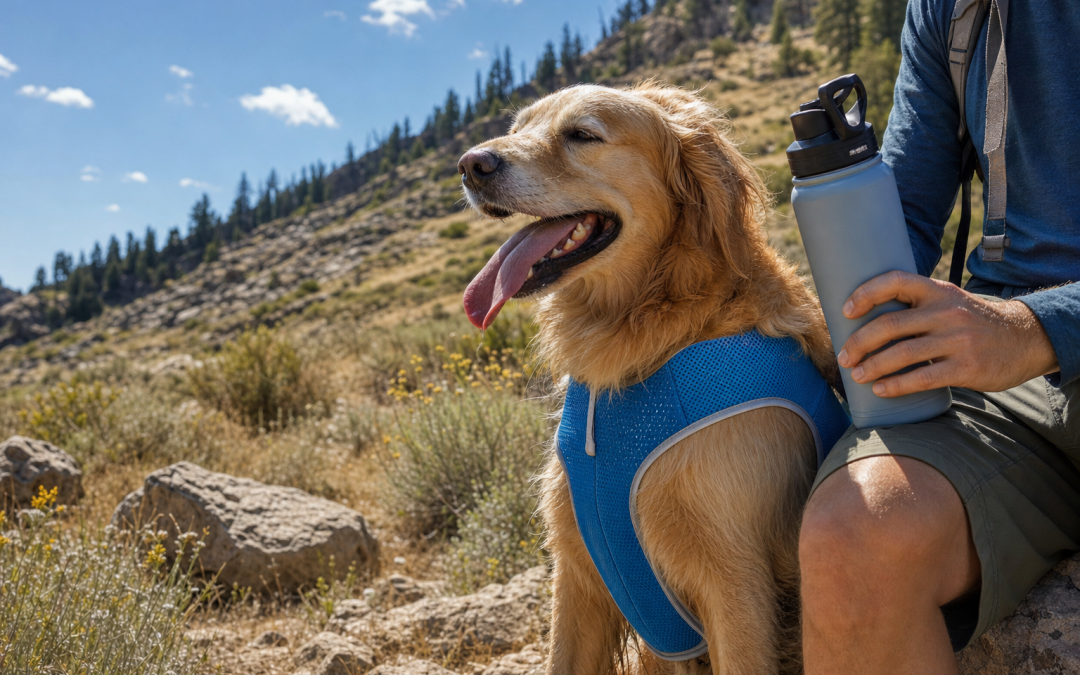
Heatstroke kills more dogs every summer than most owners realize. Dogs do not sweat through their skin. They cool themselves by panting, with limited efficiency above 80F. By 90F, an active dog on a sunny trail is generating heat faster than it can shed it. A cooling vest is one of the few practical tools that lets adventure dogs keep moving through summer weather without crossing the heatstroke threshold.
This guide covers the six cooling vests we recommend in 2026, with honest analysis of how each cooling technology actually works, who should buy which one, and when a cooling vest is the wrong solution entirely.
Disclosure: This article contains affiliate links. If you buy through our links, we earn a small commission at no extra cost to you. We only recommend gear that meets our research criteria.
How dog cooling vests actually work
There are three different cooling technologies on the market, and they work in very different ways. Choosing the wrong one for your conditions can leave you with a hot dog wearing useless gear.
- Evaporative cooling vests use water held in a special fabric. As water evaporates from the surface, it pulls heat from the dog underneath. These work well in dry climates and poorly in humid ones, because the cooling comes from evaporation. No manufacturer we checked publishes a re-wetting interval, so treat the vest as needing re-wetting whenever it stops feeling cool to the touch rather than on a timer.
- Phase-change vests use proprietary gel packs that absorb heat at a specific temperature. They cool more aggressively than evaporative vests but need recharging in a cooler or freezer once the packs have absorbed their heat load. Manufacturers do not publish consistent duration figures.
- Reflective cooling vests use silver or white fabric to reflect sunlight before it heats the dog. These are passive (no water or gel) and lighter, but they offer less aggressive cooling.
Match the technology to your environment. Evaporative cooling works by evaporation, so the more humid the air, the less it can do; in genuinely humid conditions it does very little. Phase-change is heavy. Reflective alone is not enough for hot, sunny conditions.
We do not test products. Ruffwear specifications and pricing come from Ruffwear’s product page; heat physiology comes from a Purdue University College of Veterinary Medicine review. Checked 22 August 2026. Cooling-duration figures were removed from this article because no manufacturer we checked publishes one.
The 6 best dog cooling vests for 2026
1. Ruffwear Swamp Cooler Zip – Best Overall
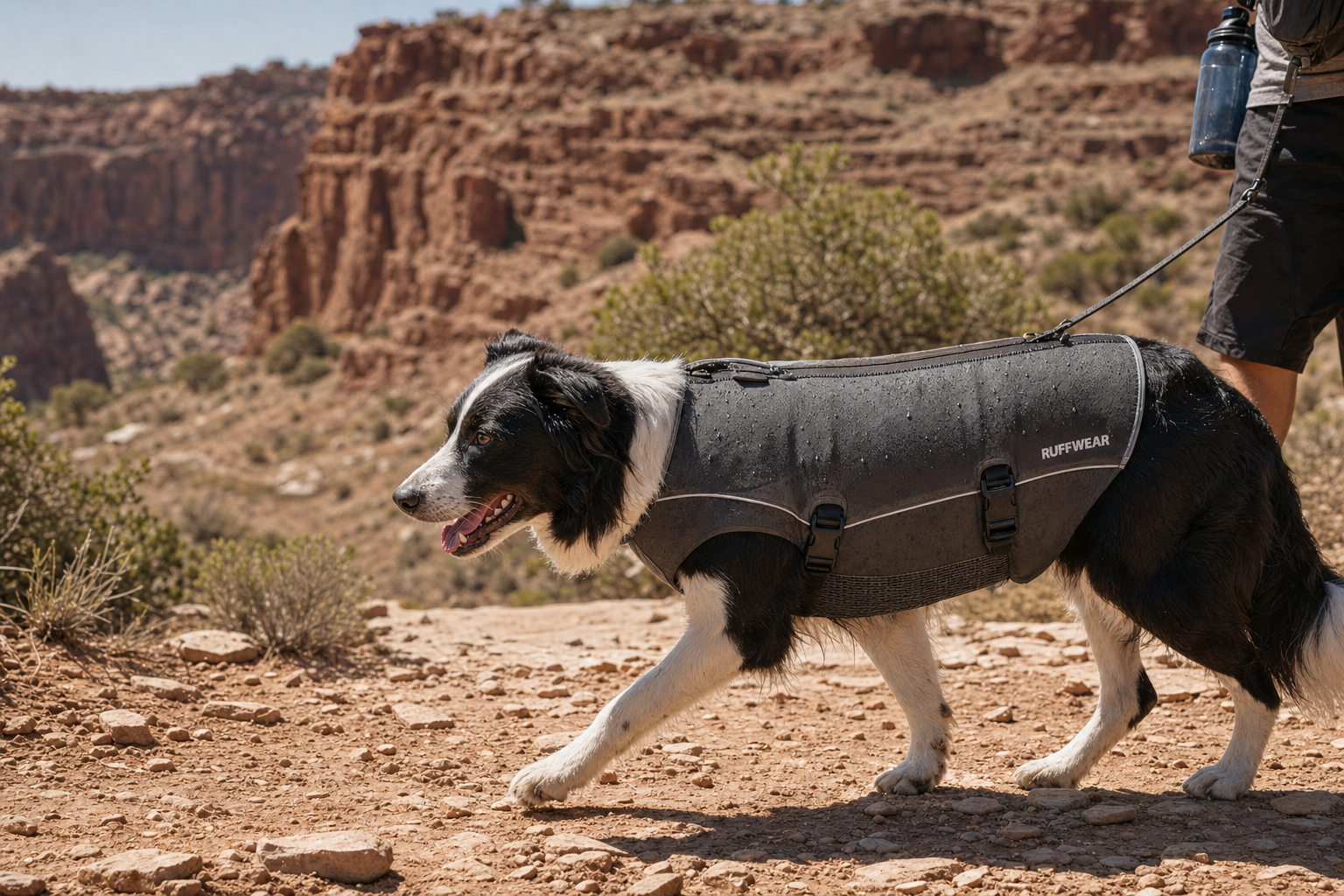
The Ruffwear Swamp Cooler Zip is the most popular evaporative cooling vest for a reason: owners consistently report it fits well across many breeds and holds up over multiple seasons. Ruffwear specifies a three-layer construction: a wicking outer layer that reflects heat and carries a UPF 50+ rating, an absorbent middle layer that stores water for evaporation, and a mesh lining against the dog. The cooling panel sits at the chest and belly. Ruffwear lists it at $59.99 and does not publish a cooling duration.
Best for: dry climates, mountain trails, light-coated dogs. Sizes XXS through XL.
Pros: excellent fit. Durable. Easy to soak and wring. Zip closure is faster than buckle systems.
Cons: not effective in high humidity. Light colors stain over time.
Genuine drawback: the zip closure makes it slower to remove than pullover vests. Some dogs do not love the sound of the zipper.
2. Hurtta Cooling Vest – Best for Active Dogs
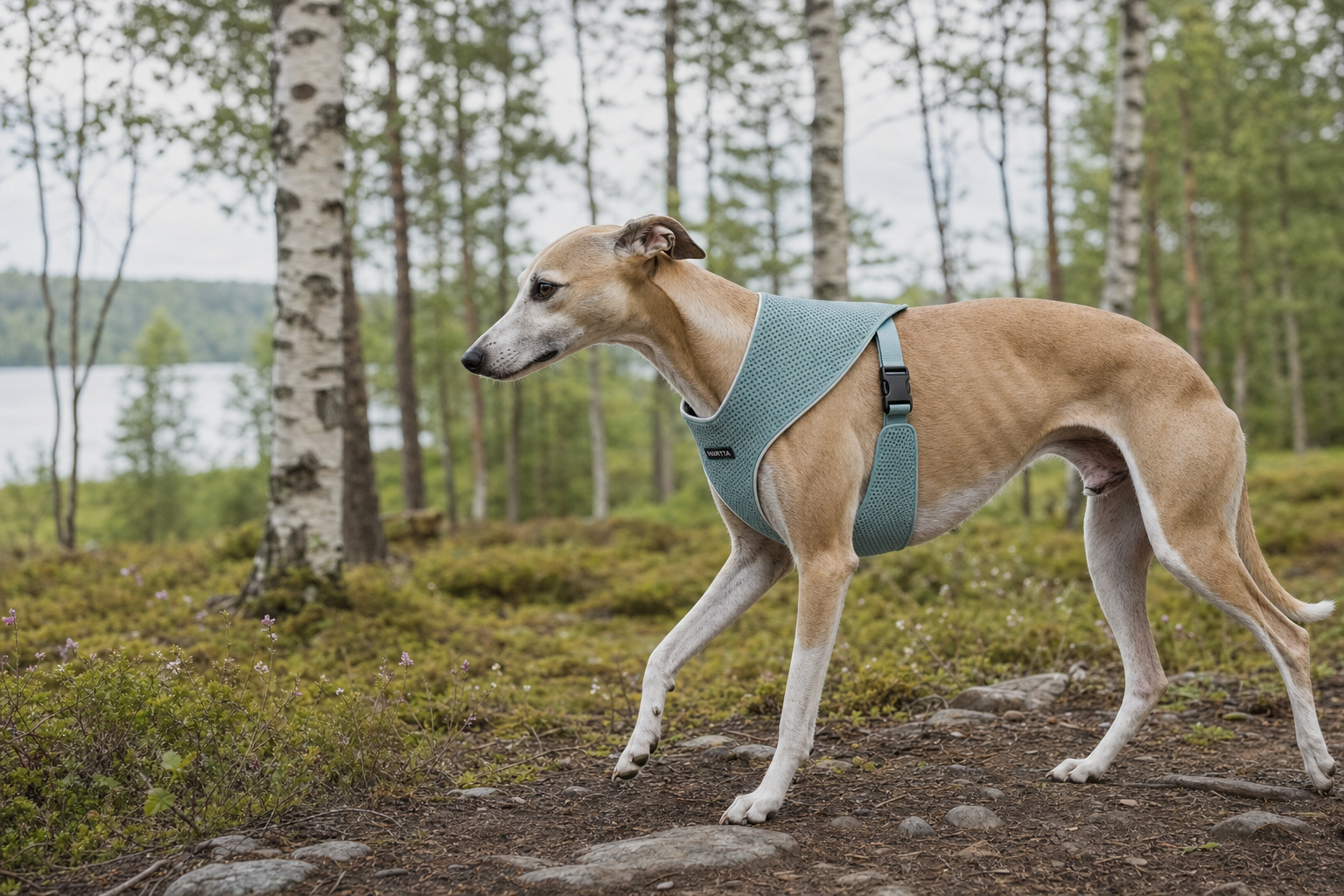
Hurtta’s cooling vest uses a fast-evaporating fabric and reflective top panel together. The reflective surface reduces how much direct sun heats the vest itself, which in principle slows the rate at which it dries out. Hurtta does not publish a duration figure. Hurtta is also the easiest vest to find in larger sizes for tall, lean breeds like collies, vizslas, and pointers.
Best for: athletic, lean breeds. Mixed sun and shade.
Pros: dual cooling technology. Excellent fit for slim chests. Quick-drying fabric.
Cons: sizing runs narrow. Premium price.
Genuine drawback: the reflective top can be too bright for some humans. Not a stealth-looking piece of gear.
3. Kurgo Core Cooling Dog Vest – Best Value
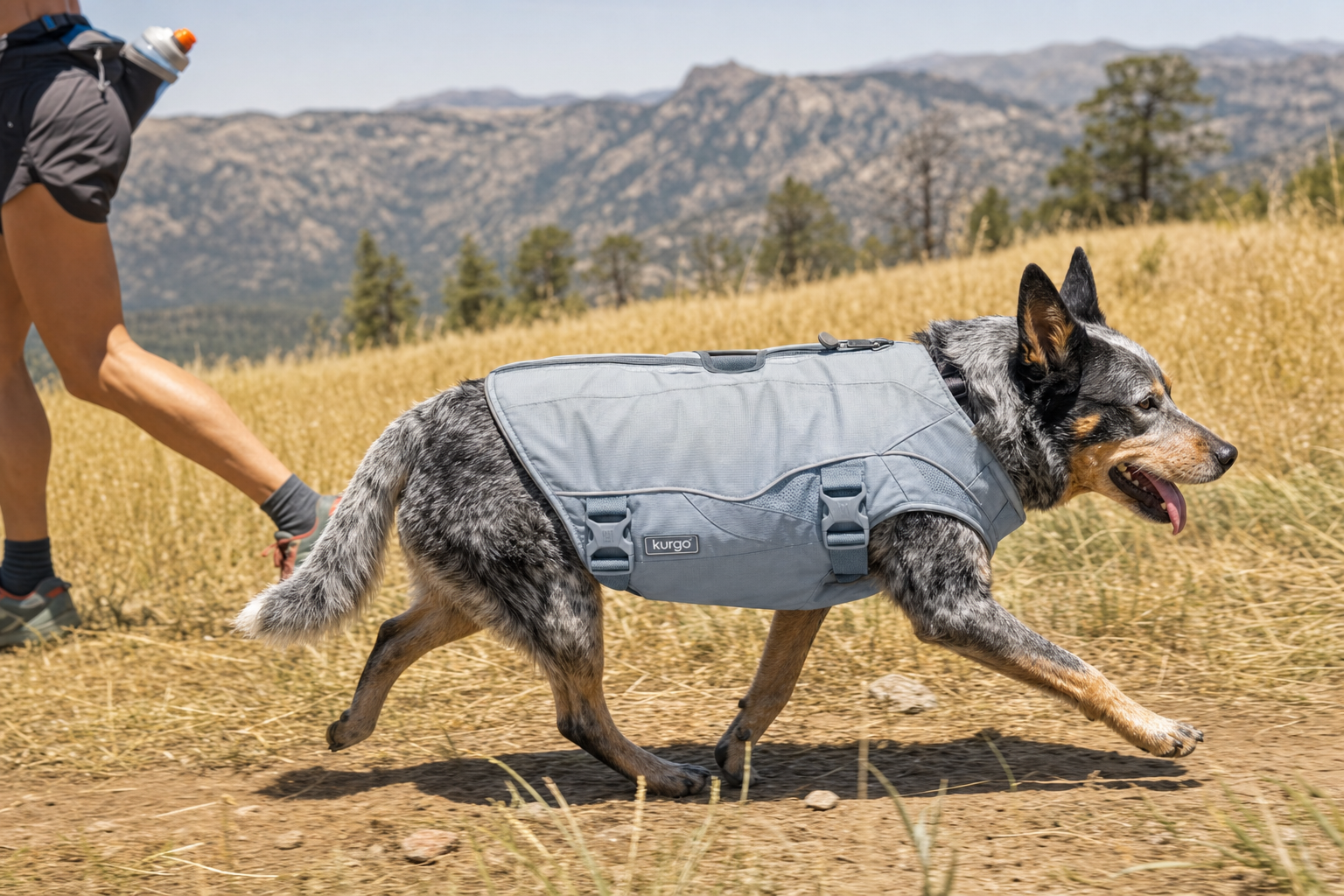
Kurgo’s Core Cooling vest is the cheaper alternative to the Ruffwear. The build quality is slightly less premium (the velcro wears faster) but the evaporative system works well and the fit is good for medium-built dogs.
Best for: medium dogs and budget buyers.
Pros: good evaporative performance. Affordable. Easy to put on.
Cons: velcro can collect debris on dusty trails. Less durable than premium options.
Genuine drawback: the velcro closures stretch and loosen with heavy use over a season. Expect to replace after about 18 months of regular summer use.
4. TechKewl PCM Cooling Dog Vest (CoolPax) – Best for Humid Climates

If you live somewhere humid (the US Southeast, coastal Asia, southern Europe in August), evaporative cooling does not work. K9 Powercool uses phase-change gel packs that cool aggressively regardless of humidity. The downside is weight, since the gel packs are heavy, and that the packs need recharging once spent. The manufacturer does not publish a duration figure.
Best for: humid climates, short intense activities like agility competitions.
Pros: works in any humidity. Stronger cooling effect than evaporative.
Cons: heavy. Limited duration. Gel packs must be recharged in cooler or fridge between uses.
Genuine drawback: at full charge, the vest can be too cold for dogs unaccustomed to it. Introduce gradually.
5. EzyDog Rashie UPF Rashguard Vest – Best Lightweight Option
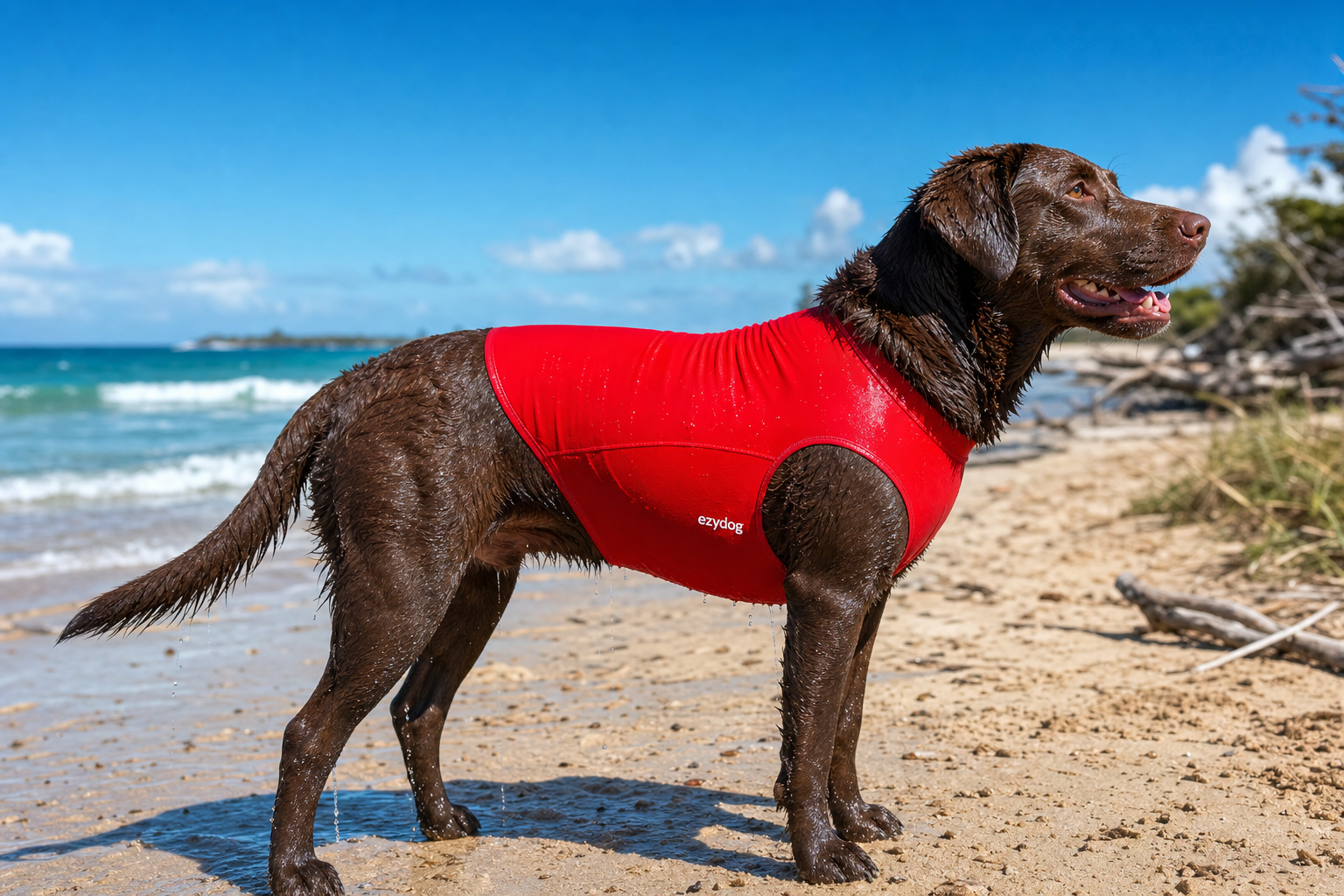
EzyDog’s Element Jacket is a reflective sun-shield vest, not an active cooling vest. It blocks UV and reflects heat before it reaches the dog, but it does not actively pull heat away. We include it as the best option for short walks in moderately warm weather where a fully soaked evaporative vest would be overkill.
Best for: short urban walks in moderate heat. Light-coated dogs that burn easily.
Pros: lightweight. No water or gel needed. Doubles as a sun protection layer.
Cons: minimal cooling compared to evaporative or phase-change options.
Genuine drawback: in true heat (above 85F with sun), this vest is not enough on its own. Pair with shade breaks and water.
6. Frisco Quick-Cooling Mesh Dog Vest – Budget Option
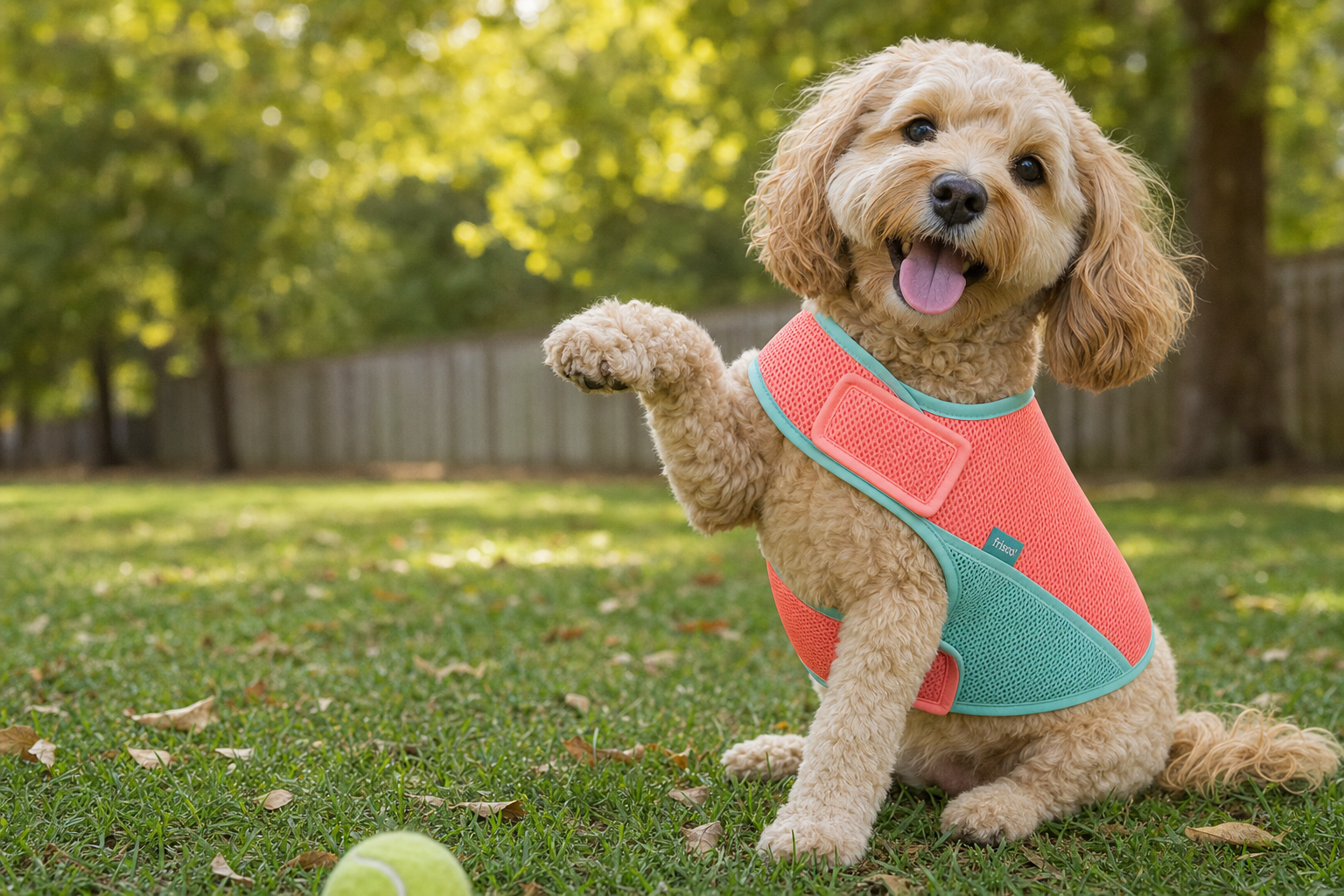
Chewy’s house brand Frisco makes a simple mesh evaporative vest that costs about a third of the Ruffwear. The fabric is thinner, the cooling effect shorter, and the build less durable. But for occasional summer walks or as a starter vest before committing to a premium option, it works.
Best for: trying out cooling vests. Small dogs that rarely wear them.
Pros: cheap. Lightweight. Easy to wash.
Cons: thinner fabric holds less water than the premium vests, so it dries out sooner. Stretches with use. Limited size range.
Genuine drawback: the fabric pills after about 10 washes. Plan to replace yearly.
When a cooling vest is not enough
A cooling vest extends your safe heat range. It does not eliminate the heatstroke risk. The rules are still the rules:
- Above 85F with high humidity (heat index over 90F), keep activity short and stop frequently. No long hikes.
- Above 95F at any humidity, do not hike. Move activity to early morning or late evening.
- Brachycephalic breeds (bulldogs, pugs, boxers) need stricter limits. Even 75F can be dangerous with exertion.
- Always carry more water than you think you need. Offer water every 15 to 20 minutes on hot days.
- Watch for warning signs: excessive panting, drooling, red gums, stumbling, or vomiting. Stop immediately and cool the dog with water on the chest and belly.
Comparison table
| Vest | Technology | Best Climate | Re-wet / recharge | Price |
|---|---|---|---|---|
| Ruffwear Swamp Cooler Zip | Evaporative | Dry, hot | Re-wet when no longer cool | $59.99 |
| Hurtta Cooling Vest | Evaporative + reflective | Mixed sun | Re-wet when no longer cool | See vendor |
| Kurgo Core Cooling | Evaporative | Dry, hot | Re-wet when no longer cool | See vendor |
| K9 Powercool | Phase-change | Humid, hot | Recharge packs when spent | See vendor |
| EzyDog Element | Reflective only | Mild sun | Passive, nothing to recharge | See vendor |
| Frisco Quick-Cooling | Evaporative | Dry, mild | Re-wet when no longer cool | See vendor |
Frequently asked questions
How do I soak a cooling vest properly?
Submerge the vest in cool (not ice cold) water for 1 to 2 minutes. Wring out excess water until it is damp but not dripping. A dripping vest cools poorly and bothers most dogs. Re-wet whenever the vest stops feeling cool to the touch. How long that takes depends on temperature, humidity, sun and wind, and no manufacturer we checked publishes an interval.
Can my dog swim in a cooling vest?
Yes, with caveats. Evaporative vests will soak through and lose effectiveness until they air-dry. Phase-change vests should not be submerged because they are heavier when wet and the gel packs do not need to be soaked. Reflective vests can usually be swum in but check the manufacturer’s care label.
Do cooling vests cause hot spots or skin issues?
They can, especially for dogs with dense undercoats. A wet vest against thick fur traps moisture and can cause hot spots over multi-day use. Dry the dog and the vest fully between uses. Inspect the skin under the vest at the end of each day.
What temperature is too hot for my dog?
There is no single number, and no veterinary body publishes one. What is published is that the thermoneutral zone for dogs runs to about 86F (30C), and that above roughly 88F (31C) a dog can no longer shed heat through the skin at all, leaving panting as the only route, according to the Purdue University College of Veterinary Medicine review. That review also notes that humidity, dehydration, poor ventilation and brachycephalic anatomy all impede panting, and that obese dogs and dark-coated dogs cope worse. Brachycephalic breeds are singled out as having heat and exercise intolerance because they cannot disperse heat by panting effectively. We have no sourced figure for how many degrees a cooling vest buys you, so we do not quote one.
How do I size a cooling vest?
Measure chest circumference at the widest point, neck circumference, and back length from base of neck to base of tail. Compare to the specific manufacturer’s sizing chart, not a generic one. Most cooling vests should fit snugly so the wet fabric contacts the dog’s skin without restricting movement.
The bottom line
For most adventure dog owners in dry to moderately humid climates, the Ruffwear Swamp Cooler Zip is the right choice. It works, it fits, and it lasts multiple seasons. If you need it for an athletic, lean dog and want better fit, the Hurtta Cooling Vest is the upgrade. In humid climates where evaporation fails, the K9 Powercool phase-change vest is the only option that actually works.
A cooling vest is a tool, not a license to push through heat. Time your activities for cooler parts of the day, offer water often, and watch your dog for warning signs. The vest extends the margin. It does not remove the limit.
Related guides: