
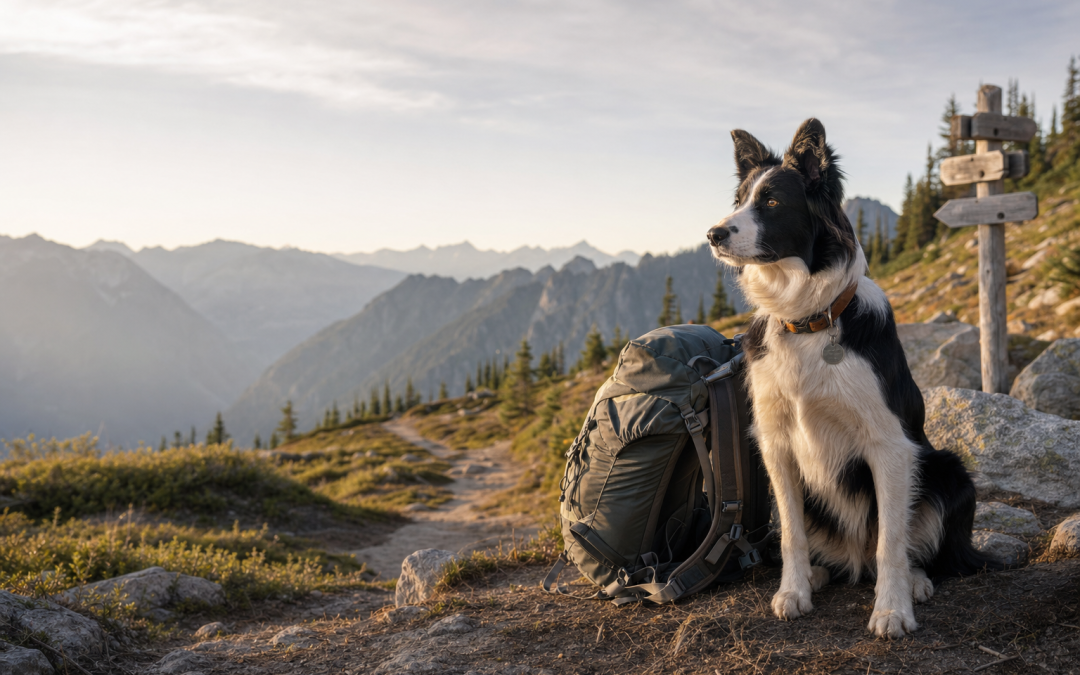
Traveling with a dog is not the same activity as traveling alone, and most online advice misses the practical realities. Whether the trip is a weekend cabin getaway, a transcontinental road trip, a backcountry camping trek, or an international flight, the dog changes the calculus on every decision: which vehicle, which route, which stops, which gear, which season, which destination.
This guide is the master document for traveling well with an adventure dog. It covers what you need to know, what gear is worth buying, what categories of risk to plan for, and what the most common mistakes are. Each section links to deeper individual guides for specific products and scenarios.
Disclosure: This article contains affiliate links. If you buy through our links, we earn a small commission at no extra cost to you. We only recommend gear that meets our research criteria.
The four travel categories every dog owner should plan for
Most dog travel content lumps everything into “road trips” or “travel” generally. That is a mistake. Each category has different gear requirements, different risks, and different planning horizons.
Category 1: Day trips and short drives
Drives under three hours to a hike, beach, or visit. The dog spends most of the trip in motion, with limited rest stops. The primary risks are vehicle safety (unrestrained dogs in crashes) and heat in summer cars. The gear that matters most is a crash-tested harness and reliable water.
Category 2: Multi-day road trips
Drives that span more than one day, with hotel or rental stays in between. The dog needs to eat, drink, sleep, and decompress along the way. Gear scope expands to include a stable food and water setup at each stop, a familiar sleeping arrangement, and contingency items for weather changes across the route.
Category 3: Camping and backpacking
Outdoor trips where the dog is away from a vehicle for hours or days. The dog needs trail-ready gear (harness, boots if rough terrain, cooling or insulation depending on season), backcountry-appropriate food carry, and either a crate or a tether system at camp.
Category 4: Flights and longer-distance travel
Anything that involves a commercial flight, train, ferry, or international border. The complexity increases dramatically: airline rules, country import requirements, vaccination paperwork, crate compliance, microchip standards. Plan months ahead.
Vehicle safety: the foundation of all dog travel
An unrestrained dog in a moving car is a crash projectile. In a collision or a hard stop the dog can be injured or killed, can injure the human passengers it strikes, or can be ejected through the windshield. Veterinary and highway-safety organisations consistently advise against letting a dog ride loose.
Three solutions exist, in roughly this order of safety:
- A crash-tested crate bolted to the cargo area. The Center for Pet Safety currently certifies crates including the Gunner G1 kennel, the Lucky Duck Lucky Kennel and the Cabela’s GunDog Kennel. Bulky and expensive, but crates generally outperform harnesses in crash testing.
- A crash-tested harness attached to the rear seatbelt. Only two harnesses in our guide carry independent Center for Pet Safety certification: the Sleepypod Clickit Sport Plus for medium and large dogs, and the ZuGoPet Rocketeer Pack for dogs up to 25 lbs. The Kurgo Impact and Ruffwear Load Up publish their own crash-lab results but are not CPS certified. See our full dog car harness guide for the difference and for sizing.
- A car barrier that keeps the dog in the cargo area. Cheaper than a crate but only restrains, not crash-protects. Better than nothing for owners who cannot or will not use a harness.
Keep the dog in the back. Avoid the front seat: airbag deployment can injure or kill a dog.
Essential gear for all dog travel
Some gear works across all four travel categories. Buy these first.
Hydration setup
A collapsible bowl that fits in a pack or car door pocket is one of the most-used pieces of dog travel gear. We cover the seven we recommend in our collapsible water bowl guide. For car-only setups, the Highwave AutoDogMug holds water spill-free between rest stops.
Water capacity matters. Plan to offer water every 15 to 30 minutes during active travel. Hot conditions can double or triple the dog’s intake. Always carry more water than you think you need.
Food and feeding setup
For trips under three days, pre-portion food into daily zip-top bags. For longer trips, a measured scoop and a quart-size container is more sustainable. Avoid changing food on a trip: stress and new food at the same time often causes digestive upset.
If your dog is on a raw or fresh diet, plan refrigeration. A 12V cooler in the car is the easiest solution; without one, you are limited to kibble or freeze-dried options on multi-day trips.
Identification and documentation
Microchip with current contact info, durable collar tag, and a backup printable card in your wallet with veterinary contact and emergency instructions. If traveling internationally, a current rabies vaccination record and (depending on destination) titer test results are non-negotiable.
First aid
A dog-specific first aid kit covers different risks than a human one: snake bites, paw lacerations, ear infections, eye irritants. Pre-built kits exist; see our first aid kit guide for what to look for.
Weather-specific gear
Hot weather travel
Heat is the most common serious risk on summer trips. A parked car heats far faster than most people expect, and it keeps climbing well past the outside temperature. Never leave a dog in a parked car in summer, even for “a minute,” even with windows cracked.
On hot trails, a cooling vest buys you some margin, though how much depends heavily on humidity. We cover the six we recommend in our cooling vest guide. Match the technology to your climate: evaporative for dry conditions, phase-change for humid.
Hot pavement is its own threat, because asphalt runs far hotter than the air above it. Test with the back of your hand: if you cannot hold it on the pavement comfortably for several seconds, it is too hot for paws. See our hot pavement boot guide for solutions.
Cold weather travel
Cold tolerance varies wildly by breed, coat, body fat, age, and conditioning. A husky in Vermont is comfortable in temperatures that would be dangerous for a Vizsla. Read our cold tolerance guide for breed-specific guidance.
For winter trips, plan for: insulated jacket if your dog needs one, boots if salt or ice is present (salt damages paws even when not visibly icy), a warm sleeping setup (heated bed if camping or if your dog struggles in cold), and shorter exposure time. See our complete winter gear guide.
Wet weather and rain
A dog soaked at 50F is colder than a dry dog at 35F. Pack a dog rain jacket for trips where rain is forecast, especially for short-haired or single-coated breeds. Dry your dog with a microfiber towel or chamois at the end of wet outings before returning to the car or tent.
Sleeping arrangements
Most dogs do not sleep well in a new place on night one. Bring something familiar: a blanket from home, the regular bed, or a favorite toy. The smell of home reduces stress more reliably than any other intervention.
For car-based travel, a hammock seat cover or a back-seat bed gives the dog a defined sleeping surface. See our hammock car seat cover guide for the seven we recommend.
For camping, a tent that fits both you and your dog comfortably is better than a tent advertised for one person. A 2-person tent for one human and one medium dog is the minimum sensible size.
Crate vs. open sleeping
If your dog crate-trains at home, a travel crate (collapsible or solid) gives them a defined safe space anywhere you go. We cover seven crates in our collapsible travel crate guide. For dogs that do not crate, a tethered tie-out at a stake or a fixed point lets them rest near you without wandering.
Pre-trip preparation checklist
The week before a longer trip:
- Verify microchip registration is current with up-to-date contact info.
- Confirm vaccination records are accessible (digital photo on your phone counts).
- Pack measured food for full trip plus 25 percent contingency.
- Pack 2 days of medication beyond trip length, in original prescription containers.
- Test car harness fit. Wash if dirty.
- Check first aid kit for expired items.
- Schedule a short test drive (10-15 minutes) the day before for dogs that are car-anxious.
- Plan rest stops every 2 to 3 hours on driving days.
- Save addresses of emergency vets along the route.
On the road: managing the trip itself
Rest stops
Stop every 2 to 3 hours for a 10 to 15 minute break. Offer water. Walk the dog for 5 minutes to relieve stress and stiffness. Use a long lead (15-20 feet) at unfamiliar areas: dogs occasionally bolt at rest areas they do not recognize.
Feeding on the move
Feed at the same time of day you feed at home if possible. Avoid feeding within 30 minutes of resuming driving. Motion sickness in dogs is common and unpleasant for everyone.
Hotel and rental stays
Verify pet policy in writing before booking. Many hotels charge a pet fee that is not obvious until check-in. Confirm size limits. Bring the dog’s regular bedding to reduce stress. Do not leave the dog alone in the room unless you trust the dog and the room is dog-proofed.
Flying with a dog
Air travel with a dog is significantly more complex than ground travel. The decision framework:
- Cabin. Weight and carrier limits are set per airline and vary widely, so check the specific carrier. The dog flies in an airline-compliant carrier under the seat. Stressful but the dog is with you.
- Cargo (most larger dogs). The dog flies in the climate-controlled belly hold. Statistically safe for healthy dogs but not zero risk. Brachycephalic breeds (bulldogs, pugs) are often refused or carry higher risk.
- Specialized pet transport. Dedicated pet transport services are an alternative to commercial cargo, at significantly higher cost. Vet the operator directly, since standards vary between providers.
Country-specific rules matter. EU entry requires an EU pet passport or USDA-endorsed health certificate, current rabies vaccination at least 21 days old, and a microchip conforming to the ISO 11784/11785 standard. UK, Australia, and Japan have additional rabies titer requirements and quarantine windows. Plan four to six months in advance for international travel.
The most common dog travel mistakes
- Leaving the dog unrestrained in the car. Survivable for the human, often catastrophic for the dog and the people in front of the dog.
- Underestimating heat. Cars heat fast. Trails get hotter than you think in mid-afternoon. Schedule activity early morning or evening in summer.
- Insufficient water. Carry twice what you think you need. Dehydration sets in within an hour on hot days.
- Changing food on the trip. Bring the regular food. Pre-portion if needed.
- Skipping the test drive for anxious dogs. A 10-day road trip is not the place to discover your dog gets carsick or panics.
- Forgetting current ID. If a dog gets lost mid-trip in an unfamiliar area, the microchip and tag are the only way back. Check both before leaving.
- Not researching destination vets. Save the address of one emergency vet in each region you will be in.
Frequently asked questions
How long is too long to drive in one day with a dog?
For most dogs, 6 to 8 hours is the practical limit, with stops every 2 to 3 hours. Beyond 8 hours the dog gets stiff, dehydrated, and stressed. For longer trips, plan multi-day routes with overnight stops.
Can I leave my dog in the car for a quick errand?
In summer, no, ever. Cars heat dangerously fast. In moderate weather (50-70F) with windows cracked, brief stops of under 5 minutes are reasonable for trained, calm dogs. Always reassess if the sun shifts.
Should I sedate my dog for travel?
Almost never for car travel. Sedatives can interact badly with car-induced anxiety and produce worse outcomes. For air travel, most airlines specifically ban sedation due to cardiovascular risk at altitude. Talk to your vet about non-sedative anxiety management (calming wraps, behavioral training, OTC products) first.
What if my dog gets carsick?
Start with shorter, more frequent drives to build tolerance. Skip food within 2 hours of the drive. Crack a window for fresh air. Some dogs respond to natural remedies (ginger treats, calming chews). For severe cases, your vet may prescribe Cerenia (maropitant), which prevents nausea without sedation.
How do I find dog-friendly trails and parks at my destination?
BringFido.com is the most comprehensive directory for pet-friendly destinations including trails, restaurants, and lodging. AllTrails has dog-friendly filters for trails. Local Facebook groups and r/dogs-friendly-travel often have specific local insight.
What documentation should I bring for domestic dog travel?
Within the US: rabies certificate and microchip number. For state lines or events: some states require a health certificate within 30 days. Within Europe: EU pet passport. Always carry photos of your dog in case of loss.
What if I lose my dog on a trip?
File a lost pet report at the location you lost them. Contact local shelters and rescue organizations. Post in local dog Facebook groups (these are often the fastest channel). Update your microchip registration if you have not. Carry a recent photo on your phone for show-and-ask purposes.
Where to go from here
This guide is the overview. Each topic links to a deeper guide for the specific decision you are making.
Travel safety and restraints:
- Best Dog Car Harnesses for Highway Safety (2026)
- Best Collapsible Dog Travel Crates Compared (2026)
- 7 Best Dog Hammock Car Seat Covers Compared (2026)
- 7 Best Dog Car Accessories for Road Trips (2026)
- How to Train Your Dog for Road Trips: 6-Stage Step-by-Step Guide (2026)
- Flying With Your Dog: Complete International Pre-Flight Checklist (2026)
Hot weather and summer travel:
- Best Cooling Vests for Dogs: 6 Picks for Hot Trail Days (2026)
- Best Dog Boots for Hot Pavement: 7 Top Picks (2026)
- Best Cooling Mats for Dogs: 6 Picks for Hot Travel Days (2026)
Cold weather and winter travel:
- How Cold Is Too Cold for Dogs? Vet Guidelines (2026)
- Best Winter Gear for Dogs: Trail-Ready Picks (2026)
- 7 Best Dog Boots That Actually Stay On (2026)
Hiking and outdoor travel:
- Best Dog Boots for Hiking: 7 Researched Picks (2026)
- Best Canicross Harnesses for Dogs: Expert Picks (2026)
- Best Collapsible Dog Water Bowls for Hiking and Travel (2026)
- Dog Trail Safety Gear: A Complete Beginner Guide (2026)
- Best Backpacks for Carrying Small Dogs on Trails (2026)
- Dog-Friendly Camping Gear Checklist for 2026: 5 Essential Categories
Safety and emergencies:
- Best Dog First Aid Kits for Hiking Reviewed (2026)
- Best GPS Trackers for Dogs: No-Sub Options (2026)
- Best Dog Life Jackets for Swimming and Safety (2026)
If you read only one related guide from this page, read the car harness guide first. Vehicle safety is where the highest-stakes mistakes happen.