

This post contains affiliate links. If you purchase through these links, we may earn a small commission at no extra cost to you. This helps support our independent research.
Correction (23 August 2026): this article was rechecked against manufacturer sources in August 2026 and several claims did not survive. Two matter most. The Whistle GO Explore no longer works at all: Whistle was acquired by Tractive and all Whistle hardware and servers were shut down on 31 August 2025, so even units people already own have stopped tracking. Do not buy one. The PitPat Dog Activity Monitor has no GPS or location tracking of any kind and should never have appeared in a GPS tracker guide. We have also corrected the Garmin TT 15 battery figure, the SpotOn battery and minimum dog size, the Aorkuler interface, and the subscription status of several devices. Each section carries its own note.
Of the trackers compared here, only two give you genuine real-time location without a subscription: the Garmin Alpha 200i with a TT 15 collar, which tracks over VHF radio, and the Aorkuler Dog GPS Tracker 2, which does the same over its own handheld controller. Garmin is the more capable and far more expensive system. Aorkuler is the budget way to get subscription-free tracking. SpotOn sells a virtual fence that works without a subscription but charges separately for tracking, and Tractive and Fi require a subscription outright.
Weekend hikers face a real dilemma: a subscription tracker keeps costing money for as long as you own it, and a cheap one may fail exactly when it matters. Subscription fees compound, so the cheapest device is often not the cheapest system after two or three years. Check the current device price and the current plan price yourself before buying, because both move.
This guide compares what each manufacturer publishes about its own product. We do not test trackers. Where a maker publishes a figure we name the maker and quote it; where a maker publishes nothing we say so rather than fill the gap with an estimate.
Disclosure: This article contains affiliate links. If you buy through our links, we earn a small commission at no extra cost to you. We only recommend gear that meets our research criteria.
Quick Picks: Best GPS Dog Trackers for Weekend Hikers 2026
🏆 Best Overall: Garmin Alpha 200i + TT 15 Collar Garmin Alpha 200i Bundle
– Garmin publishes a VHF radio range of up to 9 miles with no cell service required, and a TT 15 collar battery of 20 to 40 hours
💰 Best Value (No Subscription): Aorkuler Dog GPS Tracker 2 Aorkuler GPS Tracker 2
– One-time purchase, no subscription, 3.5-mile radio range to a handheld controller
📱 Best Subscription Value: Tractive GPS XL Tractive GPS XL
– Subscription required, unlimited range wherever there is cellular coverage
🔒 Best Virtual Fencing: SpotOn GPS Fence SpotOn GPS Fence
– Unlimited custom boundaries with no subscription for the fence itself. Tracking is a paid add-on.
🏃 Activity monitoring only, no GPS: PitPat Dog Activity Monitor PitPat Activity Monitor
– Fitness and activity tracking with no subscription. This device has no location tracking and will not find a lost dog.
How We Researched These GPS Dog Trackers
We do not test trackers and we do not own the devices below. Everything quoted here comes from the manufacturer’s own published specifications and official product pages, checked in August 2026. Where a manufacturer does not publish a figure, we say so instead of estimating.
Three things decide whether a tracker works for hiking: how it communicates, what it costs to keep running, and whether it is still supported. The third is easy to overlook and is the reason one product on this page has been retracted. A tracker that depends on a company’s servers stops working when that company shuts them down, which is what happened to Whistle in August 2025.
The important structural difference is communication method. Cellular trackers have effectively unlimited range but only where there is cell coverage, so they stop working in exactly the remote places hikers worry about. Radio frequency devices talk directly to a handheld unit, so they keep working with no coverage at all, at the cost of a hard range limit.
GPS Dog Tracker Fundamentals: What Weekend Hikers Need to Know
Subscription vs No-Subscription: The Real Cost Analysis
The subscription model dominates this market. Tractive and Fi both require an active plan, and the plan keeps costing money for as long as you use the tracker, so the device price on the box is only the entry fee. Work out the total for the number of years you actually expect to keep it, using today’s advertised plan prices rather than the ones quoted in any article, including this one.
Subscription-free tracking exists but the list is short. The Aorkuler Dog GPS Tracker 2 is a genuine one-time purchase with no plan of any kind. The Garmin Alpha system tracks over VHF radio with no subscription, though its optional inReach satellite messaging is a separate paid service. SpotOn sits in between: its virtual fence works with no subscription, and SpotOn states that “additional features are available for a fee, but not required to use SpotOn’s exceptional core features”, with location tracking among the paid extras.
However, subscription models offer advantages including unlimited range (where cellular service exists), automatic updates, and cloud-based tracking history. The trade-off comes down to whether you prioritize lower long-term costs or maximum connectivity features.
Range Requirements: Cell vs Radio vs Satellite
GPS dog trackers use three primary communication methods, each with distinct advantages and limitations for outdoor enthusiasts. Cellular-based trackers offer unlimited range but depend entirely on cell tower coverage, which means their useful range in an area with no coverage is zero. That is a structural limitation of the technology rather than a fault in any particular device.
Radio frequency trackers talk directly to a handheld unit. Garmin publishes a VHF radio range of up to 14.48 km, which is 9 miles, for the TT 15 collar; Aorkuler publishes up to 3.5 miles in open terrain. Both figures are best-case line-of-sight numbers and both shorten in dense forest or broken ground.
It is worth being precise about what is satellite and what is not, because this article previously blurred the two. The Alpha 200i’s dog tracking is VHF radio, not satellite. What is satellite is the built-in inReach service, which sends two-way text messages and an SOS for the human carrying the handheld. That inReach service needs its own paid subscription. The dog tracking does not.
Battery Life for Multi-Day Adventures
Battery life differs enormously by device type, and the published figures are worth reading closely. Tractive states up to 6 weeks for its current DOG 6 XL when Power Saving Zones are used, and up to 20 days without them. Fi states up to 3 months for the Series 3+. Those are the long-life end of the market and both are cellular devices that require a plan.
An important correction: this article previously said the Garmin TT 15 collar delivers 80 hours of active tracking. It does not. Garmin’s own specification for the TT 15 is a battery life of “from 20 to 40 hr.”, depending on the handheld it is paired with. The 80-hour figure belongs to the newer TT 15X, a different collar. For the Alpha 200i handheld, Garmin publishes up to 20 hours, or up to 15 hours with inReach enabled. Plan a multi-day trip around 20 to 40 hours on the collar, not 80.
Cold reduces battery performance in lithium cells generally, but none of these manufacturers publishes a cold-weather derating figure for its own device, so we have removed the specific percentage this article used to quote. Treat published battery life as a warm-weather best case and carry a way to recharge.

Best GPS Dog Trackers 2026: Full Reviews
Garmin Alpha 200i + TT 15: Best for Remote Backcountry Hiking

Garmin Alpha 200i Bundle
Best for: Serious hikers who venture into areas without reliable cell service
Correction (23 August 2026): this section previously claimed 80 hours of collar battery life. Garmin specifies 20 to 40 hours for the TT 15; the 80-hour figure belongs to the different TT 15X collar. Collar and handheld weights previously given here were not Garmin figures and have been removed.
The Alpha 200i is the most capable system on this page and the only one built for tracking several dogs at once in country with no phone signal. Garmin publishes a VHF radio range of up to 14.48 km, which is 9 miles, and the ability to monitor up to 20 dogs at a 2.5-second update rate on a sunlight-readable 3.5-inch touchscreen. None of that depends on a cellular network.
Published specifications from Garmin: TT 15 collar battery from 20 to 40 hours depending on the paired handheld; TT 15 water rating 1 ATM, equivalent to 10 metres; operating range from −20 to 60°C; VHF radio range up to 9 miles; Alpha 200i handheld battery up to 20 hours, or up to 15 hours with inReach enabled; 18 levels of continuous and momentary stimulation plus tone and vibration. Garmin does not list a collar weight in the TT 15 specification table.
What owners value: the system keeps working where cellular trackers stop, the topographic mapping is genuinely useful, and multi-dog tracking through one handheld is something no smartphone-based tracker here offers.
Trade-offs: it is by a wide margin the most expensive system here, and you are carrying a dedicated handheld rather than using the phone already in your pocket. The learning curve is steeper than an app. The TT 15 is a substantial collar unit and is not the right choice for a small dog. And while dog tracking needs no subscription, the inReach satellite messaging built into the handheld is a separate paid service, so “no subscription” is true of the tracking and not of the whole device.
For anyone who regularly hikes beyond cell coverage, this is the system that keeps working when the others do not. Check current pricing on the Garmin Alpha 200i bundle, which varies considerably by retailer and collar configuration.
Aorkuler Dog GPS Tracker 2: Best No-Subscription Value
Aorkuler GPS Tracker 2
Best for: Budget-conscious hikers seeking reliable tracking without ongoing fees
Correction (23 August 2026): this section previously described a companion smartphone app, Bluetooth pairing, USB-C charging, a 16-hour active tracking figure and a minimum dog weight of 8 pounds. Aorkuler publishes none of those. The device deliberately has no app and charges magnetically. Corrected below.
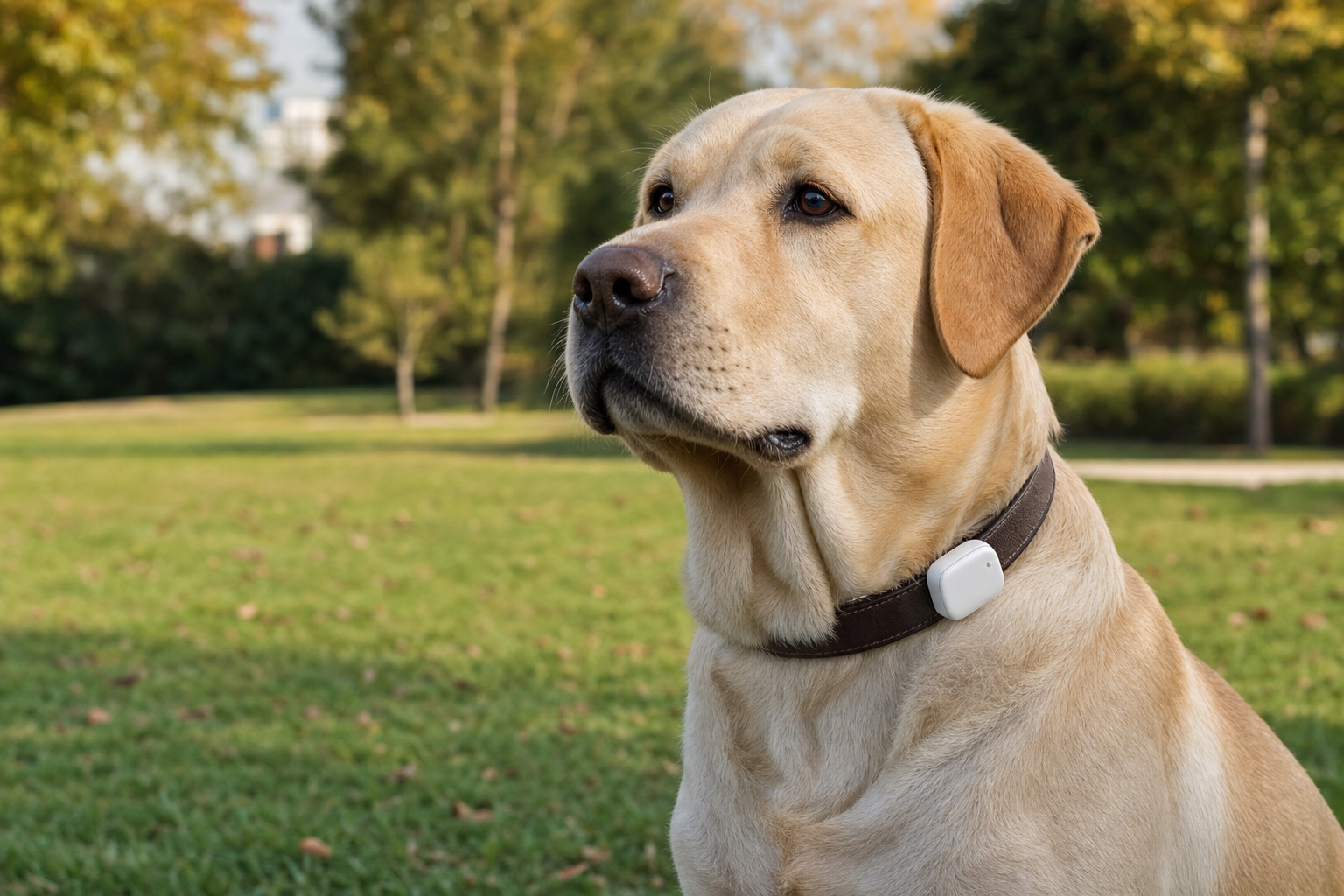
The Aorkuler Dog GPS Tracker 2 is the genuine no-subscription option on this page, and its design is unusual in a way that matters for hiking. Aorkuler states plainly: “No app, no SIM, no account. The tracker talks straight to the handheld controller over radio.” There is no phone in the loop at all, which is the whole point, because a phone is the component most likely to have no signal where you need it.
Published specifications from Aorkuler: range up to 3.5 miles in open terrain; collar unit approximately 30 g, which is 1.06 oz; IP67 rated; magnetic charging with cables included; a sound-and-light beacon on the collar to help you close the final distance; a handheld controller showing direction and distance, with no subscription, SIM or account required. Aorkuler does not publish an active-tracking battery figure or a minimum dog weight on its product page, so we no longer quote either.
What owners value: one payment and no plan, and tracking that does not care whether there is cell coverage. The 30 g collar unit is light enough for small and medium dogs.
Trade-offs: 3.5 miles is a hard ceiling and it is an open-terrain figure, so expect less in forest or steep ground. Because there is no app, there is also no tracking history, no geofence and no health monitoring, and you must carry the handheld controller. Aorkuler does not publish a battery runtime, which is a real gap when planning a long day out.
For a weekend hiker who wants location without a monthly bill and does not need analytics, this is the straightforward answer. Check current pricing on the Aorkuler GPS Tracker 2.
Tractive GPS XL: Best Subscription-Based Value
Tractive GPS XL
Best for: Hikers with reliable cell service who want unlimited range and premium app features
Correction (23 August 2026): the model this section originally described, the Tractive GPS XL, has been superseded. Tractive’s current large-dog tracker is the DOG 6 XL, and the older DOG XL Adventure is now listed as a previous model. The IP rating and weight previously quoted here were also wrong. Corrected below against Tractive’s current specifications.
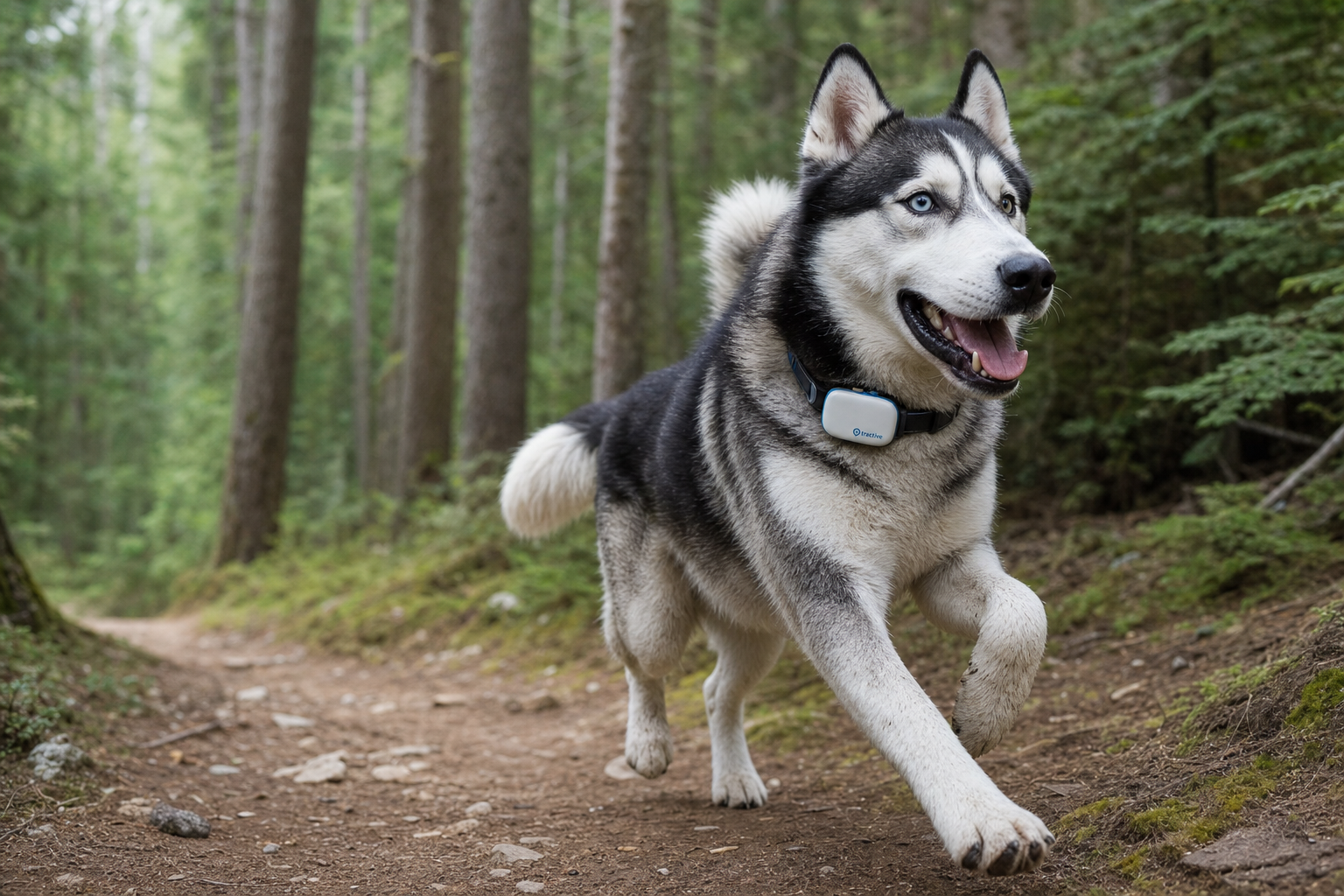
Tractive is the mainstream cellular option and the app is the reason people choose it. A subscription is mandatory: Tractive states outright that “you need a subscription for your tracker”, so this is not a no-subscription device under any configuration.
Published specifications for the current DOG 6 XL: battery up to 6 weeks when Power Saving Zones are used, or up to 20 days without them; 70 g, which is about 2.47 oz; rated 100 percent waterproof to IP68, not IP67 as previously stated here; recommended for dogs above 20 kg, which is roughly 44 lb; LIVE mode updates every 2 to 3 seconds; unlimited range wherever there is cellular coverage. The smaller DOG 6 is rated up to 2 weeks and suits dogs above 4 kg.
What owners value: the app is the most polished here, the virtual fence is genuinely useful around a campsite with coverage, and the battery on the XL means you are not charging it mid-trip.
Trade-offs: the subscription never stops, so price the plan over the years you expect to own it rather than looking at the device alone. More importantly for this article, a cellular tracker stops being a tracker where there is no cellular coverage, which is precisely the situation that makes people buy one. The XL is also a 44 lb minimum dog, so it is not an option for a smaller dog.
For trails with reliable coverage this is the best app experience on the page. For genuine backcountry it is the wrong tool. Check current Tractive pricing and plans.
SpotOn GPS Fence: Best Virtual Boundary System
SpotOn GPS Fence
Best for: Campers and hikers who need flexible boundary control without physical fencing
Correction (23 August 2026): two figures here were badly wrong. Battery life was given as up to 14 days; SpotOn publishes 33 or more hours of runtime. The minimum dog size was given as 10 pounds; SpotOn specifies at least 15 pounds and a neck of 10 inches or larger. The 8 oz collar weight was not a SpotOn figure and has been removed. The subscription position has also been clarified.
SpotOn is a virtual fence first and a tracker second, and the distinction decides whether it belongs on your shortlist. The fence works without a plan: SpotOn states “no subscription required. GPS fences work always and everywhere right out of the box.” Tracking is separate. SpotOn notes that “additional features are available for a fee, but not required to use SpotOn’s exceptional core features”, and location tracking is one of those paid features. So SpotOn is subscription-free as a fence and subscription-based as a tracker.
Published specifications from SpotOn: unlimited custom GPS boundaries of any shape or size; IP67 rated and built for rain, snow, swimming and temperatures from −30°F to above 120°F; 33 or more hours of runtime with tracking enabled, extendable in Extended Battery Life Mode; internal lithium-ion battery expected to last at least five to seven years; for dogs weighing at least 15 pounds with a neck of 10 inches or more.
What users love: Users report excellent virtual fencing accuracy and the flexibility to create custom boundaries anywhere GPS signal is available. The ability to set different boundaries for different locations (home, campsite, cabin) receives frequent praise. Reviews highlight the sturdy construction and reliable boundary alerts that help keep dogs safe around campsites without physical barriers.
Trade-offs: it is the most expensive way to solve the boundary problem, and the 33-hour runtime is short next to the weeks offered by the cellular trackers, so it is a device you charge constantly rather than occasionally. It is a substantial collar and the 15 lb minimum rules out small dogs. Boundary accuracy depends on GPS signal, so heavy tree cover degrades it. And if what you actually want is to find a dog that has already gone, remember the tracking side is a paid add-on.
For a camper who wants a boundary around a pitch or cabin without a physical fence, nothing else here does the same job. Check current SpotOn pricing.
PitPat Dog Activity Monitor: Activity Tracking Only, No GPS
PitPat Activity Monitor
Retraction (23 August 2026): this section described a location capability the product does not have. We said the PitPat Dog Activity Monitor combines “basic GPS tracking” with health monitoring and “records location data and uploads to smartphones via Bluetooth”. It does not record location at all. The Activity Monitor has no GPS and no location function of any kind; PitPat sells location tracking as a separate product and directs buyers who do not want it to the Activity Monitor instead. Retail listings label it explicitly as “No GPS”. It should never have appeared in a guide to GPS trackers, and it will not help you find a lost dog. We have left the section here, corrected, rather than deleting it, because anyone who bought this on our earlier description needs to know what they have. The stated weight was also wrong.
Best for: owners who want fitness and activity data and no subscription. Not for locating a dog.
Published specifications: 16 g, which is about 0.56 oz, not the 0.35 oz previously stated here; IP67 rated and dust tight, submersible to 1 metre for 30 minutes; user-replaceable CR2032 coin cell lasting over a year; 34 x 32 x 15 mm; Bluetooth 4.0; hook-and-loop strap that fits any collar; no subscription. Distance is estimated from an accelerometer counting steps, not from location data, which is precisely why there is no map.
What it is good at: the battery genuinely lasts over a year on a coin cell you replace yourself, it is light enough that a small dog will not notice it, and the activity and sleep analytics are the point of the device. If you want to know how much your dog actually moved on a hike, it answers that. If you want to know where your dog is, it cannot.
Trade-offs: there is no location function, so it offers nothing in an emergency where a dog has gone missing. Activity data syncs over Bluetooth when the dog is near the paired phone, which is fine for logging a walk and useless for finding a dog. PitPat is also a UK brand, so US availability and support are more limited than for the other devices here.
Buy it if you want fitness data on a dog that stays with you, for example on trail runs in a proper harness. If locating your dog is any part of why you are shopping, buy one of the actual trackers above instead. Check the PitPat Activity Monitor.
Fi Smart Dog Collar Series 3+: Best All-in-One Smart Collar
Fi Smart Collar Series 3
Best for: Tech-savvy hikers who want comprehensive smart collar features with GPS tracking
Correction (23 August 2026): the Series 3 has been superseded by the Series 3+, which is what Fi currently sells. The collar weight previously given here, 1.4 to 2.8 oz, was not a Fi figure and has been corrected. A subscription is required.
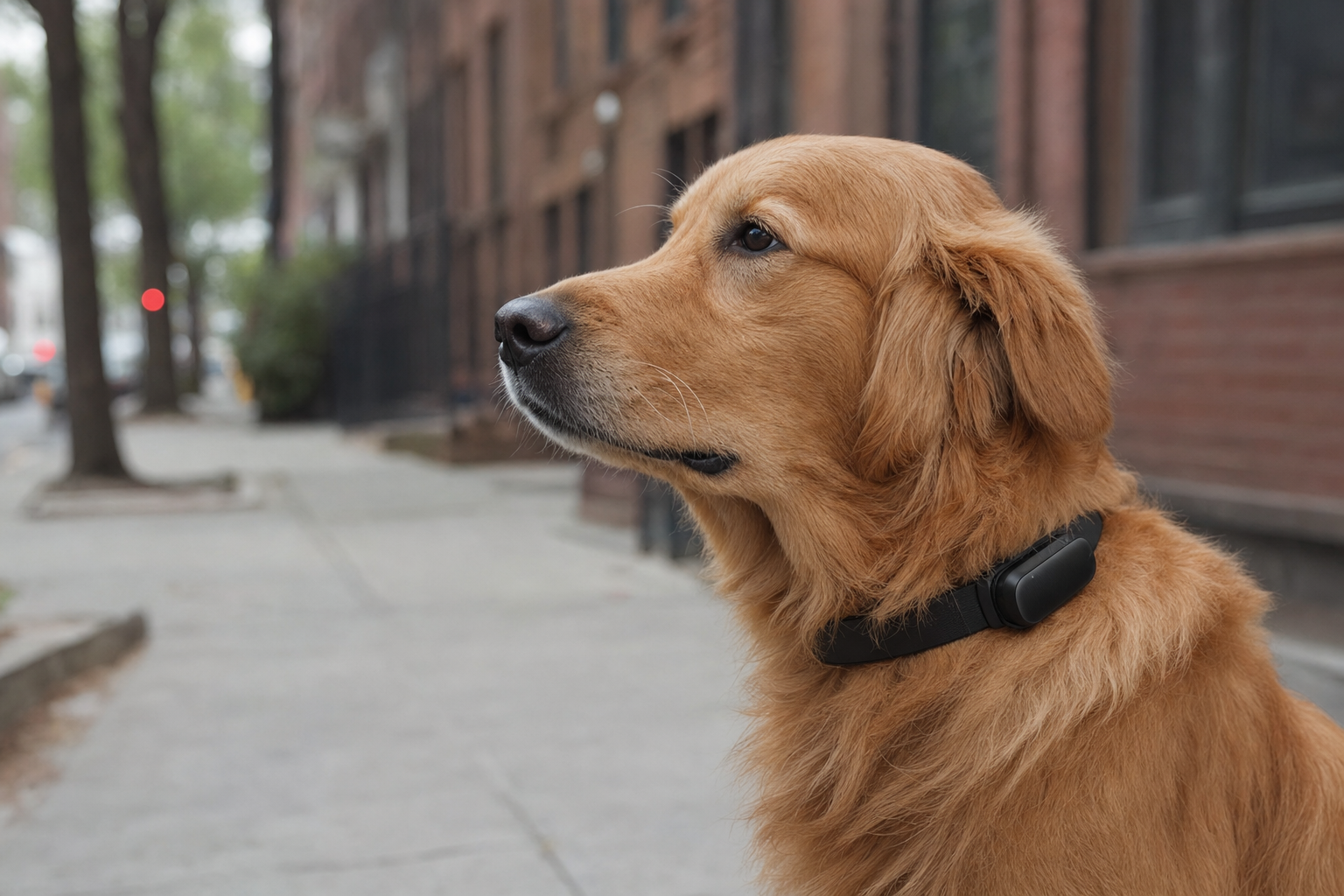
Fi combines GPS tracking with fitness monitoring, escape alerts and a normal-looking collar, and the standout specification is the battery. Fi publishes up to 3 months of battery life for the Series 3+, which is the longest on this page by a wide margin. A membership is required and is bundled for the first year with purchase.
Published specifications for the Series 3+: up to 3 months battery life; module weight about 1 oz, or 28 g; IP68 and IP66K rated, fully submersible and able to take high-pressure water jets; cellular coverage nationwide; escape alerts and activity analytics through the Fi app; Apple Watch compatible. Real-world battery life shortens considerably with frequent live GPS use.
What owners value: the battery life, a collar that looks like a collar rather than a gadget, escape detection alerts, and one app covering several dogs.
Trade-offs: the membership is mandatory and continues for as long as you use the collar, so price it over several years. Like every cellular tracker here, it stops working beyond cell coverage, which is the exact scenario a backcountry hiker is buying against. The published 3-month battery is a light-use figure and drops sharply under regular live tracking.
A strong choice for suburban and trail use with coverage, and the wrong choice for remote country. Check current Fi Series 3+ pricing and membership terms.
Whistle GO Explore: Retracted, This Product No Longer Works

Whistle GO Explore
Retraction (23 August 2026): Do not buy this tracker. It cannot work. Tractive acquired Whistle from Mars Petcare in July 2025 and closed down all Whistle hardware and servers on 31 August 2025. Whistle trackers no longer report location, including units that owners already had. The replacement window Tractive offered to existing Whistle owners closed on 30 September 2025. This article continued to recommend the Whistle GO Explore as a current buy long after that date, and that was our error. If you bought one on the strength of this page, it is not faulty, the service behind it was discontinued. We have kept this section visible rather than deleting it so that the correction reaches anyone who acted on the earlier version.
If you want what the GO Explore offered, health analytics alongside GPS on a cellular network, the direct successor is Tractive’s own range, since Tractive now owns the brand. The Fi Series 3+ covers similar ground. Both require a subscription, and both share the limitation that made this whole category a poor fit for remote hiking: no cell coverage means no tracking.
We have removed the purchase links from this section. There is no configuration in which buying a Whistle tracker in 2026 gives you a working tracker, so linking to one would be indefensible regardless of whether stock still exists in a marketplace listing.
GPS Dog Tracker Comparison: Head-to-Head Analysis
| Product | How it communicates | Subscription | Published range | Published battery | Water rating | Status |
|---|---|---|---|---|---|---|
| Garmin Alpha 200i + TT 15 | VHF radio to handheld | None for dog tracking; inReach satellite messaging is separate and paid | Up to 9 miles (14.48 km) | TT 15 collar 20-40 hr; handheld up to 20 hr, 15 hr with inReach | 1 ATM (10 m) | Current |
| Aorkuler GPS Tracker 2 | Radio to its own handheld controller, no app or SIM | None | Up to 3.5 miles, open terrain | Not published | IP67 | Current |
| Tractive DOG 6 XL | Cellular | Required | Unlimited where there is cell coverage | Up to 6 weeks with Power Saving Zones; up to 20 days without | IP68 | Current; replaces the older GPS XL |
| SpotOn GPS Fence | GPS boundary system | None for the fence; tracking is a paid add-on | Boundaries anywhere with GPS signal | 33+ hr runtime | IP67 | Current; dogs 15 lb and up |
| PitPat Activity Monitor | Bluetooth sync only. No GPS, no location tracking | None | No location function | Over 1 year on a replaceable CR2032 | IP67 | Current, but not a tracker |
| Fi Series 3+ | Cellular | Required | Unlimited where there is cell coverage | Up to 3 months | IP68 and IP66K | Current; replaces Series 3 |
| Whistle GO Explore | Was cellular | N/A | None | None | N/A | Discontinued. Servers closed 31 Aug 2025, units no longer track |
Every figure above is the manufacturer’s own published specification or is marked as not published. The price, three-year cost and weight columns previously shown here were removed on 23 August 2026: the cost figures were never sourced, and prices change too often for a printed total to stay accurate.
Price Comparison: 3-Year Total Cost Breakdown
We previously published three-year and five-year cost totals for each tracker. Those figures were not sourced from any manufacturer and have been removed rather than refreshed, because device prices and plan prices both change often enough that any number printed here would be wrong within months.
The structure of the comparison still holds and is what matters. The Aorkuler is a single payment with no plan, so its purchase price is its lifetime cost. Garmin’s dog tracking is likewise subscription-free, though inReach satellite messaging is billed separately. SpotOn charges nothing for the fence and charges for tracking. Tractive and Fi both require an ongoing plan, so their lifetime cost is the device plus the plan multiplied by however many years you keep it.
Do the arithmetic yourself with today’s prices from each manufacturer, over the number of years you realistically expect to use the tracker. That single calculation separates these products more sharply than any specification does.
Range and Accuracy Comparison
Range depends on communication method more than on price. Garmin publishes a VHF radio range of up to 9 miles for the TT 15, independent of any cellular network, but that is a best-case line-of-sight figure that dense forest and steep ground will cut into. Aorkuler publishes up to 3.5 miles and states the figure is for open terrain.
Cellular trackers provide effectively unlimited range within coverage and nothing at all outside it. Radio frequency devices keep working with no network present, which is the trade being made: a known hard ceiling in exchange for independence from infrastructure.
None of these manufacturers publishes a positional accuracy figure for its own device, so we no longer quote one. In practice the limiting factor is not how precisely the collar knows where it is but whether that position can reach you at all, which is a question of communication method rather than GPS precision.
Battery Life and Charging Options
Battery is where the categories separate most clearly. Fi publishes up to 3 months for the Series 3+ and Tractive up to 6 weeks for the DOG 6 XL with Power Saving Zones, or 20 days without. PitPat, which does no location work at all, runs over a year on a replaceable CR2032.
Real-time radio tracking costs far more power. Garmin specifies 20 to 40 hours for the TT 15 collar, not the 80 hours this article previously stated, and up to 20 hours for the Alpha 200i handheld, dropping to 15 with inReach enabled. SpotOn publishes 33 or more hours. Aorkuler does not publish a runtime. No manufacturer here publishes a cold-weather derating figure, so the percentage this article used to quote has been removed; plan on published figures being a warm-weather best case.
Charging differs too, and it is worth knowing before you pack. Aorkuler uses magnetic charging cables supplied with the device rather than USB-C, so a spare cable is not something you can borrow at a trailhead.
Buyer’s Guide: Choosing Your GPS Dog Tracker
Assessing Your Hiking Style and Needs
Your typical hiking patterns should drive GPS tracker selection more than marketing features or price alone. Day hikers who stick to established trails with cell service can benefit from subscription-based trackers that offer unlimited range and premium app features. Weekend backpackers venturing into remote areas need radio frequency devices that maintain communication without cellular dependency.
Consider your dog’s behavior patterns and escape history. Dogs with strong prey drive or previous escape incidents require real-time tracking capabilities, while well-trained dogs might only need activity monitoring with basic location logging. The frequency and remoteness of your outdoor activities directly impacts whether subscription costs provide value or represent unnecessary ongoing expense.
Evaluate your existing gear ecosystem and smartphone preferences. Some trackers integrate better with iPhone vs Android, while others require proprietary handheld devices that add weight and complexity to your gear loadout. Battery charging compatibility with existing power banks and charging systems can influence day-to-day usability during extended trips.
Subscription vs No-Subscription: Is Premium Worth It?
The subscription decision depends on your usage patterns, budget preferences, and typical hiking locations. Subscription models excel in suburban and rural areas with reliable cell coverage, offering unlimited range, automatic updates, and comprehensive customer support. The ongoing costs become worthwhile for frequent users who value premium app features and cloud-based tracking history.
No-subscription devices make financial sense for seasonal users, remote area hikers, and budget-conscious outdoor enthusiasts. The higher upfront costs typically pay for themselves within 2-3 years compared to subscription alternatives, and these devices maintain functionality regardless of cellular coverage or subscription status.
Consider the “what if” scenarios that matter most to your peace of mind. If your dog has never escaped and you hike established trails with cell service, a subscription tracker might provide excellent value. If you regularly venture into remote areas or have concerns about ongoing costs, no-subscription devices offer better long-term value and reliability.
Size and Weight Considerations for Different Dog Breeds
Weight and size affect both your dog’s comfort and whether the device stays put. The lightest thing here is the PitPat at 16 g, about 0.56 oz, but it does no location tracking at all, so light weight is not the trade it appears to be. Among actual trackers the Aorkuler collar unit is the lightest at about 30 g, or 1.06 oz, and Fi publishes about 1 oz for the Series 3+ module. Tractive publishes 70 g, about 2.47 oz, for the DOG 6 XL, which is why that model carries a 20 kg minimum dog weight.
The Garmin TT 15 is the substantial one. Garmin does not list a weight in its TT 15 specification table, so the figure this article previously gave was not a Garmin number and has been removed; retail listings put the transmitter and antenna at around 7.3 oz and the complete unit with collar at around 10 oz. Either way it is a collar built for a working gun dog, not for a small one. Check each maker’s published minimum: SpotOn specifies at least 15 pounds and a 10-inch neck, Tractive specifies above 20 kg for the DOG 6 XL and above 4 kg for the DOG 6.
Collar attachment systems vary significantly between devices. Some integrate into existing collars while others require proprietary collar systems that may not fit well with your dog’s current gear setup. Test fitting compatibility before purchasing, especially for dogs with unusual neck shapes or very thick/thin coats that affect secure attachment.
App Quality and User Experience Factors
The app often determines daily satisfaction more than the hardware does. Tractive and Fi both build their products around a smartphone app and both publish extensive app feature sets. The Aorkuler takes the opposite approach with no app at all, which removes a whole class of software complaint and also removes tracking history, geofencing and analytics.
Evaluate app store ratings and recent reviews to gauge ongoing development and bug fix responsiveness. Some manufacturers maintain active development cycles with regular feature additions, while others release devices with minimal ongoing software support. App quality often correlates with subscription model success, since ongoing revenue funds continued development.
Consider integration with other apps and services you already use. Some trackers sync with veterinary software, fitness tracking apps, or smart home systems that can enhance functionality for tech-savvy users. However, avoid choosing trackers based solely on integration features that you’re unlikely to use regularly during actual hiking activities.
Advanced Features Worth Paying For
Virtual Fencing and Boundary Alerts
Virtual fencing is useful for campers who need a boundary where a physical fence is impossible. SpotOn publishes unlimited custom GPS boundaries of any shape or size, and states the fence works without a subscription. Remember the 33-hour runtime and the 15 lb minimum dog weight when judging whether it fits your trip and your dog.
The technology works by creating GPS-based boundaries that trigger alerts when your dog approaches or crosses the defined perimeter. Most systems offer both smartphone notifications and collar-based corrections (vibration, sound, or mild stimulation) to redirect the dog back toward the safe zone without human intervention.
However, virtual fencing effectiveness depends on GPS signal quality and the dog’s training level. Well-trained dogs respond quickly to boundary alerts, while dogs with high prey drive may ignore corrections when chasing wildlife. The feature adds significant value for responsible off-leash recreation but shouldn’t be considered a substitute for proper training and supervision.
Activity and Health Monitoring
Activity tracking is a separate capability from location tracking, and the two do not always come together. PitPat is the clearest example on this page: it delivers detailed activity and sleep data and no location at all, estimating distance from an accelerometer rather than from GPS. Fi and Tractive combine both, at the cost of a subscription.
Be careful with health claims generally. Manufacturers describe these features in broad terms and we have not verified any specific health-detection claim against a manufacturer specification, so treat activity data as fitness information rather than as a diagnostic tool, and take health concerns to a vet.
The value proposition depends on your interest in data analysis and willingness to act on the insights provided. Dogs with known health conditions or very active lifestyle benefit most from comprehensive monitoring, while casual hikers may find basic activity tracking sufficient for their needs and budget constraints.
Multi-Dog Tracking Capabilities
Households with several dogs benefit from one interface covering all of them. Garmin publishes the ability to monitor up to 20 dogs from a single Alpha 200i handheld at a 2.5-second update rate, which is the strongest multi-dog capability here and one of the clearest reasons to accept the cost of the system.
Multi-dog tracking becomes especially valuable during group hiking activities or hunting scenarios where several dogs may scatter across different areas. The ability to monitor location, battery status, and activity levels for multiple animals through one interface saves time and reduces the complexity of managing several individual tracking systems.
However, multi-dog systems typically carry premium pricing that may not justify the cost unless you regularly need to track multiple animals simultaneously. Single-dog trackers can be more cost-effective when each dog has different tracking needs or usage patterns that don’t require simultaneous monitoring.
Common Problems and How to Avoid Them
Subscription Trap: Hidden Costs Over Time
Subscription trackers advertise the device price, which is the smaller number, while the plan is what you actually keep paying. Over the life of the device the plan commonly costs more than the hardware did. Both Tractive and Fi require an active plan, and Fi bundles the first year into the purchase price, which makes the first-year comparison flattering and the second-year one less so.
Research the complete cost structure before purchasing, including activation fees, plan change penalties, and price increase policies. Some companies raise subscription rates after the initial promotional period, while others charge extra fees for features like extended battery life or detailed health monitoring that seem included in basic marketing descriptions.
Consider your likely usage patterns honestly when evaluating subscription value. Weekend hikers who use GPS tracking seasonally may find subscription costs difficult to justify compared to no-subscription alternatives that provide reliable tracking without ongoing expenses. Calculate 3-5 year total ownership costs to make informed comparisons between different pricing models.
Rural Signal Issues: When Cell-Based Trackers Fail
Cellular GPS trackers become unreliable or entirely non-functional without adequate cell tower coverage, which is a common situation on serious hikes. This is the single most important thing to understand before buying one: the device is working perfectly and still cannot tell you anything, because the path back to your phone runs through a tower that is not there.
The problem extends beyond just remote wilderness areas. Mountainous terrain, dense forests, and even some suburban areas with poor carrier coverage can cause cellular trackers to lose connection unpredictably. This creates false confidence in areas with coverage followed by complete tracking failure when you venture beyond cell tower range.
Plan for this if you hike where coverage is patchy. The Garmin Alpha and the Aorkuler both communicate over radio directly to a handheld, so neither depends on a network, at the cost of a hard range ceiling of 9 miles and 3.5 miles respectively. That ceiling is a known quantity. A cellular tracker’s effective range in a coverage hole is zero, which is not.
Collar Fit and Comfort Problems
Improper collar fit represents one of the most common causes of GPS tracker problems, leading to device loss, inaccurate tracking, and dog discomfort that can affect hiking enjoyment and safety. Many trackers require specific collar types or attachment methods that may not work well with your dog’s existing collar system or neck shape.
Over-tightening collars to prevent GPS tracker loss can cause neck irritation, hair loss, and breathing problems, especially during extended outdoor activities when dogs are more active and excited. Under-tightening creates risk of device loss and inaccurate position readings that compromise the tracker’s effectiveness when you need it most.
Test collar fit with the GPS tracker attached before heading into remote areas. The collar should allow 2-3 fingers of space between the strap and your dog’s neck, remain secure during normal activity, and not cause any signs of irritation or discomfort. Consider backup attachment methods like secondary safety straps for expensive devices during high-activity adventures.
Installation and Setup: Getting Started
Initial Setup Process for Each Top Model
Garmin Alpha 200i: the most involved setup here. You register the device with Garmin, configure a profile for each dog, and sync maps for the areas you intend to use. Garmin does not publish a setup time, so the specific figure this article used to give has been removed.
Subscription trackers (Tractive, Fi): both follow the same smartphone pattern. Install the app, create an account, pair the device, choose a plan and enter payment details. Cellular activation is the step that can lag, particularly in a weak-signal area, so activate at home rather than at a trailhead.
Aorkuler: there is no app and no account. The collar unit pairs with its own handheld controller over radio, which is why there is nothing to sign up for. This article previously described an app download and Bluetooth pairing for the Aorkuler; that was wrong.
PitPat: account creation and a dog profile, then the monitor straps to any collar and syncs activity over Bluetooth. There is no location setup because there is no location function.
App Configuration and Customization
Optimal app configuration significantly impacts daily usability and battery life across all tracker types. Key settings include tracking frequency (more frequent updates drain battery faster), notification preferences (boundary alerts, low battery warnings, activity goals), and data sharing options (veterinary integration, family member access).
Battery Optimization: Most apps offer multiple tracking modes that balance battery life with update frequency. “Power saving” modes extend battery life for extended trips, while “live tracking” modes provide frequent updates for immediate location needs. Configure different modes for different activity types to maximize battery efficiency.
Alert Customization: Fine-tune notification settings to avoid alert fatigue while ensuring important notifications reach you promptly. Set boundary alerts for specific locations, customize low battery warnings based on planned activity duration, and configure emergency contact notifications for critical situations.
Troubleshooting Common Setup Issues
GPS signal problems: a first GPS lock takes longer than subsequent ones and needs a clear view of the sky. Indoor activation commonly fails because GPS does not pass through a building. Activate outdoors in the open before heading into forest or a valley. We no longer quote a lock time, because no manufacturer here publishes one.
Cellular activation delays: a new cellular tracker may not connect immediately, particularly where signal is weak. Do not assume the unit is faulty on the first attempt. Try a different location and contact the manufacturer if it still will not activate. Again, none of these makers publishes an expected activation window, so the specific timeframe this article previously gave has been removed.
App Connectivity Issues: Smartphone app problems often relate to Bluetooth connectivity, background app refresh settings, or location permissions. Ensure the tracking app has necessary permissions for location access, notifications, and background operation. Restart both the tracker and smartphone if connectivity issues persist after initial setup.
Frequently Asked Questions
What is the most reliable dog GPS tracker for weekend hiking?
The Garmin Alpha 200i with a TT 15 collar, because reliability off-grid is a question of whether the signal reaches you at all rather than of positional precision. Garmin publishes a VHF radio range of up to 9 miles that does not depend on cellular service, and the ability to track up to 20 dogs from one handheld. It is also by far the most expensive system here, so check current pricing before committing.
Is there a dog tracker without subscription fees?
Yes, but fewer than this article once suggested. The Aorkuler Dog GPS Tracker 2 is a genuine one-time purchase with no plan, no SIM and no account, tracking up to 3.5 miles to its own handheld controller. Garmin’s Alpha system tracks over VHF radio with no subscription, though its optional inReach satellite messaging is billed separately. SpotOn’s virtual fence needs no subscription but its tracking feature is a paid add-on. PitPat needs no subscription but has no location tracking at all, so it does not belong on this list.
How much do GPS dog tracker subscriptions really cost over time?
More than the device, usually, but we no longer publish specific totals here because device and plan prices change too often for a printed figure to stay true. Take the current plan price from Tractive or Fi directly, multiply by the number of years you expect to keep the tracker, and add the device price. Compare that against a one-time purchase such as the Aorkuler. That calculation, done with today’s numbers, is the only reliable version of this answer.
Which is better for hikers: AirTag or dedicated GPS tracker?
Dedicated GPS trackers provide superior range and real-time tracking capabilities compared to AirTags. AirTags depend on other iPhone users being nearby to relay location data, making them unreliable in remote hiking areas. GPS trackers offer direct communication up to several miles and work independently of other devices.
Do GPS dog trackers work without cell phone service?
Radio frequency trackers do. The Garmin Alpha and the Aorkuler both communicate directly between the collar and a handheld receiver, with no network involved. Cellular trackers such as Tractive and Fi stop working without cell tower coverage. Whistle, which this article previously listed in this category, no longer works anywhere: its servers were closed in August 2025.
What is the battery life difference between subscription and no-subscription trackers?
Battery life tracks device type rather than payment model. Tractive publishes up to 6 weeks for the DOG 6 XL with Power Saving Zones and up to 20 days without; Fi publishes up to 3 months for the Series 3+. Garmin specifies 20 to 40 hours for the TT 15 collar, not the 80 hours this article previously stated, which is the figure for the different TT 15X. SpotOn publishes 33 or more hours. Aorkuler does not publish a runtime. PitPat, which does no location work, runs over a year on a replaceable CR2032.
Are premium GPS dog trackers worth the upgrade from basic models?
For weekend hikers who regularly visit remote areas, premium trackers like the Garmin Alpha justify their cost through reliable performance when cellular service disappears. However, if you typically hike established trails with cell coverage, mid-range subscription trackers often provide excellent value. The upgrade depends on your specific hiking patterns and reliability requirements.
How waterproof do GPS dog trackers need to be for outdoor adventures?
IP67 is the practical minimum and covers rain, mud and brief submersion. Aorkuler, SpotOn and PitPat all publish IP67. Tractive publishes IP68 for the DOG 6 XL and Fi publishes IP68 plus IP66K for the Series 3+, both a step up and appropriate for a dog that swims. Garmin rates the TT 15 collar at 1 ATM, equivalent to 10 metres of water pressure.
Final Verdict: Our Top Pick for Weekend Hikers 2026
If we could only recommend one GPS tracker for weekend hikers, we’d choose the Garmin Alpha 200i with TT 15 collar despite its premium price. Garmin Alpha 200i Bundle
Here’s why: weekend hikers venture into areas where cellular service becomes unreliable or non-existent, making subscription-based trackers potentially useless when you need them most. The Garmin system provides reliable 9-mile range regardless of cell coverage, with professional-grade durability that handles harsh outdoor conditions.
The upfront cost is the obvious objection, and it is a fair one. Set against it the fact that the dog tracking carries no subscription, so the cost stops after the purchase, whereas a plan-based tracker keeps billing for as long as you own it. Do that comparison with current prices rather than with any figure printed in an article. Note too that Garmin’s inReach satellite messaging, which is for you rather than the dog, is a separate paid service.
For hikers who stay nearer the trailhead, the Aorkuler Dog GPS Tracker 2 is the sensible budget answer. Check current Aorkuler pricing. Aorkuler publishes up to 3.5 miles in open terrain, with no subscription, no SIM and no app: the collar talks to its own handheld controller. Accept the 3.5-mile ceiling and it is the cheapest genuinely subscription-free tracking here.
The point worth taking away is a structural one rather than a brand preference. Cellular connectivity is not the same as coverage. A cellular tracker is excellent on a trail with signal and worth nothing in a coverage hole, which is exactly where a dog goes missing and matters most. If your hiking regularly takes you past the edge of the network, buy radio. If it does not, a cellular tracker with a good app will serve you better and cost less to buy.